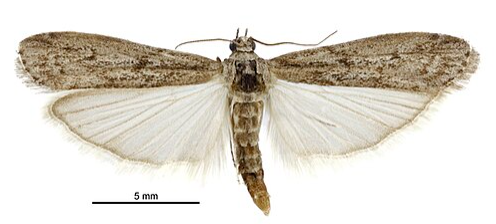
The Ephestia Flour Moth (Ephestia kuehniella), commonly known as the Mediterranean Flour Moth, is one of the most destructive stored-product pests found in homes, bakeries, grain storage facilities, food warehouses, and commercial flour mills worldwide. This insect is notorious for infesting flour, grains, cereals, pasta, dried foods, and processed grain products. Its larvae contaminate food with silken webbing, frass, shed skins, and feeding damage, making infested products unsuitable for consumption.
The Ephestia Flour Moth is considered a major pantry pest because infestations can spread rapidly in kitchens and food-processing facilities. In commercial milling operations, larval webbing may clog machinery and contaminate production systems, leading to serious economic losses and sanitation concerns.
Taxonomy and Classification
- Order: Lepidoptera
- Family: Pyralidae
- Genus: Ephestia
- Species: Ephestia kuehniella
- Common Names: Ephestia Flour Moth, Mediterranean Flour Moth
The Ephestia Flour Moth belongs to the family Pyralidae, commonly referred to as snout moths. Many members of this family are economically important stored-product pests that attack grains, seeds, flour, and processed foods.
This species is closely related to other common pantry pests such as the Indian Meal Moth and various grain moth species frequently encountered in kitchens and food storage environments.
Identification
Adult Ephestia Flour Moths are small, slender moths with a wingspan ranging from approximately 10 to 14 millimeters. Their forewings are pale gray to gray-brown and marked with darker wavy transverse bands that provide camouflage against grain dust and storage surfaces.
Key identification characteristics include:
- Grayish wings with dark zig-zag or wavy markings
- Slender body shape
- Distinctive resting posture with forelegs extended
- Zig-zag flight behavior around pantries or stored food
The larvae are creamy white to pinkish caterpillars with brown head capsules. These larvae are responsible for all feeding damage and contamination. One of the most recognizable signs of infestation is the dense silken webbing produced by the caterpillars as they move through flour and grain products.
Distribution and Habitat
The Mediterranean Flour Moth is distributed globally and is especially common in:
- Homes and pantries
- Commercial bakeries
- Grain elevators
- Flour mills
- Food-processing facilities
- Warehouses
- Pet food storage areas
Infestations are strongly associated with stored grain products and dry food materials. Larvae thrive in environments where flour dust, cereal debris, or spilled food accumulates.
Unlike many outdoor moth species, Ephestia Flour Moths are highly adapted to indoor human environments and can reproduce year-round in climate-controlled buildings.
Life Cycle
The Ephestia Flour Moth undergoes complete metamorphosis consisting of four developmental stages:
- Egg
- Larva
- Pupa
- Adult
Female moths lay eggs directly on or near suitable food sources. After hatching, larvae begin feeding immediately on flour, grains, bran, cereals, dried pet food, nuts, and other processed grain products.
As larvae feed, they spin extensive silken webbing throughout the food source. This webbing binds particles together into dense clumps and mats that are highly characteristic of infestation.
Larvae eventually leave the food material to pupate inside cracks, corners, shelf crevices, packaging folds, or wall voids. Adults emerge and begin mating shortly afterward.
Under favorable warm conditions, the entire life cycle may be completed in as little as six to eight weeks, allowing multiple generations per year.
Feeding Damage and Contamination
The primary issue associated with Ephestia Flour Moths is severe food contamination rather than direct structural damage.
Larval feeding results in:
- Silken webbing in flour and grains
- Clumping of food products
- Contamination with frass and shed skins
- Off odors and moisture buildup
- Mold growth in heavily infested products
- Reduced food quality and marketability
In commercial milling facilities, larval webbing may accumulate in machinery, conveyor systems, sifters, and processing equipment, leading to costly production shutdowns for cleaning and sanitation.
Signs of Infestation
Common signs of an Ephestia Flour Moth infestation include:
- Small moths flying around pantry shelves
- Zig-zag flying behavior indoors
- Silken webbing in flour or grain products
- Sticky or clumped flour
- Larvae crawling inside containers
- Silken cocoons in shelf corners or lids
- Accumulations of frass and food debris
Even very small quantities of spilled flour or grain dust can support larval development and allow infestations to persist.
Management and Control (IPM)
Inspection
Carefully inspect all stored food products, especially:
- Flour
- Cereal
- Pasta
- Pet food
- Bird seed
- Nuts
- Baking ingredients
Sanitation
Thorough sanitation is critical for successful control.
- Vacuum pantry shelves and cracks
- Remove spilled flour immediately
- Clean shelf corners and hinges
- Discard heavily infested products
Proper Storage
Store susceptible foods in airtight containers made of glass, metal, or heavy plastic to prevent reinfestation.
Freezing Treatments
Infested dry food products can sometimes be salvaged by freezing at 0°F (-18°C) for at least four days to kill all life stages.
Monitoring
Pheromone traps are highly useful for detecting adult males and monitoring infestation levels in both homes and commercial facilities.
Economic Importance
The Ephestia Flour Moth is considered one of the most important stored-product pests worldwide. Commercial infestations can result in:
- Food loss
- Machinery contamination
- Regulatory violations
- Sanitation shutdowns
- Reduced product quality
- Financial losses for food processors
For homeowners, infestations can persist for months if contaminated food sources are not completely removed.
Conclusion
The Ephestia Flour Moth is a persistent and highly adaptable pantry pest capable of infesting homes, bakeries, mills, and food-processing facilities. Its larvae contaminate stored foods with webbing and waste materials, making strict sanitation and proper storage essential for long-term management.
Early detection, careful inspection, airtight storage, and elimination of infested products remain the most effective methods for controlling Mediterranean Flour Moth infestations.