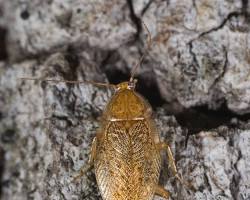
The Tawny Cockroach (Ectobius pallidus) is a small outdoor cockroach species belonging to the family Ectobiidae. Unlike the notorious indoor pest cockroaches commonly associated with kitchens, restaurants, and unsanitary conditions, the Tawny Cockroach is primarily an outdoor insect that rarely survives or reproduces indoors. Native to Europe and now established in portions of North America, this species is commonly found in gardens, leaf litter, wooded areas, and landscaped environments where it contributes to the natural breakdown of organic matter.
Because of its cockroach appearance, the Tawny Cockroach often causes alarm when it accidentally enters homes. However, this species is considered harmless and is not associated with the health risks, food contamination, or large infestations caused by species such as the German Cockroach or American Cockroach. Proper identification is important because unnecessary pesticide treatments are often used against this harmless outdoor species.
Taxonomy and Classification
- Kingdom: Animalia
- Phylum: Arthropoda
- Class: Insecta
- Order: Blattodea
- Family: Ectobiidae
- Genus: Ectobius
- Species: Ectobius pallidus
- Common Name: Tawny Cockroach
The Tawny Cockroach belongs to the genus Ectobius, a group commonly known as wood cockroaches or outdoor cockroaches. Members of this genus are generally adapted to natural outdoor habitats and differ significantly from the highly invasive indoor pest species that infest homes and commercial structures.
Physical Description
The Tawny Cockroach is relatively small and slender compared to many household pest cockroaches. Adults usually measure between 8 and 13 millimeters in length. Their bodies are light brown, pale tan, or tawny-colored, giving the species its common name.
Adults possess long antennae, six legs, and fully developed wings. Males are active fliers and are frequently attracted to outdoor lighting at night. Females may appear slightly broader-bodied but are also winged.
Unlike the German Cockroach, the Tawny Cockroach lacks the two dark parallel stripes on the pronotum behind the head. Its overall lighter coloration and outdoor behavior help distinguish it from indoor pest species.
Nymphs resemble smaller wingless versions of adults and develop gradually through multiple molts before reaching maturity.
Distribution and Habitat
The Tawny Cockroach is native to Europe but has spread into parts of North America, particularly in the northeastern and mid-Atlantic regions of the United States. The species thrives in temperate environments with access to moisture and decaying organic material.
Common habitats include:
- Gardens
- Leaf litter
- Wooded areas
- Mulch beds
- Shrubbery
- Compost piles
- Forest edges
- Landscaped yards
This cockroach strongly prefers outdoor environments and is poorly adapted to indoor living. Homes are generally too dry and lack the decaying organic material needed for survival and reproduction.
Behavior and Ecology
The Tawny Cockroach is primarily a scavenger and decomposer. It feeds on dead leaves, decaying plant matter, fungi, and organic debris. By helping break down organic material, the species contributes to nutrient recycling and soil health within ecosystems.
Unlike many indoor pest cockroaches that hide in dark cracks during the day, Tawny Cockroaches may be active outdoors during daylight hours. Adults are especially noticeable during warm weather when males fly around vegetation and outdoor lights.
These cockroaches are often attracted to porch lights, garage lights, and illuminated windows during summer evenings. As a result, they occasionally enter homes accidentally through open doors, windows, or gaps around structures.
Once indoors, Tawny Cockroaches typically die quickly because indoor conditions are too dry and unsuitable for long-term survival. They do not establish breeding populations indoors and are not considered infestation pests.
Life Cycle
The life cycle of the Tawny Cockroach consists of three primary stages:
- Egg
- Nymph
- Adult
Females produce egg cases known as oothecae, which are deposited outdoors in leaf litter, mulch, soil, or other protected organic environments. After hatching, nymphs feed on decaying organic matter while gradually developing into adults.
Development speed depends on environmental conditions such as temperature, humidity, and food availability. Most populations complete one generation per year.
Because the entire life cycle occurs outdoors, indoor populations are not sustainable.
Human Interaction
The Tawny Cockroach is not considered dangerous to humans. It does not bite, sting, contaminate food supplies, or spread disease in the same manner associated with pest cockroach species.
Its primary impact on homeowners is psychological. Many people react strongly to any cockroach sighting, even when the species involved is harmless and incapable of infesting structures.
Occasional indoor sightings are most common during warm weather when adults are highly active and attracted to lights. In many cases, only a few individuals are encountered.
Signs of Activity
- Small tan cockroaches around outdoor lights
- Flying insects near windows or porch lights at night
- Individuals found in gardens or mulch beds
- Occasional accidental indoor sightings
- Daytime activity in leaf litter or vegetation
Damage and Economic Importance
Unlike indoor pest cockroaches, the Tawny Cockroach does not damage structures, contaminate stored food, or create unsanitary infestations. The species is generally considered beneficial because of its role in decomposition.
By feeding on decaying plant material, these cockroaches assist with nutrient recycling and soil formation. Their ecological role is similar to other decomposer insects found in forests and gardens.
Economic impacts are minimal and usually limited to nuisance concerns when adults enter homes or gather around lights.
Management and Control (IPM)
Integrated Pest Management (IPM) for Tawny Cockroaches focuses primarily on exclusion and habitat modification rather than pesticide use.
Seal entry points around windows, doors, utility openings, and foundations to reduce accidental indoor entry.
Reduce outdoor lighting attraction by using yellow “bug lights,” reducing unnecessary nighttime lighting, or positioning lights away from doors and windows.
Maintain landscaping by removing excessive leaf litter, mulch buildup, and organic debris near foundations.
Improve screens and weather stripping to block flying adults from entering structures.
Mechanical removal is usually sufficient for individuals found indoors. Vacuuming or capturing and releasing them outdoors is often more appropriate than chemical treatment.
Because these cockroaches do not reproduce indoors, widespread insecticide applications are generally unnecessary.
Ecological Importance
The Tawny Cockroach serves an important ecological role as a decomposer species. By consuming decaying organic matter, it helps recycle nutrients into the soil and contributes to ecosystem health.
These cockroaches also serve as prey for birds, amphibians, reptiles, spiders, and predatory insects, making them part of broader food webs within natural habitats.
Conclusion
The Tawny Cockroach (Ectobius pallidus) is a harmless outdoor cockroach species that plays a valuable ecological role in decomposition and nutrient recycling. Although it may occasionally wander indoors after being attracted to lights, it is not capable of establishing infestations inside homes. Proper identification helps distinguish this beneficial outdoor insect from true pest cockroach species and prevents unnecessary pesticide use. In most cases, simple exclusion and habitat management are sufficient to minimize unwanted encounters.