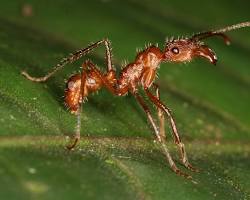
Ectatomma ants are a fascinating group of predatory ants belonging to the genus Ectatomma within the family Formicidae. These ants are native to tropical and subtropical regions throughout Central and South America and are widely recognized for their role as predators, scavengers, and important ecological regulators. Unlike many common household ants that rely heavily on sugary foods and large cooperative colonies, Ectatomma ants are often solitary hunters that actively search for prey in forests, grasslands, agricultural fields, and disturbed environments.
These ants are notable for their robust bodies, strong mandibles, and painful sting. In many ecosystems, they serve as beneficial predators that help control populations of insects and other small arthropods. However, they may occasionally become nuisance pests near homes, farms, and agricultural operations where their nests are disturbed or where food sources are abundant.
Taxonomy and Classification
- Kingdom: Animalia
- Phylum: Arthropoda
- Class: Insecta
- Order: Hymenoptera
- Family: Formicidae
- Subfamily: Ectatomminae
- Genus: Ectatomma
- Common Name: Ectatomma Ants
The genus Ectatomma contains several species distributed across the Americas. These ants belong to an ancient lineage of predatory ants with characteristics that differ from many highly social ant species. Their hunting behavior, nest structure, and colony organization make them important subjects of ecological and behavioral research.
Physical Description
Ectatomma ants are medium to large ants with a heavily built appearance. Most species range from about 6 to 15 millimeters in length, though size varies depending on species and caste. Their coloration is typically reddish-brown, dark brown, or chestnut-colored, allowing them to blend into soil, leaf litter, and woodland habitats.
One of their defining features is their strong mandibles, which are used to capture prey, defend the colony, and manipulate nest material. Their bodies are segmented into the standard ant structure of head, thorax, and abdomen, with clearly visible elbowed antennae and six legs.
Their exoskeleton is often shiny and heavily armored, giving them a robust appearance compared to smaller household ants. Many species possess a noticeable stinger capable of delivering a painful defensive sting when threatened.
Workers generally appear similar in size, though queens are larger and more heavily built. Winged reproductive individuals may emerge seasonally during mating flights.
Distribution and Habitat
Ectatomma ants are widely distributed across tropical and subtropical areas of the Americas. Their range includes:
- Central America
- South America
- Southern Mexico
- Caribbean regions
- Tropical agricultural zones
These ants are highly adaptable and occupy a variety of habitats, including:
- Rainforests
- Tropical woodlands
- Grasslands
- Agricultural fields
- Plantation areas
- Forest edges
- Disturbed landscapes
Nests are usually constructed in soil, beneath rocks, under fallen logs, or among leaf litter. Some species prefer sunny open ground, while others inhabit shaded forest environments. Their colonies are often relatively small compared to massive colonies formed by some other ant species.
Behavior and Ecology
Ectatomma ants are primarily predatory and are known for their solitary foraging habits. Individual workers leave the nest alone to search for prey rather than relying heavily on large coordinated trails. This hunting strategy helps them exploit a wide variety of food sources.
These ants feed on:
- Small insects
- Termites
- Caterpillars
- Spiders
- Larvae
- Dead arthropods
- Organic debris
- Sweet plant secretions
Although predatory by nature, they also scavenge carrion and consume sugary materials such as nectar or honeydew produced by sap-feeding insects.
Because they prey on numerous pest insects, Ectatomma ants are often considered beneficial predators in agricultural ecosystems. Their feeding activity may naturally suppress populations of caterpillars, beetles, and other crop pests.
Communication within the colony relies on pheromones, tactile signals, and chemical cues. However, their foraging patterns are generally less organized and trail-dependent than those seen in highly social ants like fire ants or Argentine ants.
Life Cycle
Like all ants, Ectatomma ants undergo complete metamorphosis consisting of four stages:
- Egg
- Larva
- Pupa
- Adult
Queens lay eggs within underground chambers protected by worker ants. Larvae are fed by workers until they mature and pupate. After completing pupation, adult workers emerge and begin participating in colony activities.
Colony growth is generally slower than in many aggressive invasive ant species. Colonies may contain only a few dozen to several hundred individuals depending on species, habitat quality, and environmental conditions.
Winged reproductive ants are produced seasonally and participate in mating flights that allow colonies to spread into new areas.
Human Interaction
Ectatomma ants are not usually considered major household pests, but they may occasionally enter structures in search of food or moisture. In agricultural settings, workers and farmers may encounter them while handling soil, vegetation, or debris.
These ants can deliver a painful sting when disturbed. While the sting is not typically medically dangerous, it may cause localized pain, redness, swelling, and irritation. Individuals sensitive to insect venom may experience stronger reactions.
In farming systems, these ants may provide ecological benefits by preying on insect pests. Some researchers view them as important components of natural biological control systems in tropical agriculture.
However, nests located near pathways, homes, livestock areas, or work zones may become problematic due to accidental stings.
Signs of Infestation
- Medium to large reddish-brown ants seen foraging alone
- Soil nests near vegetation or debris
- Visible ant activity in agricultural fields
- Painful stings after disturbing soil or nest areas
- Workers carrying prey items back to nests
Management and Control
Management of Ectatomma ants is usually only necessary when colonies occur near homes, work areas, or sensitive agricultural operations. Because they can provide beneficial pest control, complete elimination may not always be desirable.
Avoid disturbing nests whenever possible. Most stings occur after accidental contact with nest sites or foraging workers.
Maintain sanitation around structures to reduce food attraction. Remove exposed food, sugary residues, and organic waste that may attract foraging ants.
Seal entry points in buildings, including cracks, gaps, utility penetrations, and foundation openings.
Reduce debris and ground clutter near structures where nests may develop. Wood piles, rocks, and dense vegetation can provide shelter for colonies.
Use targeted treatments only when necessary. Professional pest control may be required if nests occur in high-traffic areas or sensitive locations.
Ecological Importance
Ectatomma ants play an important role in ecosystem balance. As predators, they help regulate populations of smaller arthropods and contribute to nutrient recycling through scavenging activity. Their nesting behavior also aerates soil and influences local insect communities.
Because they are both predators and scavengers, these ants occupy an important ecological niche in tropical ecosystems. In some agricultural systems, their presence may reduce reliance on chemical insecticides by naturally suppressing pest populations.
Conclusion
Ectatomma ants are powerful predatory ants native to tropical and subtropical regions of the Americas. Known for their solitary hunting behavior, strong mandibles, and painful sting, these ants serve as important predators and scavengers in forests, grasslands, and agricultural environments. Although they may occasionally become nuisance pests near humans, they are also valuable ecological allies that help control populations of other insects. Proper management focuses on minimizing conflict while recognizing their beneficial role in natural ecosystems.