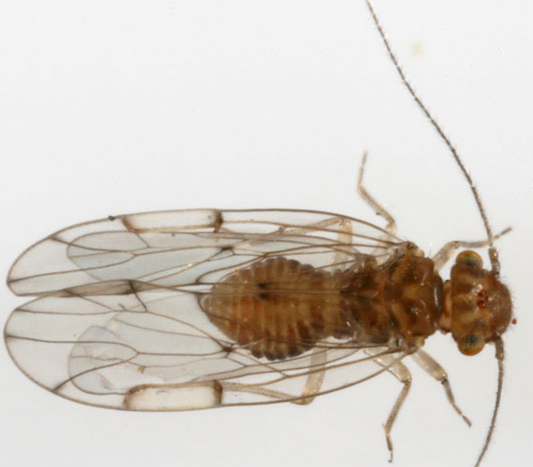
Ectopsocus Barklice are small insects in the barklouse group, commonly found on tree bark, leaves, fences, and other outdoor surfaces. Members of the genus Ectopsocus belong to a broader group of insects often called barklice or psocids. Despite their name, they are not true lice and do not bite humans, infest pets, or damage structures in the same way as termites or beetles.
These insects are primarily scavengers, feeding on algae, fungi, lichen, and other microscopic materials found on bark and similar surfaces. For this reason, barklice are generally considered harmless and are often viewed as part of the natural cleaning community in outdoor ecosystems. Their presence can sometimes surprise homeowners when they appear in noticeable numbers on tree trunks or siding, but they rarely require control.
Taxonomy and Classification
- Order: Psocoptera
- Family: Ectopsocidae
- Genus: Ectopsocus
- Common Group: Barklice
Physical Description
Ectopsocus barklice are tiny insects, usually only a few millimeters long. They are soft-bodied and pale gray, tan, or light brown in color. Some species are winged while others may be wingless depending on their life stage and environmental conditions.
Because of their small size, they are often overlooked until many individuals are present in one area.
Distribution and Habitat
Barklice are widespread and occur in humid environments where algae and fungi are available. They are commonly found on:
- Tree bark
- Fences
- Mulch and wood surfaces
- Siding in shaded, humid areas
- Leaf litter and outdoor structures
Moisture and shade are often key factors in supporting barklouse populations.
Behavior and Ecology
Ectopsocus barklice feed on microscopic organic material including algae, lichens, fungal spores, and debris. Rather than harming trees, they often help remove surface growths from bark.
Because of this feeding behavior, they are more closely associated with decomposer and scavenger roles than with true pest activity. They are sometimes confused with booklice, which are closely related indoor psocids.
Management and Prevention
Control is rarely necessary. If barklice are considered a nuisance, the best approach is habitat modification:
- Reduce excessive moisture around affected areas
- Improve airflow around siding and fences
- Trim dense vegetation that creates heavy shade
- Clean algae and mildew from outdoor surfaces
Because these insects are harmless and may even contribute to surface cleaning, Pestipedia generally recommends leaving them alone unless large populations become objectionable.