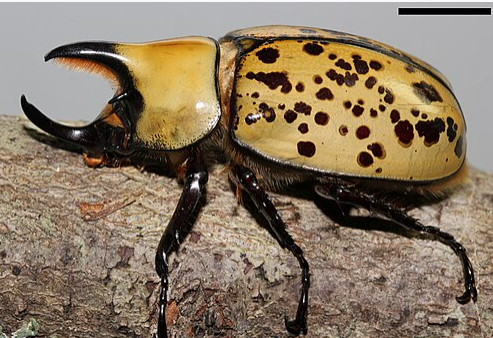
The Eastern Hercules Beetle (Dynastes tityus) is one of the largest and most impressive beetles native to North America. Famous for its enormous size and the dramatic horns found on males, this species belongs to the rhinoceros beetle group within the scarab beetle family. Despite its intimidating appearance, the Eastern Hercules Beetle is harmless to humans and plays an important ecological role as a decomposer in forest ecosystems.
Taxonomy and Classification
The Eastern Hercules Beetle belongs to the order Coleoptera, which includes all beetles, and the family Scarabaeidae, the scarab beetles.
Within the scarab family, it is classified among the rhinoceros beetles, a group known for their large size, heavy bodies, and horned males. The genus Dynastes contains some of the largest beetles in the world, including the famous Hercules beetles of Central and South America.
The Eastern Hercules Beetle is the only species of Dynastes native to the eastern United States.
Physical Description
Adult Eastern Hercules Beetles are among the heaviest insects in North America and may reach lengths of more than 2 inches, not including the horns.
Males possess two large horns:
- A long curved horn extending from the thorax
- A shorter horn projecting upward from the head
These horns are used during combat between rival males competing for access to females. Males wrestle by attempting to lift and throw opponents using their horns.
Females lack the large horns and are generally slightly smaller and more rounded in appearance.
The coloration of the beetle varies depending on humidity levels. In dry conditions, the wing covers are typically olive green, gray-green, or tan with black spots. Under humid conditions, the coloration may darken dramatically to nearly black.
This color-changing effect occurs because moisture alters the reflective properties of the beetle’s exoskeleton.
Distribution and Habitat
The Eastern Hercules Beetle is found throughout much of the eastern and southeastern United States.
Preferred habitats include:
- Hardwood forests
- Woodlands
- Decaying logs
- Rotting tree stumps
- Forest edges
- Moist wooded environments
The species is strongly associated with decomposing wood because the larvae require rotting timber as a food source.
Adults are commonly attracted to lights at night during warm summer months.
Life Cycle
The Eastern Hercules Beetle undergoes complete metamorphosis with four life stages:
- Egg
- Larva
- Pupa
- Adult
Females lay eggs inside decaying wood or organic debris. After hatching, larvae begin feeding on rotting wood and decomposing plant material.
The larvae are large white grubs with brown heads and thick segmented bodies. They may grow several inches long before pupating.
The larval stage can last one to two years depending on environmental conditions and food availability.
Once fully developed, the larva forms a pupal chamber within the decaying wood or soil. Adults emerge during late spring or summer.
Behavior
Eastern Hercules Beetles are primarily nocturnal and are most active during warm, humid evenings.
Males frequently engage in combat over mating opportunities. Using their horns, they attempt to pry opponents from branches or logs.
Despite their intimidating appearance, these beetles are harmless to humans. They do not bite, sting, or damage structures.
Adults feed sparingly and may consume:
- Tree sap
- Rotting fruit
- Decaying plant material
Ecological Importance
The Eastern Hercules Beetle is considered highly beneficial because its larvae contribute to decomposition and nutrient recycling within forest ecosystems.
By breaking down decaying wood, the larvae help:
- Recycle nutrients into soil
- Accelerate decomposition
- Support healthy forest ecosystems
- Create habitat for other organisms
As decomposers, these beetles play an essential role in woodland nutrient cycles.
Natural Predators
Eastern Hercules Beetles may be preyed upon by:
- Birds
- Raccoons
- Skunks
- Large reptiles
- Predatory mammals
Their large size and strong exoskeleton provide some protection against predators.
Human Interactions
Unlike destructive wood-boring insects, Eastern Hercules Beetles do not infest homes, furniture, or structural wood. Because they only develop in decaying wood, they are not considered structural pests.
They are popular among insect enthusiasts and are frequently photographed due to their dramatic appearance and enormous size.
Occasionally adults may wander indoors after being attracted to lights, but they are harmless and can simply be relocated outdoors.
Management and Control
No control is necessary for Eastern Hercules Beetles because they are beneficial decomposers and do not cause damage to structures or healthy trees.
- No Chemical Control Needed: These beetles are ecologically beneficial.
- Preserve Decaying Wood: Maintaining natural woodland habitats supports healthy populations.
- Reduce Outdoor Lighting: This may reduce attraction to buildings during summer nights.
Conclusion
The Eastern Hercules Beetle is one of North America’s most remarkable insects, admired for its massive size, horned appearance, and impressive strength. Although intimidating in appearance, it is harmless to humans and highly beneficial to forest ecosystems. Through its role in decomposition and nutrient recycling, this giant scarab beetle contributes significantly to the health of woodland environments across eastern North America.