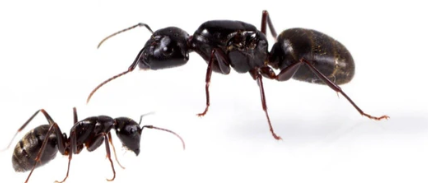
The Eastern Black Carpenter Ant (Camponotus pennsylvanicus) is one of the largest and most recognizable ant species in North America. This species is widely known as a significant structural pest because it excavates wood to create nesting galleries inside homes, buildings, trees, and other wooden structures. Unlike termites, carpenter ants do not consume wood for nutrition. Instead, they tunnel through softened or moisture-damaged wood to establish colonies and expand their nesting systems.
Eastern Black Carpenter Ants are especially problematic in homes with water damage, roof leaks, plumbing issues, or damp crawl spaces. Over time, large colonies may weaken structural wood and contribute to expensive repairs if infestations remain untreated.
Taxonomy and Classification
- Order: Hymenoptera
- Family: Formicidae
- Genus: Camponotus
- Species: Camponotus pennsylvanicus
Carpenter ants belong to the same insect order as bees and wasps. The genus Camponotus includes numerous carpenter ant species worldwide, many of which are associated with wood excavation and structural infestations.
Identification
Eastern Black Carpenter Ants are among the largest ants found in North America. Workers typically range from 1/4 to 1/2 inch in length, while queens may exceed 3/4 inch long.
Key identifying features include:
- Large black body
- Smooth, rounded thorax
- Elbowed antennae
- Single-node waist (petiole)
- Powerful mandibles for wood excavation
Winged reproductive ants, called alates or swarmers, are often mistaken for termites during spring mating flights. However, carpenter ants have bent antennae, narrow waists, and unequal wing sizes, while termites possess straight antennae and uniform wings.
Distribution and Habitat
The Eastern Black Carpenter Ant is widespread throughout eastern North America, including much of the United States and southern Canada.
Common nesting habitats include:
- Moisture-damaged structural wood
- Wall voids
- Attics
- Window frames
- Decks and porches
- Tree stumps
- Dead trees
- Firewood piles
Colonies often establish a primary nest outdoors and create satellite nests indoors when environmental conditions are favorable.
Behavior
Eastern Black Carpenter Ants are social insects that live in organized colonies containing workers, larvae, pupae, and reproductive queens.
Workers forage primarily at night in search of food and moisture. Their diet includes:
- Honeydew from aphids
- Dead insects
- Sugary foods
- Grease and proteins
- Pet food
- Kitchen scraps
Although they tunnel through wood, carpenter ants do not digest cellulose like termites. Instead, they remove wood shavings and debris from their galleries, producing coarse sawdust-like material known as frass.
Life Cycle
The carpenter ant life cycle includes:
- Egg
- Larva
- Pupa
- Adult
Queens establish new colonies after mating flights, which commonly occur during spring and early summer. Initial colony growth is slow, but mature colonies may eventually contain thousands of workers.
Workers may live for several years, while queens can survive for over a decade under favorable conditions.
Structural Damage
Eastern Black Carpenter Ants are considered serious structural pests because of their excavation behavior.
Common signs of infestation include:
- Rustling sounds inside walls
- Piles of frass beneath wood
- Winged ants indoors
- Smooth tunnels inside wood
- Large black ants trailing indoors
- Moisture-damaged wood activity
Unlike termite galleries, carpenter ant tunnels are smooth and clean in appearance because the ants remove debris while excavating.
Severe infestations may weaken:
- Support beams
- Floor joists
- Wall studs
- Window frames
- Porches and decks
- Roof structures
Prevention
Preventing carpenter ant infestations primarily involves reducing moisture and eliminating nesting opportunities.
- Repair plumbing leaks promptly
- Improve attic and crawl space ventilation
- Replace water-damaged wood
- Store firewood away from structures
- Trim tree branches away from roofs
- Seal cracks and utility openings
- Reduce excess moisture around foundations
Management and Control
Effective carpenter ant control requires locating and eliminating both primary and satellite nests.
Inspection
Professional inspections often focus on moisture-prone areas such as:
- Bathrooms
- Kitchens
- Basements
- Attics
- Window frames
- Rooflines
Baiting
Slow-acting ant baits are frequently used because workers carry food back to the colony, eventually affecting queens and developing brood.
Nest Removal
Removing infested wood and correcting moisture problems are often necessary for long-term elimination.
Professional Treatment
Large infestations may require professional pest management services using targeted insecticides, dusts, or foam applications within wall voids and structural cavities.
Ecological Role
Despite their status as pests indoors, carpenter ants play important ecological roles outdoors by helping decompose dead wood and recycling nutrients within forest ecosystems.
They also serve as prey for birds, reptiles, amphibians, and other insects.
Conclusion
The Eastern Black Carpenter Ant is one of North America’s most important structural ant pests. Although these ants do not consume wood like termites, their excavation activity can seriously damage moisture-weakened structures over time. Early detection, moisture management, and professional treatment when necessary are essential for preventing long-term structural problems caused by carpenter ant infestations.