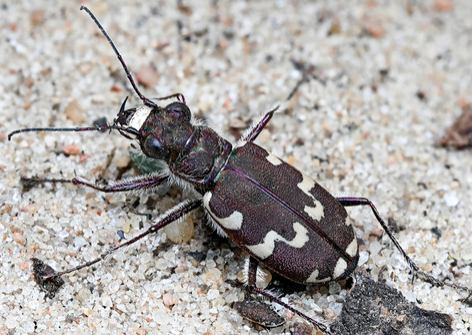
Dune Tiger Beetles (family Cicindelidae) are fast-moving, visually striking predatory beetles that inhabit sandy environments such as coastal dunes, beaches, and inland desert landscapes. Renowned for their exceptional speed and keen eyesight, these beetles are among the most effective ground predators in open habitats.
Rather than being pests, dune tiger beetles are considered highly beneficial insects because they actively hunt and consume a wide variety of smaller arthropods, helping maintain ecological balance in fragile dune ecosystems.
Quick Facts
- Family: Cicindelidae
- Order: Coleoptera
- Habitat: Sand dunes, beaches, deserts, and dry open ground
- Diet: Small insects and arthropods
- Status: Beneficial predator
Taxonomy and Classification
Dune tiger beetles belong to the family Cicindelidae, commonly known as tiger beetles. This group is closely associated with ground beetles, though tiger beetles are typically more active, visually oriented hunters.
They undergo complete metamorphosis, progressing through egg, larval, pupal, and adult stages.
The name “tiger beetle” reflects their aggressive predatory behavior and speed, much like a terrestrial predator stalking prey.
Identification
Dune tiger beetles are easily recognized by their distinctive physical characteristics:
- Body Shape: Slender, streamlined body adapted for speed
- Eyes: Large, prominent compound eyes for excellent vision
- Legs: Long and powerful, enabling rapid movement across sand
- Coloration: Metallic green, bronze, or sandy tones depending on species
Many species exhibit coloration that blends with their sandy environment, providing both camouflage and protection from predators.
The larvae are less visible but equally specialized, living in vertical burrows in sandy soil.
Distribution and Habitat
Dune tiger beetles are found in sandy habitats around the world, particularly in:
- Coastal dunes and beaches
- Inland sand dunes and desert regions
- Dry, open landscapes with loose soil
These habitats provide ideal conditions for both hunting and larval development.
Because they rely on open, undisturbed sandy areas, their presence can indicate relatively intact natural ecosystems.
Behavior and Life Cycle
Dune tiger beetles exhibit a fascinating life cycle that includes both active and ambush predation strategies:
- Egg: Laid in sandy soil
- Larva: Lives in a vertical burrow, waiting to ambush prey
- Pupa: Develops within the burrow
- Adult: Emerges to actively hunt on the surface
Larval Behavior:
- Larvae anchor themselves in burrows
- Use their jaws to capture passing insects
- Retreat quickly into the burrow after capturing prey
Adult Behavior:
- Extremely fast runners and capable fliers
- Use short bursts of speed to chase prey
- Often pause frequently due to overheating or visual processing limitations
Feeding and Ecological Role
Dune tiger beetles are voracious predators that feed on a wide variety of small organisms, including:
- Ants
- Flies
- Small beetles
- Other arthropods
Their role in ecosystems includes:
- Regulating insect populations
- Contributing to biodiversity
- Serving as prey for birds and larger predators
Both larvae and adults are important contributors to natural pest control in sandy environments.
Pest Status
Dune tiger beetles are not pests. They are beneficial insects that provide natural pest suppression by preying on other insects.
They do not damage plants, structures, or stored products and are generally harmless to humans.
Conservation and Environmental Importance
Many species of tiger beetles are considered indicators of environmental health, particularly in fragile dune ecosystems.
Threats to their populations include:
- Habitat destruction
- Coastal development
- Off-road vehicle activity in dune systems
- Pollution and environmental degradation
Protecting their habitats helps preserve biodiversity and ecosystem stability.
Prevention and Control
No prevention or control measures are necessary or recommended. Dune tiger beetles should be protected and encouraged due to their ecological value.
Related Articles
Conclusion
Dune tiger beetles are remarkable predators adapted to life in sandy environments. Their speed, keen vision, and hunting ability make them one of the most efficient insect predators in open landscapes.
As beneficial insects, they contribute significantly to natural pest control and ecological balance. Preserving their habitats ensures the continued health of dune ecosystems and the many species that depend on them.