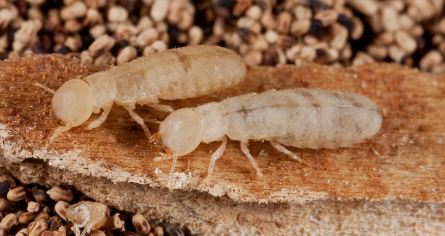
Drywood Termites (family Kalotermitidae) are a group of wood-infesting termites that live entirely within dry wood, without requiring contact with soil. Unlike subterranean termites, they obtain all necessary moisture from the wood they consume and from metabolic processes, allowing them to infest structural lumber, furniture, and other wooden materials.
These termites are considered significant structural pests, particularly in warm coastal regions, where they can cause extensive damage to homes and wooden objects if left undetected.
Taxonomy and Classification
Drywood termites belong to the order Blattodea (the same order as cockroaches) and the family Kalotermitidae. They are eusocial insects, meaning they live in organized colonies with specialized castes.
They undergo incomplete metamorphosis, developing through egg, nymph, and adult stages without a pupal phase.
Identification and Physical Description
Drywood termites are generally larger than subterranean termites and exhibit a range of coloration depending on caste and species.
- Size: Approximately 3/8 to 1 inch long
- Color: Light tan to dark brown
- Body: Soft-bodied and segmented
Key castes include:
- Workers (immatures): Cream-colored, responsible for feeding and maintenance
- Soldiers: Larger heads with strong, toothed mandibles for defense
- Alates (swarmers): Winged reproductives, darker in color
A defining feature of drywood termites is their fecal pellets (frass), which are:
- Hard and dry
- Six-sided (hexagonal)
- Often found in small piles beneath infested wood
Their galleries within wood are smooth, clean, and resemble finely sanded tunnels.
Distribution and Habitat
Drywood termites are most commonly found in warm, dry, and coastal regions, including:
- Southern United States
- Gulf Coast regions
- Coastal California
- Tropical and subtropical climates worldwide
They infest dry, sound wood in locations such as:
- Attics and roof structures
- Wall voids and siding
- Eaves, fascia boards, and trim
- Furniture and wooden fixtures
- Utility poles and dead trees
Because they do not require soil contact, infestations may occur in isolated wooden items within a structure.
Behavior and Life Cycle
Drywood termites live in relatively small colonies compared to subterranean species. A colony may contain a few hundred to several thousand individuals.
The life cycle includes:
- Egg: Laid by the queen within the wood
- Nymph: Develops into workers, soldiers, or reproductives
- Adult: Performs colony-specific roles
Key behavioral traits include:
- Colonies are entirely contained within wood
- They do not build mud tubes
- Swarming typically occurs during warm seasons, often at night
New colonies begin when winged reproductives (alates) leave the nest, mate, and establish themselves in a new piece of wood.
Social Structure
Drywood termite colonies are organized into distinct castes:
- King and Queen: Responsible for reproduction
- Workers (immatures): Feed and maintain the colony
- Soldiers: Defend against predators, especially ants
- Alates: Winged termites that disperse to form new colonies
Unlike subterranean termites, drywood termite workers are actually immature forms capable of developing into other castes.
Feeding and Damage
Drywood termites feed on cellulose found in wood. Their feeding occurs within the wood structure, making infestations difficult to detect early.
Common signs of infestation include:
- Small piles of pellet-like frass
- Tiny kick-out holes in wood surfaces
- Hollow-sounding wood when tapped
- Visible swarmers or discarded wings
Damage may include:
- Weakening of structural wood
- Damage to furniture and wooden objects
- Long-term structural compromise if untreated
Pest Status
Drywood termites are considered serious structural pests. Unlike subterranean termites, their infestations are often localized but can still cause significant damage over time.
Because they live entirely within wood, infestations may go unnoticed until damage becomes extensive.
Management and Control
Control methods differ from those used for subterranean termites due to their isolated nesting behavior.
| Method | Description | Use Case |
|---|---|---|
| Fumigation | Whole-structure treatment | Severe or widespread infestations |
| Spot Treatments | Localized insecticide application | Small, isolated colonies |
| Wood Treatments | Borate or preservative applications | Preventative or targeted control |
Professional inspection is often required to determine the extent of infestation.
Prevention
- Seal cracks and openings in exterior wood
- Paint or treat exposed wood surfaces
- Inspect furniture and wooden items regularly
- Reduce excess wood storage near structures
Preventative maintenance is key to reducing the likelihood of infestation.
Related Articles
Conclusion
Drywood termites are highly adapted wood-dwelling insects capable of infesting structures without soil contact. Their hidden lifestyle and slow but steady feeding can lead to significant damage over time.
Early detection, proper wood maintenance, and targeted treatment strategies are essential for protecting structures and preventing long-term damage from these persistent pests.