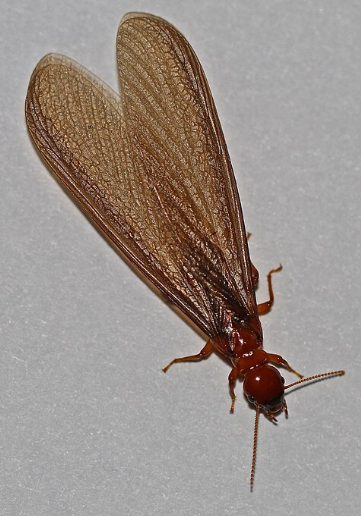
Dampwood Termites (family Termopsidae, also commonly classified under Archotermopsidae in modern taxonomy) are among the largest termite species and are strongly associated with moist, decaying wood. As their name suggests, they require high moisture levels to survive and are most often found in wet logs, stumps, and water-damaged structures.
Although they are generally less destructive than Subterranean Termites or Formosan Termites, they can still cause structural damage when moisture problems persist. Their presence is often an indicator of underlying water issues within a structure.
Taxonomy and Classification
- Common Name: Dampwood Termites
- Order: Blattodea
- Family: Termopsidae / Archotermopsidae
- Type: Moisture-dependent wood-destroying insect
Dampwood termites are eusocial insects that live in organized colonies consisting of workers, soldiers, and reproductives. Like other termites, they undergo incomplete metamorphosis, gradually developing through nymph stages.
Physical Description
Dampwood termites are larger than most other termite species.
- Size: Approximately 1/2 to 5/8 inch long
- Workers: Cream-colored, soft-bodied, and wingless
- Soldiers: Large head with strong mandibles; often brown or reddish
- Reproductives (Alates): Dark brown to black with wings
Their larger size makes them easier to identify compared to other termite species. Unlike subterranean termites, they do not require extensive soil contact and are usually found directly within infested wood.
Distribution and Habitat
Dampwood termites are most commonly found in cool, humid regions, particularly along coastal areas.
Common regions include:
- Pacific Northwest (Washington, Oregon, Northern California)
- Coastal regions with high humidity
- Forested and mountainous areas
Preferred habitats include:
- Decaying logs and tree stumps
- Fallen timber and forest debris
- Water-damaged structural wood
- Wood exposed to leaks or poor drainage
They require high moisture content in wood and rarely infest dry, sound lumber.
Behavior and Life Cycle
Dampwood termites live entirely within the wood they consume and do not construct external shelter tubes like subterranean termites.
- Nesting: Colonies are established directly in moist wood
- Colony Size: Generally smaller than subterranean termite colonies
- Swarming: Winged reproductives emerge seasonally to form new colonies
The life cycle includes:
- Egg Stage: Laid by the queen within the colony
- Nymph Stage: Develop into workers, soldiers, or reproductives
- Adult Stage: Maintain colony structure and reproduction
Because they depend heavily on moisture, their survival is closely tied to environmental conditions.
Feeding and Damage
Dampwood termites feed on wood and cellulose material, particularly when it is softened by moisture or decay.
- Preferred Wood: Damp, rotting, or water-damaged timber
- Damage Pattern: Galleries cut along the grain of the wood
- Moisture Dependency: Cannot survive in dry wood
Damage is typically slower than that caused by other termite species but can still become significant if moisture problems are not addressed.
Common signs of infestation include:
- Soft or hollow-sounding wood
- Presence of large termites inside wood
- Moist or decayed wood structures
Social Structure
Dampwood termites maintain a typical termite caste system:
- Queen and King: Responsible for reproduction
- Workers: Feed the colony and maintain the nest
- Soldiers: Defend against predators
The colony structure is less complex and smaller compared to highly destructive termite species.
Management and Control
Control of dampwood termites focuses primarily on moisture management.
| Strategy | Purpose | Benefit |
|---|---|---|
| Moisture Reduction | Fix leaks and improve drainage | Eliminates suitable habitat |
| Wood Replacement | Remove and replace damaged wood | Stops infestation source |
| Borate Treatments | Apply wood preservatives | Protects against reinfestation |
| Fumigation | Used in severe infestations | Eliminates hidden colonies |
Because dampwood termites depend on moisture, eliminating water sources is often sufficient to control infestations.
Prevention
- Repair leaking roofs, pipes, and gutters
- Ensure proper ventilation in crawl spaces and attics
- Avoid wood-to-ground contact
- Use treated or sealed wood in construction
- Maintain proper drainage around structures
Preventing moisture buildup is the most effective way to avoid dampwood termite infestations.
Related Articles
Conclusion
Dampwood termites are moisture-dependent insects that primarily infest decaying or water-damaged wood. While they are less aggressive than other termite species, they can still cause structural damage if moisture issues persist.
By addressing water problems, maintaining dry conditions, and using preventative treatments, homeowners can effectively manage and prevent infestations while protecting structural integrity.