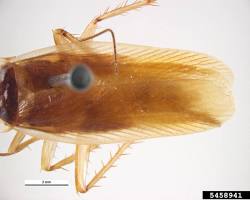
The Brown-banded Cockroach (Supella longipalpa) is a small indoor cockroach species commonly found in homes, apartments, hotels, offices, and commercial buildings. Unlike many cockroach species that prefer damp environments, brown-banded cockroaches thrive in warm, dry indoor areas and are often found high on walls, inside furniture, and near electronics.
This species is considered a significant household pest because it contaminates food, spreads bacteria, and contributes to indoor allergy problems. Their small size and ability to hide in tiny cracks allow infestations to grow unnoticed for long periods.
Quick Facts
- Family: Ectobiidae
- Scientific Name: Supella longipalpa
- Common Habitat: Warm indoor spaces
- Diet: Food crumbs, paper, starches, adhesives
- Status: Household pest
- Preferred Conditions: Warm, dry indoor environments
Identification
Brown-banded cockroaches are among the smaller indoor cockroach species, typically measuring about 1/2 inch long as adults.
They are light brown to tan and easily identified by the two pale horizontal bands that cross the wings and abdomen.
Important identification features include:
- Small oval-shaped body
- Light brown coloration
- Two yellowish or tan bands across the body
- Long antennae
- Fast running behavior
Males are slimmer and capable of short gliding flights, while females are broader with shorter wings.
Nymphs are smaller, wingless, and darker in color but still show the characteristic banding.
Unlike the German Cockroach, brown-banded cockroaches are more likely to be found throughout an entire structure rather than concentrated only in kitchens and bathrooms.
Distribution and Habitat
Brown-banded cockroaches occur worldwide and are strongly associated with human structures.
They are especially common in:
- Apartments
- Hotels
- Office buildings
- Hospitals
- Residential homes
- Warehouses
- Restaurants
Unlike many other cockroach species, brown-banded cockroaches prefer:
- Warm temperatures
- Dry environments
- Elevated hiding areas
- Protected cracks and crevices
Common hiding locations include:
- Inside furniture
- Behind picture frames
- Inside cabinets
- Behind appliances
- Near televisions and electronics
- Inside clocks and radios
- Ceiling corners
- Closets and shelving
Because they prefer warmer elevated areas, infestations are often discovered far from kitchens or water sources.
Life Cycle
The brown-banded cockroach undergoes incomplete metamorphosis with three primary stages:
- Egg
- Nymph
- Adult
Females produce egg capsules called oothecae.
Unlike some cockroach species that carry egg capsules until hatching, brown-banded females glue or attach oothecae to hidden surfaces.
Egg cases are commonly placed:
- Under furniture
- Inside cabinets
- Behind decorations
- Near ceilings
- Inside appliances
After hatching, nymphs molt several times before becoming adults.
Under warm indoor conditions, the life cycle can continue year-round.
Behavior
Brown-banded cockroaches are nocturnal and avoid light whenever possible.
At night they emerge to search for food and water.
Unlike larger cockroach species, they require relatively little moisture and can survive in dry areas.
They feed on a wide variety of materials including:
- Food crumbs
- Grease
- Paper
- Glue
- Book bindings
- Starches
- Fabric residues
- Pet food
This species is highly adaptable and capable of surviving in difficult indoor environments.
Pest Status
Brown-banded cockroaches are considered important indoor sanitation pests.
They may contaminate:
- Food
- Utensils
- Countertops
- Stored goods
- Furniture surfaces
Like other indoor cockroach species, they may carry bacteria and allergens on their bodies.
Common health concerns include:
- Food contamination
- Indoor odor problems
- Asthma triggers
- Allergic reactions
- Psychological stress from infestations
Heavy infestations are particularly problematic in apartments and multi-unit housing where roaches spread between rooms and units.
Signs of Infestation
Common signs of brown-banded cockroach activity include:
- Small live roaches seen at night
- Egg capsules attached to furniture
- Dark droppings resembling pepper
- Shed skins from molting nymphs
- Roaches near ceilings or electronics
- Musty cockroach odors
Because they hide in elevated areas, infestations may go unnoticed longer than German cockroach infestations.
Prevention
Prevention focuses on sanitation, exclusion, and reducing hiding areas.
- Seal cracks and entry points
- Reduce food debris and clutter
- Store food in sealed containers
- Vacuum frequently
- Inspect used furniture before bringing indoors
- Reduce cardboard storage
- Monitor warm hidden spaces
Keeping kitchens and storage areas clean greatly reduces food availability for roaches.
Control
Successful brown-banded cockroach control usually requires a combination of methods.
Common treatment options include:
- Roach bait stations
- Gel baits
- Crack-and-crevice insecticide treatments
- Sticky monitoring traps
- Vacuum removal
- Professional pest management services
Because these cockroaches spread throughout structures, treatment often needs to include bedrooms, living rooms, closets, and furniture in addition to kitchens.
In apartment complexes and commercial buildings, coordinated building-wide treatment may be necessary.
Interesting Facts
- Brown-banded cockroaches can survive in drier environments than many roaches.
- They often hide inside electronics because of the warmth.
- Females glue egg capsules to hidden surfaces.
- They are smaller than American cockroaches.
- The species is active year-round indoors.
- Brown-banded cockroaches frequently infest upper cabinets and ceilings.