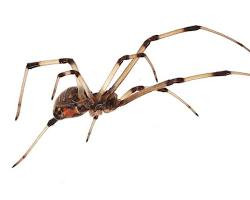
The Brown Widow Spider (Latrodectus geometricus) is a venomous spider closely related to the Black Widow Spider. Although it belongs to the same genus, its venom is generally considered less potent. Brown widows are increasingly common in warm regions and urban environments throughout the southern United States and many tropical areas worldwide.
Unlike many aggressive pest species, brown widow spiders are shy and reclusive. They prefer protected outdoor hiding locations and rarely bite humans unless directly disturbed or trapped against the skin. Even so, they are considered medically important spiders because their venom can produce painful symptoms.
Quick Facts
- Family: Theridiidae
- Scientific Name: Latrodectus geometricus
- Common Habitat: Outdoor structures, fences, garages, patio furniture
- Diet: Insects and small arthropods
- Status: Venomous but rarely dangerous
- Main Defense: Venom and tangled web trapping
Identification
Brown widow spiders are generally tan, gray, or light brown with mottled patterns across the abdomen and legs. Unlike the glossy black appearance of black widow spiders, brown widows often display:
- Light brown or gray coloration
- Dark banding on the legs
- Mottled or geometric body patterns
- An orange or yellow-orange hourglass marking underneath the abdomen
Adult females are significantly larger than males and are the spiders most commonly encountered around homes and outdoor furniture.
Their legs are long and slender, and the abdomen appears bulbous like other widow spiders.
One of the easiest ways to identify a brown widow infestation is through the spider’s egg sacs.
Brown widow egg sacs are highly distinctive because they appear:
- Spiky
- Tufted
- Covered in small projections
- Different from the smooth sacs of black widows
This unique egg sac appearance is often the quickest identification clue for homeowners.
Distribution and Habitat
Brown widow spiders thrive in warm climates and urban environments.
In the United States they are especially common in:
- Florida
- Texas
- California
- Arizona
- Louisiana
- Georgia
- Other southern coastal states
The species is believed to have spread widely through transportation and commerce.
Brown widows prefer protected outdoor environments where they can build webs safely away from disturbances.
Common hiding locations include:
- Outdoor furniture
- Mailboxes
- Garages
- Storage sheds
- Fence corners
- Flower pots
- Playground equipment
- Patio furniture
- Under eaves and railings
Unlike some other spiders, brown widows adapt very well to human-made structures.
Life Cycle
The brown widow spider undergoes several developmental stages:
- Egg
- Spiderling
- Juvenile
- Adult
Females produce multiple egg sacs during their lifetime.
Each sac may contain dozens or even hundreds of developing spiderlings.
After hatching, young spiders disperse by crawling or ballooning on silk strands carried by air currents.
Juveniles molt repeatedly as they grow into adults.
Females generally live longer than males and remain stationary within protected web locations.
Behavior
Brown widow spiders are nocturnal and typically remain hidden during the daytime.
At night they become more active within their webs searching for trapped prey.
Their webs are:
- Irregular
- Tangled
- Messy-looking
- Sticky for prey capture
Prey commonly includes:
- Flies
- Mosquitoes
- Roaches
- Ants
- Moths
- Small arthropods
Brown widows are generally defensive rather than aggressive.
When disturbed, they often:
- Retreat into hiding
- Drop from the web
- Remain motionless
- Avoid confrontation
Bites usually occur only when the spider is accidentally pressed against skin.
Pest Status
Brown widow spiders are considered medically important due to their venom, though bites are usually less severe than those from black widows.
Typical bite symptoms may include:
- Pain at the bite site
- Redness and swelling
- Muscle discomfort
- Mild cramping
- Nausea in some cases
Serious reactions are uncommon but may occur in sensitive individuals.
Because the spiders help reduce insect populations, they can also provide limited natural pest control benefits outdoors.
Signs of Infestation
Common indicators of brown widow activity include:
- Tangled irregular webs
- Spiky egg sacs
- Spiders beneath outdoor furniture
- Webs in garages or sheds
- Spider activity around stored items
Infestations are often concentrated around protected exterior structures.
Prevention
Reducing hiding places is one of the best prevention strategies.
Helpful prevention methods include:
- Reduce clutter around buildings
- Wear gloves when handling stored equipment
- Inspect outdoor furniture regularly
- Seal cracks and gaps around structures
- Remove unused containers and debris
- Limit insect populations that serve as prey
Keeping garages and storage areas organized greatly reduces suitable harborage.
Control
Brown widow control generally focuses on physical removal and habitat modification.
Effective methods may include:
- Removing webs and egg sacs
- Vacuuming spiders from structures
- Reducing outdoor clutter
- Using targeted residual insecticides when necessary
- Professional pest control for large infestations
Because the spiders prefer hidden areas, inspections around outdoor furniture and storage areas are especially important.
Interesting Facts
- Brown widows are closely related to black widow spiders.
- Their egg sacs are covered with tiny spike-like projections.
- The species has spread rapidly through many warm urban areas.
- Brown widows are less aggressive than many people assume.
- They often outcompete black widows in some urban habitats.
- Their tangled webs are designed to trap crawling insects.