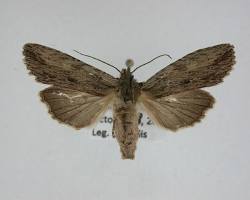
The Black-marked Pinion Moth is a nocturnal moth species recognized for its muted gray coloration and dark linear markings across the wings. Like many woodland moths, this species relies heavily on camouflage to blend into tree bark, branches, and forest debris during the daytime. Although the moth is relatively common in wooded habitats, it often goes unnoticed because of its excellent natural camouflage and nighttime activity patterns.
The Black-marked Pinion Moth belongs to the order Lepidoptera, which includes both butterflies and moths. Adults are primarily active after sunset and are commonly attracted to porch lights, streetlights, and illuminated windows. Caterpillars feed on foliage from various trees and shrubs, although feeding damage is usually minor and rarely causes concern in residential or forested environments.
This species is generally considered harmless and is viewed as part of the natural nighttime insect community found throughout North America. Like many moths, it also serves as an important food source for birds, bats, spiders, and predatory insects.
The species belongs to the larger group of moths, many of which are beneficial pollinators and essential components of forest ecosystems.
Quick Facts
- Order: Lepidoptera
- Habitat: Forests, suburban landscapes, woodland edges
- Diet: Tree and shrub foliage (larvae)
- Activity Period: Nocturnal
- Status: Minor or non-pest moth species
- Wingspan: Approximately 1–1.5 inches
Identification
The Black-marked Pinion Moth is characterized by its subdued coloration and narrow dark wing markings.
Adults typically display:
- Gray or gray-brown forewings
- Thin black streaks or lines across the wings
- Subtle mottled patterns
- A slender body structure
- Scaled wings typical of moth species
The dark markings help break up the outline of the moth when resting against:
- Tree bark
- Wood surfaces
- Forest debris
- Branches and trunks
Adults generally have:
- A wingspan between 1 and 1.5 inches
When resting, the moth typically folds its wings flat against the body, increasing its camouflage effectiveness.
Like many nocturnal moths, adults possess:
- Sensitive antennae
- Large eyes adapted for nighttime activity
- Hair-like body scales for insulation
Distribution and Habitat
The Black-marked Pinion Moth occurs throughout large portions of North America.
It is most commonly found in:
- Deciduous forests
- Mixed woodlands
- Suburban tree-lined neighborhoods
- Gardens with mature vegetation
- Woodland edges
- Parks and natural areas
The species thrives in areas where:
- Trees and shrubs are abundant
- Leaf litter provides shelter
- Natural vegetation remains undisturbed
- Host plants are available for caterpillars
Adults are commonly attracted to:
- Outdoor lights
- Porch lighting
- Campground lights
- Streetlights
The moth is primarily active during:
- Warm evenings
- Humid nights
- Late spring through early fall
Life Cycle
Like other moth species, the Black-marked Pinion Moth undergoes complete metamorphosis.
The four developmental stages include:
- Egg
- Caterpillar (larva)
- Pupa
- Adult moth
Female moths lay eggs on host plants suitable for larval feeding.
After hatching, caterpillars begin feeding on:
- Leaves of trees
- Shrub foliage
- Native woodland plants
Larvae molt multiple times before pupating in protected locations such as:
- Leaf litter
- Soil debris
- Bark crevices
- Vegetation near the ground
Adult moths emerge after pupation and begin mating activities during nighttime hours.
Behavior
The Black-marked Pinion Moth is primarily nocturnal.
Adults spend daylight hours hidden on:
- Tree trunks
- Wooden surfaces
- Forest debris
- Branches and bark
Their camouflage helps reduce predation from:
- Birds
- Small mammals
- Predatory insects
- Reptiles
Adults become active after sunset and may:
- Search for mates
- Visit lights
- Feed on nectar or plant fluids
- Move between wooded habitats
Caterpillars contribute to forest ecosystems by:
- Recycling plant material
- Supporting food webs
- Providing prey for predators
Pest Status
The Black-marked Pinion Moth is not considered a significant pest species.
Reasons include:
- Low population densities
- Minor feeding damage
- Natural predator regulation
- Limited impact on ornamental plants
Although caterpillars feed on leaves, damage is generally:
- Temporary
- Cosmetic
- Limited in scope
Healthy trees and shrubs can easily tolerate the feeding activity associated with this species.
Prevention
Prevention measures are rarely necessary.
If caterpillar feeding becomes noticeable:
- Maintain healthy plant populations.
- Encourage birds and beneficial insects.
- Inspect foliage periodically.
- Reduce unnecessary outdoor lighting if desired.
Healthy ecosystems naturally help control moth populations through predation and environmental pressures.
Control
Control is rarely required for this species.
If management becomes necessary, options may include:
- Manual caterpillar removal
- Pruning heavily affected foliage
- Encouraging natural predators
- Using biological insecticides when appropriate
Broad-spectrum insecticides are generally discouraged because they may harm:
- Pollinators
- Butterflies
- Beneficial insects
- Native moth populations
Interesting Facts
- The moth’s dark wing streaks help it blend into bark textures.
- Adults are commonly attracted to artificial lighting.
- Moths are among the most diverse insect groups worldwide.
- The species contributes to nighttime pollination.
- Caterpillars serve as food for birds and predatory insects.
- The moth’s muted coloration provides excellent daytime camouflage.