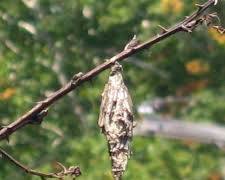
Overview
The Banded Tussock Moth is a hairy caterpillar-producing moth belonging to the family Erebidae. Like many tussock moth species, the larvae are highly recognizable because of their dense tufts of hair, colorful markings, and unusual body structures. These caterpillars are commonly found feeding on trees, shrubs, and ornamental plants throughout North America.
Tussock moth caterpillars are considered occasional defoliators because large populations can strip leaves from trees and shrubs during outbreak years. While healthy trees usually recover from moderate feeding, repeated defoliation may weaken stressed plants and increase susceptibility to disease, drought, or secondary insect infestations.
In addition to plant damage, many tussock moth caterpillars possess irritating hairs that can cause skin irritation, itching, or mild allergic reactions in sensitive individuals. Because of their colorful appearance, children and pets are often tempted to handle them, which may result in contact dermatitis.
Although some species become nuisance pests, tussock moths are also important components of forest ecosystems. Their caterpillars serve as food for birds, predatory insects, spiders, and parasitic wasps.
Quick Facts
- Family: Erebidae
- Order: Lepidoptera
- Common Name: Banded Tussock Moth
- Habitat: Forests, gardens, shrubs, ornamental landscapes
- Diet: Leaves of trees and shrubs
- Status: Occasional defoliating pest
- Defensive Feature: Irritating hairs and tufts
- Activity Period: Spring through late summer
Taxonomy and Classification
- Kingdom: Animalia
- Phylum: Arthropoda
- Class: Insecta
- Order: Lepidoptera
- Family: Erebidae
Banded tussock moths belong to a diverse group of hairy caterpillar-producing moths commonly known as tussock moths. Many species were formerly placed within the family Lymantriidae but are now classified under Erebidae.
They are closely related to other hairy caterpillars and forest moth species, including:
The term “tussock” refers to the distinctive tufts or clumps of hair located along the caterpillar’s body.
Identification
The caterpillars of banded tussock moths are the most recognizable stage of the insect.
Key identifying characteristics include:
- Dense tufts of hair covering the body
- Bright or contrasting banded coloration
- Long hair pencils projecting from the front or rear
- Soft-looking but potentially irritating hairs
- Slow crawling movement
Depending on the species, coloration may include:
- Yellow
- Black
- White
- Orange
- Brown
- Red
Many species display distinctive dorsal tussocks arranged in rows along the back.
The adult moths are generally much less conspicuous than the caterpillars.
Adult characteristics may include:
- Small to medium size
- Gray or brown wings
- Patterned wing markings
- Fuzzy thorax
- Nocturnal behavior
Female moths of some species may be poor fliers or entirely wingless.
Distribution and Habitat
Banded tussock moth species occur across much of North America and are especially common in:
- Forests
- Woodlands
- Urban landscapes
- Parks
- Gardens
- Shrublands
They thrive in areas containing abundant deciduous trees and shrubs.
Host plants vary depending on the species but commonly include:
- Oak
- Maple
- Birch
- Willow
- Elm
- Fruit trees
- Ornamental shrubs
Caterpillars are usually most active during spring and summer when foliage is abundant.
Life Cycle
Banded tussock moths undergo complete metamorphosis.
Egg Stage
Adult females lay clusters of eggs on bark, leaves, branches, or protected surfaces.
Egg masses are often covered with hairs from the female’s body for protection.
Larval Stage
The caterpillar stage is the primary feeding and damaging phase.
After hatching, larvae begin consuming foliage immediately.
As they grow, the caterpillars molt several times before reaching maturity.
The larval stage may last:
- Several weeks to several months depending on climate and species
Pupal Stage
Mature caterpillars spin cocoons in:
- Leaf litter
- Tree bark crevices
- Branches
- Protected vegetation
The pupal stage allows transformation into the adult moth.
Adult Stage
Adults emerge to mate and reproduce.
Most adult tussock moths:
- Are nocturnal
- Are attracted to lights
- Live only a short time
- Focus mainly on reproduction
Behavior and Feeding
Banded tussock caterpillars are active foliage feeders.
Using chewing mouthparts, they consume:
- Leaves
- Tender shoots
- New growth
- Occasionally flower buds
Young larvae often feed in groups, while older caterpillars may become more solitary.
When populations are high, caterpillars can:
- Defoliate branches
- Skeletonize leaves
- Reduce tree vigor
- Create visible feeding damage
Their hairs serve as protection against predators.
When threatened, caterpillars may:
- Raise the front of the body
- Remain motionless
- Release irritating hairs
Plant Damage
Damage caused by banded tussock moths varies depending on population size.
Common symptoms include:
- Chewed leaves
- Defoliation
- Bare branches
- Reduced growth
- Stress on young trees
Healthy mature trees often recover from moderate feeding.
However, repeated outbreaks may:
- Weaken trees
- Reduce resistance to disease
- Increase drought stress
- Invite secondary pests
Young ornamental trees and shrubs are especially vulnerable.
Human Interaction
Banded tussock moth caterpillars are not aggressive, but their hairs can cause irritation.
Possible reactions include:
- Skin rash
- Redness
- Itching
- Mild allergic reactions
Sensitive individuals may experience stronger reactions after direct contact.
For this reason, caterpillars should not be handled with bare hands.
Pets and children are particularly likely to touch the insects due to their colorful appearance.
Natural Predators
Many predators naturally help control tussock moth populations.
These include:
- Birds
- Spiders
- Parasitic wasps
- Ground beetles
- Predatory insects
Natural diseases and fungal infections also help suppress outbreaks.
Prevention and Monitoring
Monitoring trees during spring and early summer helps detect infestations early.
Signs of activity include:
- Visible caterpillars
- Chewed leaves
- Egg masses
- Silken cocoons
Preventive strategies include:
- Maintaining healthy trees
- Reducing plant stress
- Inspecting ornamental plants regularly
- Encouraging natural predators
Control Methods
Most infestations do not require aggressive treatment.
Mechanical Control
- Hand-remove caterpillars
- Prune heavily infested branches
- Remove egg masses during winter
Biological Control
Bacillus thuringiensis (Bt) is commonly used against young caterpillars.
This biological insecticide specifically targets caterpillars while minimizing harm to beneficial insects.
Chemical Control
In severe outbreaks, insecticides may be applied to ornamental or high-value trees.
Treatment is most effective against:
- Young larvae before heavy feeding occurs
Ecological Importance
Despite their occasional pest status, banded tussock moths play important ecological roles.
They contribute to:
- Forest food webs
- Predator nutrition
- Biodiversity
- Nutrient cycling
Their caterpillars serve as prey for many insectivorous animals.
Interesting Facts
- Tussock moth caterpillars are among the hairiest caterpillars in North America.
- Some species have defensive hairs that can irritate human skin.
- Female moths of certain species are flightless.
- Outbreaks may occur cyclically every several years.
- The bright coloration of many caterpillars warns predators of potential irritation.
Conclusion
The Banded Tussock Moth is a distinctive hairy caterpillar-producing moth commonly found in forests, gardens, and ornamental landscapes throughout North America. Although most populations remain harmless, outbreaks can lead to significant defoliation of trees and shrubs. Their irritating hairs and unusual appearance make them highly noticeable, while their ecological role as prey and foliage feeders contributes to forest biodiversity. Monitoring, biological controls, and maintaining healthy trees are the best approaches for managing these occasional defoliators.