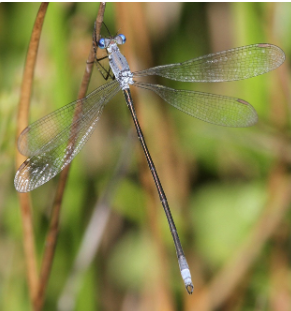
Azure Spreadwing (Lestes dryas) is a species of damselfly in the family Lestidae, commonly known as spreadwings. It is widely distributed across North America, Europe, and parts of Asia, and is typically associated with temporary wetlands, ponds, and marshy habitats. This species is notable for its habit of holding its wings partially open at rest, unlike most damselflies.
The Azure Spreadwing is a beneficial predatory insect that plays an important role in controlling mosquito and small insect populations. It is not considered a pest and is an indicator of healthy wetland ecosystems.
Taxonomy and Classification
- Common Name: Azure Spreadwing
- Scientific Name: Lestes dryas
- Order: Odonata
- Family: Lestidae
- Type: Damselfly (predator)
The family Lestidae includes damselflies known for their spread-wing resting posture and association with still or temporary water bodies.
Identification and Physical Description
The Azure Spreadwing is a slender damselfly, typically measuring 1.25 to 1.75 inches in length. It has a metallic appearance and a distinctive resting posture.
Key identifying features include:
- Metallic green or bronze body
- Blue pruinescence (powdery coating) on mature males
- Wings held partially open at rest
- Long, slender abdomen
Females are generally less brightly colored, with more subdued green or brown tones.
Nymphs are aquatic and adapted for life in still or temporary water bodies.
Life Cycle
The Azure Spreadwing undergoes incomplete metamorphosis, progressing through egg, nymph, and adult stages.
Females lay eggs in plant material, often in damp or drying vegetation near water bodies. Eggs can withstand dry conditions and may overwinter.
Nymphs develop in water, feeding on small aquatic organisms. Development time varies depending on environmental conditions.
When ready to mature, nymphs emerge from the water and molt into adults.
Adults are typically active during summer months.
Habitat and Distribution
The Azure Spreadwing is widely distributed across temperate regions of the Northern Hemisphere. It is commonly found in:
- Temporary ponds and wetlands
- Marshes and bogs
- Shallow lakes and slow-moving water
- Grasslands near water sources
It is particularly well adapted to habitats that may dry out seasonally.
Behavior and Ecology
Azure Spreadwings are active during the day and are often seen perching on vegetation near water. Their spread-wing posture distinguishes them from other damselflies.
Both nymphs and adults are predators, feeding on a variety of small insects. This makes them effective at controlling mosquito populations.
Their ability to lay drought-resistant eggs allows them to survive in temporary habitats where other species may not thrive.
They are also an important part of the food web, serving as prey for birds, fish, and other animals.
Diet
The diet of the Azure Spreadwing varies by life stage:
- Nymphs: Aquatic insects, larvae, and small invertebrates
- Adults: Mosquitoes, flies, and other small flying insects
This feeding behavior contributes to natural pest control and ecosystem balance.
Benefits and Importance
The Azure Spreadwing provides several ecological benefits:
- Control of mosquito populations
- Support of wetland ecosystem health
- Contribution to biodiversity
Its presence is often an indicator of functional wetland habitats.
Human Interaction and Risks
The Azure Spreadwing is harmless to humans. It does not bite or sting and poses no health risks.
It is often appreciated for its unique behavior and ecological value.
Management and Conservation
Conservation efforts focus on protecting wetland habitats and maintaining water quality:
- Preserve wetlands and temporary water bodies
- Reduce pollution and runoff
- Maintain vegetation near water
- Avoid excessive pesticide use
These measures support healthy populations of damselflies and other aquatic species.
Prevention
No prevention is necessary, as the Azure Spreadwing is beneficial.
Encouraging natural habitats supports its populations.
Related Articles
Conclusion
The Azure Spreadwing is a resilient and ecologically important damselfly that thrives in temporary wetland environments. Its ability to control insect populations and adapt to changing conditions makes it a valuable component of aquatic ecosystems.
By preserving wetland habitats and maintaining environmental quality, this species can continue to contribute to biodiversity and natural pest control.