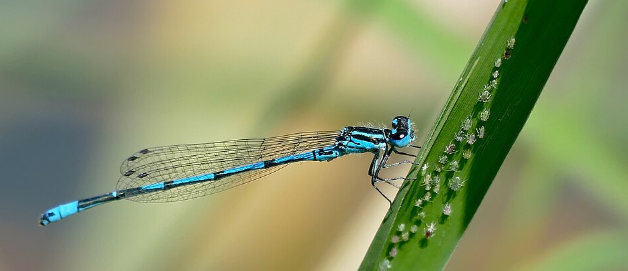
p>Azure Damselfly (Coenagrion puella) is a small species of damselfly in the family Coenagrionidae, commonly known as narrow-winged damselflies. Native to Europe and parts of western Asia, it is one of the most recognizable damselfly species due to its bright blue coloration. It is commonly found near freshwater habitats and plays an important role as a beneficial predator of small insects.
The Azure Damselfly is not a pest and is valued for its contribution to controlling insect populations, including mosquitoes.
Taxonomy and Classification
- Common Name: Azure Damselfly
- Scientific Name: Coenagrion puella
- Order: Odonata
- Family: Coenagrionidae
- Type: Damselfly (predator)
The family Coenagrionidae includes many small, brightly colored damselflies commonly found around still or slow-moving water.
Identification and Physical Description
The Azure Damselfly is a slender insect, typically measuring 1 to 1.5 inches in length. It is easily identified by its vivid coloration.
Key identifying features include:
- Bright blue and black banded abdomen in males
- More subdued green or brown coloration in females
- Thin, delicate wings held together above the body when at rest
- Slender, elongated body
The patterning on the abdomen is often used to distinguish it from similar species.
Nymphs are aquatic and have robust bodies adapted for underwater life.
Life Cycle
The Azure Damselfly undergoes incomplete metamorphosis, progressing through egg, nymph, and adult stages.
Females lay eggs in aquatic vegetation or directly into water. After hatching, nymphs live underwater, where they are active predators.
The nymph stage may last several months to over a year, depending on environmental conditions.
When ready to mature, the nymph emerges from the water and molts into an adult.
Adults are typically active during spring and summer.
Habitat and Distribution
The Azure Damselfly is widely distributed across Europe and parts of Asia. It is commonly found in:
- Ponds and lakes
- Canals and slow-moving streams
- Wetlands and marshes
- Garden water features
It prefers habitats with abundant vegetation and calm water.
Behavior and Ecology
Azure Damselflies are active during the day and are often seen flying low over water or resting on vegetation.
Males are territorial and may defend areas near water where females are likely to lay eggs.
Both nymphs and adults are predators, contributing to the control of insect populations in aquatic and terrestrial environments.
They also serve as prey for fish, birds, and other wildlife.
Diet
The diet of the Azure Damselfly varies by life stage:
- Nymphs: Aquatic insects, larvae, and small invertebrates
- Adults: Mosquitoes, flies, and other small flying insects
This feeding behavior makes them effective natural pest control agents.
Benefits and Importance
The Azure Damselfly provides several ecological benefits:
- Reduction of mosquito populations
- Support of aquatic ecosystem health
- Contribution to biodiversity
Its presence is often an indicator of clean and healthy water.
Human Interaction and Risks
The Azure Damselfly is harmless to humans. It does not bite or sting and poses no health risks.
It is often appreciated for its delicate appearance and ecological role.
Management and Conservation
Conservation efforts focus on maintaining freshwater habitats and water quality:
- Protect ponds and wetlands
- Reduce water pollution
- Maintain aquatic vegetation
- Avoid pesticide runoff
These practices help sustain populations of damselflies and other aquatic organisms.
Prevention
No prevention is necessary, as the Azure Damselfly is beneficial.
Encouraging clean water environments supports its populations.
Related Articles
Conclusion
The Azure Damselfly is a visually striking and ecologically important insect that contributes to insect population control and aquatic ecosystem health. Its presence is a positive indicator of environmental quality.
By preserving freshwater habitats and minimizing pollution, this species can continue to thrive and support biodiversity.