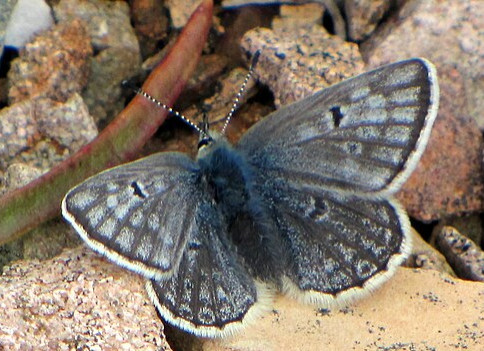
Arctic Blue Butterfly (Plebejus aquilo) is a small species of butterfly in the family Lycaenidae, commonly known as the blues. It is a cold-adapted species found in arctic and subarctic regions of North America, Europe, and Asia. This butterfly is well known for its resilience in harsh climates and its association with tundra ecosystems.
The Arctic Blue Butterfly is a beneficial pollinator and an important component of fragile northern ecosystems. It is not considered a pest and plays a role in maintaining biodiversity in extreme environments.
Taxonomy and Classification
- Common Name: Arctic Blue Butterfly
- Scientific Name: Plebejus aquilo
- Order: Lepidoptera
- Family: Lycaenidae
- Type: Blue butterfly (pollinator)
The family Lycaenidae includes small butterflies often characterized by bright coloration and complex ecological relationships, including associations with ants.
Identification and Physical Description
The Arctic Blue Butterfly is small, with a wingspan typically ranging from 0.75 to 1.25 inches. Despite its size, it is visually striking.
Key identifying features include:
- Males: Bright blue upper wings with narrow dark borders
- Females: Brown to grayish wings with blue scaling and orange spots
- Underside: Pale gray with black spots and orange markings
The coloration provides both visual appeal and camouflage when resting.
Larvae are small and green, blending into their host plants and surrounding vegetation.
Life Cycle
The Arctic Blue Butterfly undergoes complete metamorphosis, progressing through egg, larva, pupa (chrysalis), and adult stages.
Females lay eggs on or near host plants. After hatching, larvae feed on the plant and grow through several instars.
In cold climates, development may be slow, and the species may overwinter in the larval stage. Pupation occurs in sheltered locations, and adults emerge during the short summer season.
Typically, there is one generation per year, reflecting the limited growing season in its habitat.
Host Plants
The larvae of the Arctic Blue Butterfly feed on plants adapted to cold environments. Common host plants include:
- Legumes such as wild vetches (Vicia spp.)
- Other low-growing tundra vegetation
These plants provide the necessary nutrients for larval development in harsh climates.
Habitat and Distribution
The Arctic Blue Butterfly is found in northern regions of the Northern Hemisphere. In North America, it is primarily associated with:
- Arctic tundra
- Alpine meadows
- Subarctic environments
- Cold, open landscapes
It thrives in areas with low vegetation and extreme seasonal conditions.
Behavior and Ecology
Adults are active during the brief summer months and are often seen flying close to the ground. They are adapted to cooler temperatures and may bask in sunlight to regulate body heat.
The species may exhibit interactions with ants, a common trait among lycaenid butterflies, where larvae produce substances that attract and benefit ants in exchange for protection.
As pollinators, adults visit flowers for nectar, contributing to plant reproduction in their ecosystems.
They are also part of the food web, serving as prey for birds and other predators.
Diet
The diet of the Arctic Blue Butterfly varies by life stage:
- Adults: Nectar from tundra flowers
- Larvae: Leaves of host plants
This feeding behavior supports both plant and insect life cycles.
Benefits and Importance
The Arctic Blue Butterfly provides several ecological benefits:
- Pollination of cold-region plants
- Support of biodiversity in fragile ecosystems
- Contribution to ecological balance
Its presence is often an indicator of a healthy tundra environment.
Human Interaction and Risks
This species is harmless to humans. It does not bite or sting and is not considered a pest.
It is primarily of interest to scientists and nature enthusiasts studying arctic ecosystems.
Management and Conservation
Conservation efforts focus on protecting sensitive habitats and mitigating climate change impacts.
- Preserve tundra ecosystems: Limit environmental disturbance.
- Protect host plants: Maintain native vegetation.
- Reduce climate impacts: Support environmental conservation efforts.
- Avoid pesticide use: Protect insect populations.
These measures are critical for the survival of cold-adapted species.
Prevention
No prevention is necessary, as the Arctic Blue Butterfly is beneficial.
Encouraging conservation efforts helps ensure its continued survival.
Related Articles
Conclusion
The Arctic Blue Butterfly is a resilient and ecologically important species adapted to some of the harshest environments on Earth. Its role as a pollinator and its contribution to biodiversity make it a vital component of arctic ecosystems.
Protecting its habitat ensures the continued health of these fragile environments and the species that depend on them.