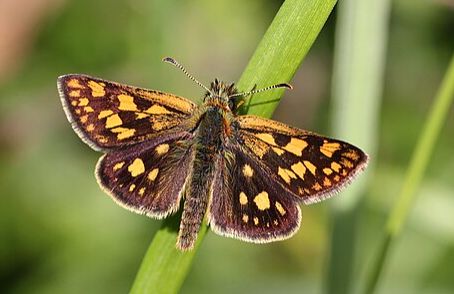
Arctic Skipper (Carterocephalus palaemon) is a small butterfly in the family Hesperiidae, commonly known as skippers. This species is widely distributed across the Northern Hemisphere, including parts of North America, Europe, and Asia. It is well adapted to cooler climates and is commonly found in woodland edges, clearings, and moist grassy habitats.
The Arctic Skipper is a beneficial pollinator and plays an important role in supporting plant reproduction and biodiversity. It is not considered a pest and is valued as part of healthy natural ecosystems.
Taxonomy and Classification
- Common Name: Arctic Skipper
- Scientific Name: Carterocephalus palaemon
- Order: Lepidoptera
- Family: Hesperiidae
- Type: Skipper butterfly (pollinator)
The family Hesperiidae includes butterflies known for their rapid, darting flight and robust bodies compared to other butterfly groups.
Identification and Physical Description
The Arctic Skipper is a small butterfly, with a wingspan typically ranging from 1 to 1.5 inches. It has a stocky body and relatively small wings compared to other butterflies.
Key identifying features include:
- Orange-brown wings with dark brown borders
- Distinct pale or yellowish spots arranged in rows on the wings
- Stout body typical of skipper butterflies
The underside of the wings is usually lighter in color, with more muted patterns that provide camouflage when at rest.
Larvae are small, green caterpillars that blend into grassy vegetation.
Life Cycle
The Arctic Skipper undergoes complete metamorphosis, progressing through egg, larva, pupa (chrysalis), and adult stages.
Females lay eggs on host plants, typically grasses. After hatching, larvae feed on the leaves and create shelters by folding or tying leaves together with silk.
Larvae develop through several instars before pupating within their shelters or nearby vegetation.
Adults emerge during late spring or early summer. There is typically one generation per year, especially in cooler regions.
Host Plants
The larvae of the Arctic Skipper primarily feed on grasses. Common host plants include:
- Various woodland grasses
- Sedges and related species
These plants are commonly found in moist, shaded habitats.
Habitat and Distribution
The Arctic Skipper is found across northern regions of North America and other parts of the Northern Hemisphere. It is commonly associated with:
- Woodland edges and clearings
- Moist meadows
- Grassy forest understories
- Cool, temperate environments
Its distribution reflects its preference for cooler climates and suitable host plants.
Behavior and Ecology
Arctic Skippers are active during the day and are known for their fast, darting flight. They often fly low to the ground and may quickly settle on vegetation.
Adults feed on nectar from a variety of flowers, contributing to pollination. They are often seen visiting small wildflowers in their habitats.
Larvae feed on grasses but rarely cause noticeable damage due to their low population densities.
As part of the ecosystem, Arctic Skippers serve as prey for birds and other predators and contribute to biodiversity.
Diet
The diet of the Arctic Skipper varies by life stage:
- Adults: Nectar from flowering plants
- Larvae: Leaves of grasses and sedges
This feeding behavior supports both plant reproduction and insect development.
Benefits and Importance
The Arctic Skipper provides several ecological benefits:
- Pollination of wildflowers
- Support of biodiversity in cool habitats
- Contribution to ecosystem stability
Its presence often indicates a healthy and diverse environment.
Human Interaction and Risks
This species is harmless to humans. It does not bite or sting and is not considered a pest.
It is appreciated by naturalists and butterfly enthusiasts for its unique behavior and appearance.
Management and Conservation
Conservation efforts focus on preserving natural habitats and maintaining plant diversity.
- Protect grassland and woodland habitats
- Encourage native plant growth
- Reduce pesticide use
- Support biodiversity
These practices help sustain populations of Arctic Skippers and other beneficial insects.
Prevention
No prevention is necessary, as the Arctic Skipper is beneficial.
Encouraging its presence supports healthy ecosystems and pollination.
Related Articles
Conclusion
The Arctic Skipper is a small but ecologically important butterfly adapted to cooler climates and grassy habitats. Its role as a pollinator and its contribution to biodiversity make it a valuable part of natural ecosystems.
By preserving habitats and supporting native plants, this species can continue to thrive and contribute to ecological balance.