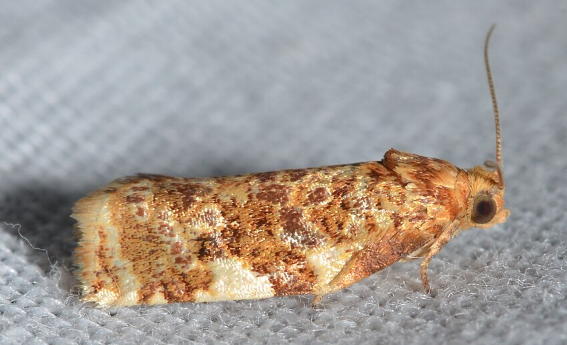
Archips Leafroller (Archips spp.) refers to a group of moths in the family Tortricidae, commonly known as leafroller moths. These insects are widespread across North America and are particularly known for their larval stage, which rolls or folds leaves to create protective shelters while feeding. Several species within the genus Archips are considered agricultural and horticultural pests.
Archips leafrollers can affect a wide variety of plants, including fruit trees, ornamental shrubs, and forest species. While damage is often cosmetic, heavy infestations can impact plant health and crop yields.
Taxonomy and Classification
- Common Name: Archips Leafroller
- Scientific Group: Archips spp.
- Order: Lepidoptera
- Family: Tortricidae
- Type: Leafroller moth (plant pest)
The family Tortricidae includes many economically important pests, particularly species whose larvae feed on leaves and fruits.
Identification and Physical Description
Adult Archips leafroller moths are small to medium-sized, typically with a wingspan of 1/2 to 1 inch. They are usually brown, tan, or gray with subtle banding or mottled patterns that provide camouflage.
Key identifying features include:
- Folded forewings held roof-like over the body at rest
- Muted coloration with irregular markings
- Compact body shape
Larvae are more recognizable and are responsible for most of the damage. They are typically:
- Green or brown caterpillars
- Smooth-bodied with a small head capsule
- Found inside rolled or folded leaves
The rolled leaf structure is a key diagnostic sign of leafroller activity.
Life Cycle
Archips leafrollers undergo complete metamorphosis, progressing through egg, larva, pupa, and adult stages.
Females lay eggs in masses on leaves or bark. After hatching, larvae begin feeding and soon create leaf rolls or shelters using silk.
Larvae feed within these shelters, protected from predators and environmental conditions. After completing development, they pupate within the rolled leaves or nearby debris.
Adults emerge to mate and lay eggs, completing the cycle. Many species have one generation per year, though this can vary by climate.
Host Plants
Archips leafrollers have a broad host range and may feed on numerous plants, including:
- Fruit trees (apple, pear, cherry)
- Shade trees (oak, maple, birch)
- Ornamental shrubs
- Various agricultural crops
This wide host range contributes to their potential as pests in both agricultural and landscape settings.
Damage and Symptoms
Larval feeding causes several characteristic types of damage:
- Rolled or folded leaves held together with silk
- Chewed foliage within leaf shelters
- Scarring on fruit in some species
- Reduced photosynthesis due to leaf damage
While light infestations are mostly cosmetic, heavy infestations can weaken plants and reduce yields.
Habitat and Distribution
Archips leafrollers are widely distributed across North America and are found in:
- Orchards and agricultural fields
- Forests and woodlands
- Gardens and residential landscapes
Their presence is closely tied to host plant availability.
Behavior and Ecology
Larvae are the primary damaging stage and remain concealed within rolled leaves. This behavior provides protection from predators and environmental stress.
Adults are nocturnal and are often attracted to light sources. They are relatively short-lived and focus on reproduction.
Natural enemies, including parasitoid wasps and predatory insects, help regulate leafroller populations in many ecosystems.
Management and Control
Effective management of Archips leafrollers involves an integrated pest management (IPM) approach:
- Monitoring: Inspect plants for rolled leaves and larvae
- Manual removal: Prune and destroy infested leaves
- Biological control: Encourage natural predators and parasitoids
- Bacillus thuringiensis (Bt): Target young larvae when appropriate
- Insecticides: Use selectively if infestations are severe
Early detection is key to minimizing damage.
Prevention
Preventative measures can help reduce the likelihood of infestations:
- Maintain plant health through proper watering and fertilization
- Prune regularly to remove potential egg-laying sites
- Encourage beneficial insects
- Inspect new plants before introduction
These practices help support long-term plant health and resilience.
Related Articles
Conclusion
Archips leafrollers are common insects that can cause noticeable damage to a wide range of plants. While typically not devastating, their feeding behavior can affect plant appearance and productivity.
With proper monitoring and integrated management strategies, infestations can be effectively controlled. Understanding their life cycle and behavior is key to minimizing their impact in both agricultural and residential settings.