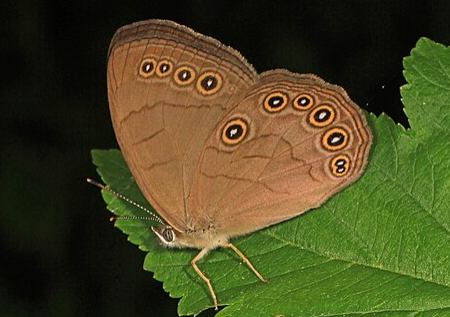
Appalachian Brown Butterfly (Satyrodes appalachia) is a species of butterfly in the family Nymphalidae, subfamily Satyrinae, commonly known as the browns. Native to eastern North America, this species is closely associated with wetland and riparian habitats, including bogs, marshes, and forested stream corridors. It is recognized for its subdued brown coloration and distinctive eye spots on the wings.
The Appalachian Brown Butterfly is considered a beneficial pollinator and an indicator of healthy wetland ecosystems. It is not a pest and plays an important role in supporting biodiversity.
Taxonomy and Classification
- Common Name: Appalachian Brown Butterfly
- Scientific Name: Satyrodes appalachia
- Order: Lepidoptera
- Family: Nymphalidae
- Subfamily: Satyrinae
- Type: Brown butterfly (pollinator)
The subfamily Satyrinae includes butterflies often associated with grasses and shaded habitats. These species typically have earthy coloration and eye spots that help deter predators.
Identification and Physical Description
The Appalachian Brown Butterfly is a medium-sized butterfly, with a wingspan typically ranging from 1.5 to 2.5 inches. Its coloration is generally brown to tan, providing effective camouflage in its natural habitat.
Key identifying features include:
- Brown wings with subtle lighter shading
- Prominent eye spots on the forewings and hindwings
- Rounded wing shape typical of satyr butterflies
The underside of the wings often displays more pronounced eye spots and banding, which help confuse predators when the butterfly is at rest.
Larvae are small, greenish caterpillars that blend into grassy vegetation.
Life Cycle
The Appalachian Brown Butterfly undergoes complete metamorphosis, progressing through egg, larva, pupa (chrysalis), and adult stages.
Females lay eggs on or near host plants, typically grasses and sedges. After hatching, larvae feed on these plants and grow through several instars.
Once fully developed, the caterpillar forms a chrysalis, usually attached to vegetation. After transformation, the adult butterfly emerges.
There are typically one to two generations per year, depending on climate and geographic location.
Host Plants
The larvae of the Appalachian Brown Butterfly primarily feed on grasses and sedges. Common host plants include:
- Sedges (Carex spp.)
- Various wetland grasses
These plants are commonly found in moist, shaded environments.
Habitat and Distribution
The Appalachian Brown Butterfly is found in eastern North America, particularly in regions associated with the Appalachian Mountains and surrounding areas. It is most commonly found in:
- Bogs and marshes
- Wet meadows
- Forested wetlands
- Stream and river edges
It prefers cool, shaded, and moist habitats with abundant vegetation.
Behavior and Ecology
Appalachian Brown Butterflies are active during the day and tend to fly low to the ground. Their flight is often slow and fluttering, staying close to vegetation.
Adults frequently rest on leaves, grasses, or low branches, where their coloration provides effective camouflage.
They are less reliant on nectar than many other butterflies and may feed on sap, decaying fruit, or other organic materials in addition to flower nectar.
As part of the ecosystem, they contribute to pollination and serve as prey for birds and other predators.
Diet
The diet of the Appalachian Brown Butterfly varies by life stage:
- Adults: Nectar, plant sap, and decaying organic material
- Larvae: Grasses and sedges
This feeding behavior supports both plant health and nutrient cycling.
Benefits and Importance
The Appalachian Brown Butterfly provides several ecological benefits:
- Pollination of wetland plants
- Support of biodiversity in sensitive habitats
- Indicator of healthy wetland ecosystems
Its presence often reflects stable and well-preserved environmental conditions.
Human Interaction and Risks
This species is harmless to humans. It does not bite or sting and is not considered a pest.
It is often of interest to naturalists and conservationists due to its habitat specificity.
Management and Conservation
Conservation efforts focus on protecting wetland habitats and maintaining water quality.
- Preserve wetlands: Protect natural habitats from development.
- Maintain water quality: Reduce pollution and runoff.
- Support native vegetation: Encourage growth of host plants.
- Avoid pesticides: Protect sensitive insect populations.
These measures are essential for sustaining populations of this and other wetland species.
Prevention
No prevention is necessary, as the Appalachian Brown Butterfly is beneficial.
Encouraging its presence supports healthy ecosystems and biodiversity.
Related Articles
Conclusion
The Appalachian Brown Butterfly is a subtle yet ecologically important species that thrives in wetland environments. Its presence highlights the importance of preserving natural habitats and maintaining ecological balance.
With no harmful impact on humans and clear environmental benefits, this butterfly is best appreciated as a valuable component of North America’s wetland biodiversity.