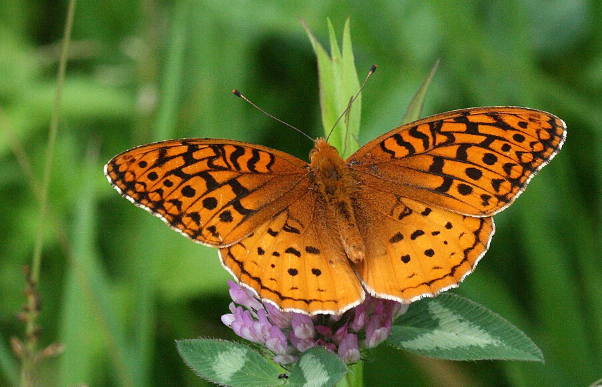
Aphrodite Fritillary Butterfly (Speyeria aphrodite) is a species of butterfly in the family Nymphalidae, commonly known as brush-footed butterflies. Native to North America, this species is found primarily in open habitats such as meadows, prairies, and woodland edges. It is known for its vibrant orange wings marked with black spots and its important role as a pollinator.
The Aphrodite Fritillary Butterfly is considered a beneficial insect and contributes to ecosystem health through pollination and as part of natural food webs.
Taxonomy and Classification
- Common Name: Aphrodite Fritillary Butterfly
- Scientific Name: Speyeria aphrodite
- Order: Lepidoptera
- Family: Nymphalidae
- Type: Fritillary butterfly (pollinator)
The genus Speyeria includes several fritillary species, many of which are associated with violet plants during their larval stage.
Identification and Physical Description
The Aphrodite Fritillary Butterfly is a medium to large butterfly, with a wingspan typically ranging from 2.5 to 3.5 inches. Its wings are bright orange with black markings.
Key identifying features include:
- Orange upper wings with bold black spots
- Silver spots on the underside of the hindwings
- Dark marginal bands along the wing edges
The underside of the wings is more subdued in color, often featuring brownish tones with reflective silver markings that provide camouflage.
Larvae are dark-colored caterpillars with spiny projections. They are typically well camouflaged among leaf litter.
Life Cycle
The Aphrodite Fritillary Butterfly undergoes complete metamorphosis, progressing through egg, larva, pupa (chrysalis), and adult stages.
Females lay eggs near host plants, usually violets. After hatching, larvae may enter a dormant phase before feeding begins.
Larvae feed on violet leaves and grow through several instars. Once fully developed, they form a chrysalis and undergo transformation into adults.
Adults emerge during the summer months. Typically, there is one generation per year.
Host Plants
The larvae of the Aphrodite Fritillary Butterfly rely primarily on plants in the violet genus (Viola). Common host plants include:
- Wild violets
- Woodland violet species
- Prairie violets
The availability of these plants is essential for the survival of the species.
Habitat and Distribution
The Aphrodite Fritillary Butterfly is found across eastern and central North America. It is commonly associated with:
- Meadows and prairies
- Open woodlands
- Grasslands and fields
- Roadsides and natural clearings
It prefers habitats that provide both nectar sources and suitable host plants.
Behavior and Ecology
Adults are active during the day and are often seen flying among flowers in search of nectar. They are strong fliers and may travel across open landscapes.
Their feeding activity contributes to pollination, supporting plant reproduction and biodiversity.
Larvae feed on host plants but typically do not cause significant damage due to their low population densities.
As part of the ecosystem, the Aphrodite Fritillary serves as prey for birds and other predators, contributing to food web dynamics.
Diet
The diet of the Aphrodite Fritillary Butterfly varies by life stage:
- Adults: Nectar from a variety of flowering plants
- Larvae: Leaves of violet plants
This feeding behavior supports both pollination and plant growth cycles.
Benefits and Importance
The Aphrodite Fritillary Butterfly provides several ecological benefits:
- Pollination of wildflowers and native plants
- Support of biodiversity
- Contribution to ecosystem health
Its presence is often an indicator of a healthy and diverse habitat.
Human Interaction and Risks
This species is harmless to humans. It does not bite or sting and is not considered a pest.
It is widely appreciated for its beauty and ecological value.
Management and Conservation
Conservation efforts focus on protecting habitats and supporting host plants.
- Preserve native plants: Maintain violet populations.
- Plant nectar sources: Provide food for adults.
- Reduce pesticide use: Protect butterflies and other beneficial insects.
- Support natural habitats: Encourage biodiversity.
These practices help sustain healthy populations of fritillary butterflies.
Prevention
No prevention is necessary, as the Aphrodite Fritillary Butterfly is beneficial.
Encouraging its presence enhances pollination and ecosystem health.
Related Articles
Conclusion
The Aphrodite Fritillary Butterfly is a striking and beneficial species that contributes to pollination and biodiversity in North American ecosystems. Its reliance on native plants highlights the importance of habitat conservation.
By supporting natural landscapes and reducing environmental stressors, this butterfly can continue to thrive as an important part of ecological communities.