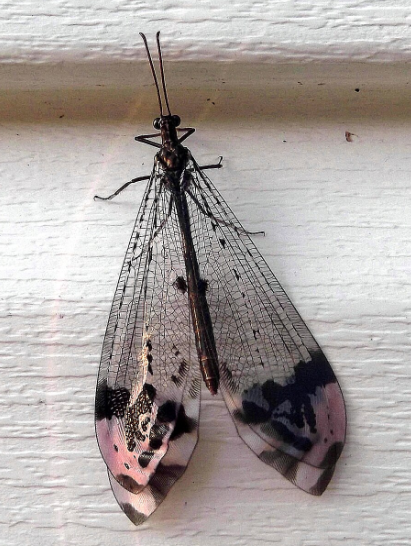
Antlion – Glenarus gratus (Glenarus gratus) is a species of antlion in the family Myrmeleontidae, native to North America. Unlike the more commonly recognized pit-building antlion larvae, this species belongs to a group of non-pit-building antlions. It is typically found in wooded environments, particularly in areas with loose soil, leaf litter, or sheltered microhabitats.
Glenarus gratus is a beneficial predatory insect, contributing to the natural control of small arthropods. It plays an important role in ecosystem balance and is not considered a pest.
Taxonomy and Classification
- Common Name: Antlion (Glenarus gratus)
- Scientific Name: Glenarus gratus
- Order: Neuroptera
- Family: Myrmeleontidae
- Type: Non-pit-building antlion
The genus Glenarus includes species that differ from typical antlions by not constructing pit traps. Instead, they actively hunt prey within their habitat.
Identification and Physical Description
The American species Glenarus gratus has two distinct life stages with differing appearances.
Larvae are robust and somewhat flattened, measuring approximately 1/2 to 1 inch in length. They possess:
- Large, curved mandibles used for grasping prey
- Camouflaged coloration, typically brown or gray
- Broad body adapted for moving through debris
Unlike pit-building antlions, these larvae do not construct traps but instead roam or remain concealed while waiting for prey.
Adults resemble other antlions and are similar in appearance to delicate dragonflies or damselflies. They typically measure 1 to 2 inches in length and have:
- Long, slender bodies
- Transparent, net-veined wings
- Clubbed antennae, distinguishing them from dragonflies
Adults are generally inconspicuous and are often found resting on vegetation.
Life Cycle
Glenarus gratus undergoes complete metamorphosis, progressing through egg, larva, pupa, and adult stages.
Females lay eggs in suitable substrates such as loose soil or leaf litter. After hatching, larvae begin hunting small insects.
The larval stage may last several months to a year, depending on environmental conditions. During this time, larvae grow through multiple molts.
When ready to pupate, the larva constructs a cocoon from soil and debris. After metamorphosis, the adult emerges to reproduce.
Habitat and Distribution
Glenarus gratus is found in parts of eastern and central North America. It is typically associated with:
- Woodlands and forest floors
- Leaf litter and organic debris
- Under logs, bark, or sheltered areas
- Loose, well-drained soil environments
Its habitat preferences differ from pit-building species, favoring more complex ground cover rather than open sandy areas.
Behavior and Ecology
Unlike classic antlion species, larvae of Glenarus gratus do not build pit traps. Instead, they rely on ambush and active hunting strategies.
Larvae may remain partially buried or concealed within leaf litter, waiting for prey to pass nearby. They use their strong mandibles to capture and subdue insects.
Adults are nocturnal or crepuscular and may be attracted to light sources. They are weak fliers and spend much of their time resting.
As predators, both larvae and adults contribute to regulating populations of small insects, including ants and other arthropods.
Diet
The diet of Glenarus gratus varies by life stage:
- Larvae: Small insects such as ants, beetles, and other arthropods
- Adults: Nectar, pollen, or small insects (depending on availability)
Larvae are the primary predatory stage and play a key role in insect population control.
Benefits and Importance
Glenarus gratus provides several ecological benefits:
- Natural control of small insect populations
- Contribution to forest floor ecosystems
- Support of biodiversity
Its predatory behavior helps maintain balance within its habitat.
Human Interaction and Risks
This species is harmless to humans. It does not bite or sting and poses no risk.
It is rarely encountered due to its concealed lifestyle and is often unnoticed in natural environments.
Management and Control
No control measures are necessary, as Glenarus gratus is beneficial.
Its presence indicates a healthy ecosystem with active predator-prey interactions.
Prevention
No prevention is required. Maintaining natural habitats will support populations of this and other beneficial insects.
- Preserve leaf litter and natural ground cover
- Avoid excessive pesticide use
- Encourage biodiversity
These practices promote balanced ecosystems.
Related Articles
Conclusion
Glenarus gratus represents a fascinating variation within the antlion family, showcasing a non-pit-building lifestyle and active predatory behavior. Its presence contributes to ecological balance and biodiversity.
With no threat to humans and clear environmental benefits, this species is best appreciated as a natural and valuable component of forest ecosystems.