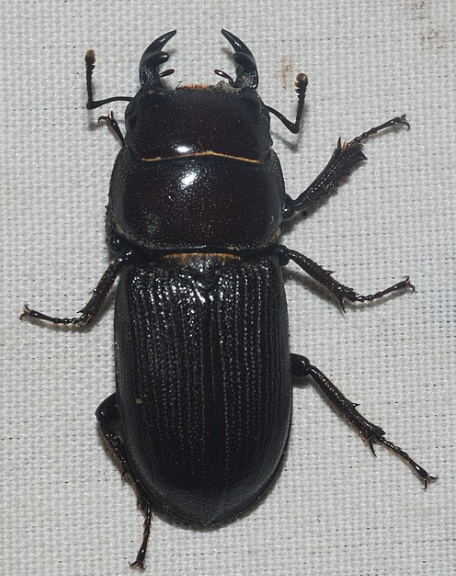
Antelope Beetle (Dendroides canadensis) is a species of beetle in the family Tetratomidae, commonly referred to as polypore fungus beetles. Native to North America, this beetle is most often found in wooded environments where it is associated with decaying wood and bracket fungi. It is named for the distinctive, branched antennae of the male, which resemble the antlers of an antelope.
The Antelope Beetle is not considered a pest. Instead, it is a beneficial decomposer that contributes to the breakdown of wood and fungal material, playing an important role in forest ecosystems.
Taxonomy and Classification
- Common Name: Antelope Beetle
- Scientific Name: Dendroides canadensis
- Order: Coleoptera
- Family: Tetratomidae
- Type: Fungus-associated beetle
The family Tetratomidae includes beetles that are commonly associated with fungi, particularly those growing on decaying wood.
Identification and Physical Description
The Antelope Beetle is medium-sized, typically measuring 10 to 20 mm in length. Its body is elongated and somewhat flattened, with a soft appearance compared to many other beetles.
Key identifying features include:
- Dark brown to black coloration
- Elongated body with smooth wing covers (elytra)
- Highly branched antennae in males, resembling antlers
- Serrated or less elaborate antennae in females
The dramatic antennae of males are the most distinctive characteristic of this species and are used in mate detection.
Life Cycle
The Antelope Beetle undergoes complete metamorphosis, progressing through egg, larva, pupa, and adult stages.
Females lay eggs in or near decaying wood or fungal growth. After hatching, larvae feed on fungi and decomposing organic material.
The larval stage may last several months, during which the larvae contribute to the breakdown of organic matter.
Pupation occurs within the wood or fungal substrate. Adults emerge to mate and continue the cycle.
Habitat and Distribution
The Antelope Beetle is found across eastern North America and is commonly associated with forested habitats. It is typically found in:
- Deciduous forests
- Rotting logs and stumps
- Areas with abundant fungal growth
- Woodland edges and natural areas
Its presence is closely tied to decaying wood and fungi.
Behavior and Ecology
Antelope Beetles are generally nocturnal and may be attracted to light sources. During the day, they remain hidden within wood or under bark.
Larvae play a key role in decomposing wood and fungi, aiding in nutrient cycling within forest ecosystems.
Adults are less active feeders but may still consume fungal material. They are part of the broader community of organisms that break down dead organic matter.
As part of the ecosystem, they serve as prey for birds, small mammals, and other insects.
Diet
The diet of the Antelope Beetle is primarily associated with fungi:
- Larvae: Fungi and decaying organic material
- Adults: Fungal growth and possibly plant matter
This feeding behavior supports the decomposition process in forest environments.
Benefits and Importance
The Antelope Beetle provides important ecological benefits:
- Breakdown of decaying wood
- Decomposition of fungal material
- Contribution to nutrient cycling
- Support of forest ecosystem health
It is an essential part of the natural recycling system in wooded habitats.
Human Interaction and Risks
The Antelope Beetle is harmless to humans. It does not bite, sting, or cause damage to structures.
It is rarely encountered indoors and is generally confined to natural environments.
Management and Control
No management is necessary, as the Antelope Beetle is beneficial and not a pest.
Its presence indicates a healthy ecosystem with active decomposition processes.
Prevention
Prevention is not required. However, removing decaying wood near structures may reduce their presence in landscaped areas if desired.
- Clear rotting logs near buildings
- Maintain yard cleanliness
- Store firewood away from structures
These steps are generally unnecessary unless specific concerns arise.
Related Articles
Conclusion
The Antelope Beetle is a distinctive and ecologically valuable species known for its unique antennae and association with fungi. As a decomposer, it plays a crucial role in maintaining healthy forest ecosystems.
With no impact on human structures and clear environmental benefits, it is best appreciated as a natural and important part of North America’s woodland biodiversity.