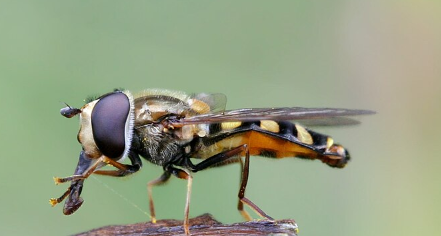
American Hover Fly (family Syrphidae) is a group of beneficial flies commonly found throughout North America. Also known as flower flies or syrphid flies, these insects are recognized for their ability to hover in mid-air and their resemblance to bees or wasps. Despite their appearance, hover flies are harmless and do not sting or bite.
American hover flies play a dual ecological role: adults are important pollinators, while larvae of many species are predators of plant pests, especially aphids. This combination makes them highly valuable in both natural ecosystems and agricultural environments.
Taxonomy and Classification
- Common Name: American Hover Fly
- Scientific Family: Syrphidae
- Order: Diptera
- Type: Pollinator and beneficial predator
The family Syrphidae includes hundreds of species, many of which are widely distributed and commonly encountered in gardens and fields. These flies are closely associated with flowering plants and pest populations.
Identification and Physical Description
American hover flies vary in size but are typically 1/4 to 3/4 inch long. They are often mistaken for bees or wasps due to their coloration and body patterns.
Key identifying features include:
- Yellow and black banding on the abdomen (mimicking stinging insects)
- Single pair of wings (true flies)
- Large compound eyes
- Ability to hover in place while flying
Unlike bees and wasps, hover flies lack stingers and have a more delicate body structure.
Larvae are small, legless, and often green or brown. They have a slug-like appearance and are usually found on plants where prey is abundant.
Life Cycle
American hover flies undergo complete metamorphosis, progressing through egg, larva, pupa, and adult stages.
Females lay eggs near colonies of prey, such as aphids. After hatching, larvae begin feeding immediately, consuming large numbers of pests during their development.
Once fully grown, larvae pupate on plant surfaces or in sheltered areas. Adults emerge after a short pupal stage and begin feeding on nectar and pollen.
Multiple generations may occur each year, especially in warmer climates.
Habitat and Distribution
American hover flies are widely distributed across North America and can be found in a variety of habitats, including:
- Gardens and flower beds
- Fields and meadows
- Agricultural crops
- Urban and suburban landscapes
They are most commonly seen in areas with abundant flowering plants and pest populations.
Behavior and Ecology
Adult hover flies are active during the day and are frequently observed hovering around flowers. They are excellent fliers and can remain stationary in the air while feeding.
Their resemblance to bees and wasps is a form of protective mimicry, deterring predators.
Larvae are voracious predators of soft-bodied insects. A single larva can consume dozens of aphids per day, making them highly effective natural pest control agents.
As part of the ecosystem, hover flies contribute to pollination and help regulate pest populations.
Diet
The diet of American hover flies varies by life stage:
- Adults: Nectar and pollen from flowers
- Larvae: Aphids, small insects, and other soft-bodied pests
This combination of feeding behaviors makes them valuable in both pollination and pest management.
Benefits and Importance
American hover flies provide significant ecological and agricultural benefits:
- Pollination of crops and wild plants
- Natural control of aphids and other pests
- Support of biodiversity and ecosystem health
They are often considered one of the most beneficial insect groups in gardens and farms.
Human Interaction and Risks
American hover flies are completely harmless to humans. They do not sting or bite and are safe to handle.
They may occasionally be mistaken for bees or wasps, but their behavior and lack of aggression quickly distinguish them.
Management and Conservation
Rather than controlling hover flies, efforts should focus on encouraging their presence.
- Plant diverse flowers: Provide nectar sources throughout the growing season.
- Reduce pesticide use: Protect beneficial insect populations.
- Encourage habitat diversity: Maintain a mix of plants and natural areas.
These practices help support healthy hover fly populations.
Prevention
No prevention is necessary, as hover flies are beneficial and not pests.
Encouraging their presence can improve pest control and pollination naturally.
Related Articles
Conclusion
The American Hover Fly is a highly beneficial insect that contributes to both pollination and natural pest control. Its ability to mimic stinging insects while remaining harmless makes it a fascinating and valuable member of the ecosystem.
By supporting hover fly populations through habitat management and reduced pesticide use, gardeners and farmers can enhance sustainability and improve crop health naturally.