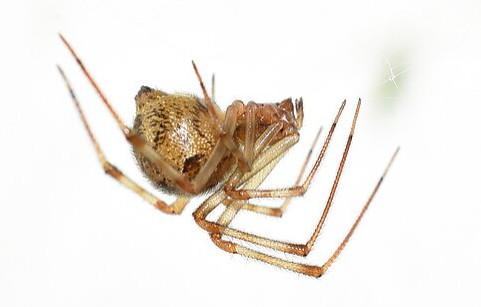
The American House Spider (Parasteatoda tepidariorum) is one of the most common arachnids found in human dwellings throughout North America. A member of the cobweb spider family, this species is widely recognized for its irregular, tangled webs that accumulate in corners, ceilings, basements, garages, and around window frames. Although their presence may trigger concern or “arachnophobia” in homeowners, these spiders are highly beneficial predators that contribute to natural indoor pest control by capturing flies, mosquitoes, ants, and even other spiders.
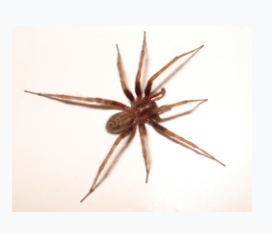
American house spiders are generally shy and non-aggressive. When disturbed, they are far more likely to retreat into hiding or drop from their web than attempt to bite. As a result, they are considered harmless to humans and play a valuable role in maintaining ecological balance within homes by reducing populations of common indoor pests.
Taxonomy and Classification
- Kingdom: Animalia
- Phylum: Arthropoda
- Class: Arachnida
- Order: Araneae
- Family: Theridiidae (Cobweb Spiders)
- Genus: Parasteatoda
- Species: Parasteatoda tepidariorum
Physical Description
The American house spider is relatively small, typically measuring between 4 and 8 millimeters in body length. It is characterized by a rounded, bulbous abdomen and long, slender legs. The coloration varies but usually consists of a mottled blend of gray, brown, tan, and sometimes cream, often marked with darker chevron or zigzag patterns.
Unlike many hunting spiders, this species has poor eyesight and relies heavily on vibrations transmitted through its web to detect prey. Its web is loosely constructed, irregular, and often described as “messy,” which is a defining trait of cobweb spiders.
Web Structure and Identification
The web of the American house spider is one of its most recognizable features. These webs are typically built in undisturbed indoor locations and consist of tangled silk threads without a defined pattern.
A key identifying sign is the presence of pear-shaped egg sacs, which are papery, brown, and suspended within the web. Each sac may contain hundreds of eggs, contributing to the persistence of spider populations in suitable environments.
Behavior and Ecology
American house spiders are sit-and-wait predators. They remain in or near their web, waiting for vibrations that indicate trapped prey. Once an insect becomes entangled, the spider quickly immobilizes it using silk and venom.
Their diet includes:
- Flies
- Mosquitoes
- Ants
- Small beetles
- Other spiders
Because of this feeding behavior, they are considered beneficial members of the predatory insect ecosystem within homes.
If a web no longer produces sufficient prey, the spider will abandon it and construct a new web nearby. This behavior contributes to the buildup of cobwebs often seen in basements, attics, and rarely disturbed spaces.
Distribution and Habitat
This species is widely distributed across North America and has also been introduced to other parts of the world. It thrives in human-made environments and is rarely found far from structures.
Common habitats include:
- Basements and crawl spaces
- Ceiling corners
- Behind furniture
- Window frames and doorways
- Garages and sheds
The spider prefers areas with minimal disturbance and consistent access to insect prey.
Management and Prevention
Management of American house spiders is typically simple and does not require chemical treatments. Since they are beneficial predators, control is often focused on reducing their presence rather than eliminating them entirely.
- Vacuum removal: Use a vacuum to remove spiders, webs, and egg sacs.
- Regular cleaning: Dusting and sweeping prevent web buildup.
- Seal entry points: Reduce insect entry by sealing cracks and gaps around windows and doors.
- Reduce prey: Controlling other insects helps limit spider populations.
In most cases, maintaining cleanliness and limiting insect activity is sufficient to keep populations under control without the need for pesticides.
Physical Description
- Length: 4–8 mm
- Color: Brown or tan
- Body: Rounded abdomen
Behavior and Ecology
These spiders capture flies, mosquitoes, and other small insects in their webs.
Management and Prevention
They are generally harmless and may help control indoor insect populations.
Identification: Safe vs. Dangerous
Because of its brown coloration and frequent presence inside homes, the American House Spider is often mistaken for more dangerous species. However, it is considered harmless to humans. Proper identification is important, especially when distinguishing it from the medically significant Brown Recluse Spider.
The table below highlights key differences to help homeowners quickly identify whether they are dealing with a harmless cobweb spider or a potentially dangerous species.
| Feature | American House Spider (Safe) | Brown Recluse (Dangerous) |
|---|---|---|
| Abdomen Shape | Round and bulbous (like a marble) | Slim and elongated (like a pill) |
| Markings | Mottled “V” or chevron patterns | Distinct dark “violin” shape on the cephalothorax |
| Web Style | Messy, tangled cobwebs in corners | Flat, hidden sheet-like webs in dry, undisturbed areas |
| Legs | Often banded or ringed | Uniform tan or brown with no bands |
If you are unsure about identification, avoid handling spiders directly and consider consulting a local pest control professional for accurate identification and guidance.