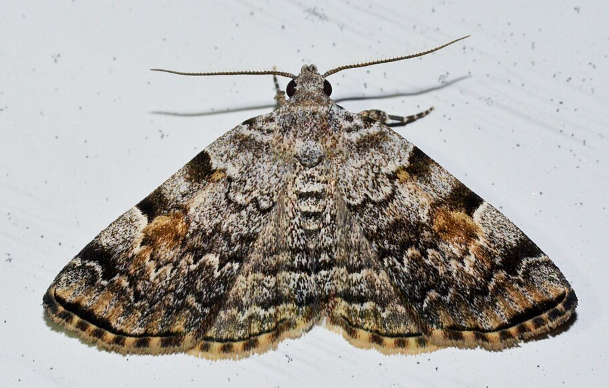
American Idia (Idia americalis), commonly referred to as a litter moth, is a species of moth in the family Erebidae. It is widely distributed across North America and is typically associated with woodland environments, leaf litter, and areas rich in decaying organic material. Unlike many moth species that feed on living plants, the American Idia plays a role in decomposition and nutrient cycling.
This species is generally not considered a pest and is instead an important contributor to ecosystem health due to its role in breaking down organic debris.
Taxonomy and Classification
- Common Name: American Idia (Litter Moth)
- Scientific Name: Idia americalis
- Order: Lepidoptera
- Family: Erebidae
- Type: Detritus-feeding moth
The genus Idia includes moths often associated with leaf litter and decomposing organic matter. These species are sometimes called “litter moths” due to their habitat preferences.
Identification and Physical Description
Adult American Idia moths are small to medium-sized, with a wingspan typically ranging from 1 to 1.5 inches. Their coloration is generally tan, brown, or grayish, often with subtle darker lines or bands across the wings.
The wings are relatively narrow and held flat or slightly tented over the body when at rest. Their muted coloration provides effective camouflage against leaf litter and bark.
Larvae are small caterpillars that are typically brown or gray, blending well into their surroundings. They are not brightly colored and are adapted for a concealed lifestyle within organic debris.
Life Cycle
The American Idia undergoes complete metamorphosis, progressing through egg, larva, pupa, and adult stages.
Females lay eggs in areas rich in organic material, such as leaf litter or decaying plant matter. After hatching, larvae feed on decomposing material rather than living plants.
The larval stage may last several weeks, during which the caterpillars grow and molt. Pupation occurs within the litter or nearby sheltered locations.
Adults emerge to mate and continue the life cycle. Multiple generations may occur each year in favorable conditions.
Diet
Unlike many moth species, American Idia larvae are detritivores, feeding primarily on:
- Decaying leaves
- Organic debris
- Fungal material
- Other decomposing plant matter
Adults may feed on nectar or other organic substances, though their feeding habits are less prominent than those of the larval stage.
Habitat and Distribution
The American Idia is widely distributed across North America and is commonly found in:
- Forests and woodlands
- Leaf litter and forest floors
- Gardens with organic mulch
- Compost and decomposing plant material
It prefers moist, shaded environments where organic material accumulates.
Behavior and Ecology
Adult American Idia moths are primarily nocturnal and are attracted to light sources. During the day, they rest in concealed locations, blending into their surroundings.
Larvae are typically hidden within leaf litter, where they feed and develop. Their cryptic coloration helps them avoid predators.
As decomposers, these moths contribute to the breakdown of organic material, aiding in nutrient recycling and soil health.
They are part of the broader ecosystem, serving as prey for birds, insects, and other animals.
Damage and Economic Importance
The American Idia is not considered a pest and does not typically cause damage to living plants or structures.
Because it feeds on decaying material, it is more accurately classified as a beneficial organism that supports ecosystem processes.
Management and Control
No control measures are necessary for the American Idia, as it poses no threat to plants or human structures.
In fact, its presence can be beneficial, indicating healthy decomposition processes in soil and organic matter.
Prevention
Prevention is not required, as the American Idia is not harmful. However, reducing organic debris may limit its presence if desired.
- Remove excess leaf litter
- Maintain clean garden beds
- Manage compost areas
These steps are generally unnecessary unless aesthetic concerns arise.
Related Articles
Conclusion
The American Idia is a modest but ecologically important species that contributes to the decomposition of organic matter. Unlike many moths that feed on living plants, it supports soil health and nutrient cycling.
Its presence in forests and gardens is a sign of a functioning ecosystem. With no need for control, the American Idia should be appreciated as a beneficial and natural part of its environment.