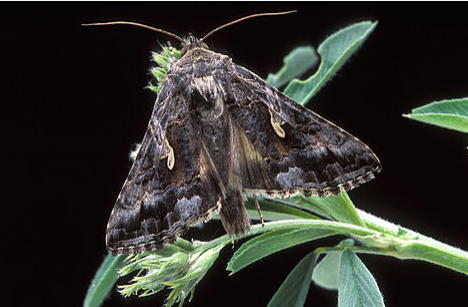
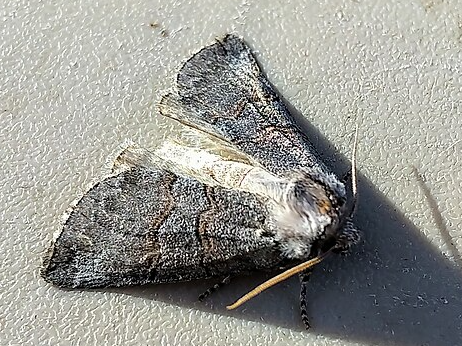
Alfalfa Looper Moth (Autographa californica) is a species of noctuid moth in the family Noctuidae, commonly known as owlet moths. It is widely distributed across North America and is recognized as an important agricultural pest in certain regions. The larval stage, known as the alfalfa looper, feeds on a wide range of crops and plants, including alfalfa, vegetables, and ornamental species.
The name “looper” refers to the distinctive movement of the caterpillar, which arches its body as it moves forward due to the absence of some abdominal prolegs. While the adult moth is relatively inconspicuous, the larvae can cause significant damage when populations are high.
Taxonomy and Classification
- Common Name: Alfalfa Looper Moth
- Scientific Name: Autographa californica
- Order: Lepidoptera
- Family: Noctuidae
- Type: Agricultural pest moth
This species belongs to a group of moths often referred to as loopers or inchworms. It is closely related to other looper species that affect crops, such as cutworms and other foliage-feeding caterpillars.
Identification and Physical Description
Adult Alfalfa Looper Moths are medium-sized, with a wingspan typically ranging from 1.2 to 1.5 inches. Their forewings are mottled gray or brown with distinctive silver or metallic markings, often forming a Y- or figure-eight shape. These markings help distinguish them from other similar moth species.
The hindwings are lighter in color, usually pale gray or off-white, with darker margins.
The larvae are green caterpillars that can grow up to 1 to 1.5 inches long. They have a smooth body and lack several middle prolegs, giving them their characteristic looping motion. A faint white stripe may run along the sides of the body.
Life Cycle
The Alfalfa Looper Moth undergoes complete metamorphosis, progressing through egg, larva, pupa, and adult stages.
Females lay eggs singly on the leaves of host plants. After hatching, larvae begin feeding immediately. The larval stage is the primary feeding phase and can last several weeks.
When mature, larvae spin a thin cocoon on plant surfaces and pupate within it. The pupal stage typically lasts one to two weeks, after which adults emerge.
In warmer regions, multiple generations may occur each year, while cooler climates may see fewer generations.
Host Plants
The Alfalfa Looper is a polyphagous feeder, meaning it feeds on a wide variety of plants. Common host plants include:
- Alfalfa
- Soybeans
- Cotton
- Lettuce
- Cabbage and other leafy vegetables
- Ornamental plants
This broad host range makes it a concern in both agricultural and garden settings.
Damage and Symptoms
Larval feeding results in damage to plant foliage. Common symptoms include:
- Irregular holes in leaves
- Skeletonized foliage
- Defoliation in severe infestations
- Reduced plant vigor and yield
Young larvae may feed on leaf surfaces, while older larvae consume larger portions of leaves. Heavy infestations can lead to significant crop losses.
Habitat and Distribution
The Alfalfa Looper Moth is found throughout much of North America, particularly in regions with agricultural activity. It is commonly encountered in:
- Crop fields and agricultural areas
- Gardens and residential landscapes
- Greenhouses
- Open fields with suitable host plants
Its distribution is closely tied to the availability of host plants and favorable environmental conditions.
Behavior and Ecology
Adult moths are primarily nocturnal and are attracted to light sources. They are strong fliers and can disperse over long distances, contributing to the spread of infestations.
Larvae feed actively on foliage and are typically found on the undersides of leaves. Their green coloration provides camouflage, helping them avoid predators.
Natural enemies, including parasitic wasps, birds, and predatory insects, help regulate populations in natural settings.
Management and Control
Effective management of alfalfa loopers involves integrated pest management (IPM) strategies.
- Monitoring: Regular scouting for larvae and feeding damage.
- Biological control: Encourage natural predators and parasitoids.
- Cultural practices: Crop rotation and proper field management.
- Mechanical control: Hand removal in small infestations.
- Chemical control: Use insecticides when populations exceed economic thresholds.
Early detection is critical for minimizing damage and reducing the need for chemical treatments.
Prevention
Preventative measures focus on reducing the likelihood of infestation and maintaining plant health.
- Maintain healthy, well-nourished crops
- Remove plant debris that may harbor pests
- Use resistant plant varieties when available
- Encourage beneficial insects in the ecosystem
Preventative strategies are most effective when combined with regular monitoring.
Related Articles
Conclusion
The Alfalfa Looper Moth is a widespread species whose larvae can cause significant damage to a variety of crops and plants. Its adaptability and broad host range make it an important pest in agricultural systems.
Through proper monitoring, integrated pest management, and preventative practices, populations can be effectively managed to minimize economic impact. Understanding its life cycle and behavior is key to implementing successful control strategies.