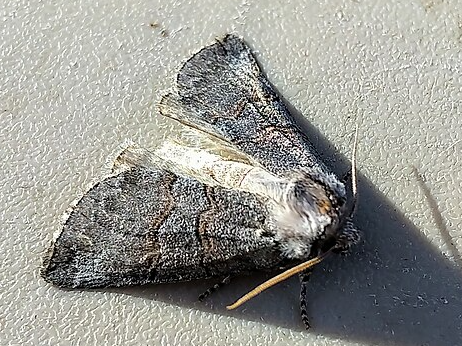
Alberta Lutestring Moth (Tetracis jubararia) is a species of geometrid moth in the family Geometridae, a group commonly known as inchworm or looper moths due to the distinctive movement of their larvae. This species is native to North America and is primarily found in western regions, including Canada and the northern United States. Like many geometrid moths, the Alberta Lutestring Moth is generally not considered a significant pest but plays a role in forest and woodland ecosystems.
The adult moth is relatively inconspicuous, blending well into its surroundings, while the larval stage—commonly called an inchworm—feeds on the leaves of host plants. Although feeding damage can occur, it is typically minor and does not result in serious harm to healthy vegetation.
Taxonomy and Classification
- Common Name: Alberta Lutestring Moth
- Scientific Name: Tetracis jubararia
- Order: Lepidoptera
- Family: Geometridae
- Type: Geometrid moth (inchworm moth)
The family Geometridae includes a large number of species whose larvae are known for their looping gait. These caterpillars are commonly referred to as caterpillars or inchworms.
Identification and Physical Description
Adult Alberta Lutestring Moths are small to medium-sized, with a wingspan typically ranging from 1 to 1.5 inches. Their coloration is generally pale brown, tan, or gray, often with faint lines or bands across the wings that provide camouflage against bark and foliage.
The wings are relatively broad and held flat when at rest. Their subtle coloration allows them to blend into their environment, making them difficult to spot during the day.
The larvae are slender and elongated, with a smooth body and minimal prolegs. This structure results in the characteristic “looping” movement, where the caterpillar arches its body as it moves forward.
Life Cycle
The Alberta Lutestring Moth undergoes complete metamorphosis, progressing through egg, larva, pupa, and adult stages.
Females lay eggs on host plants, typically on leaves or branches. After hatching, larvae begin feeding on foliage. This stage is the primary feeding period and may last several weeks.
When fully grown, larvae pupate, often in leaf litter or soil. The pupal stage allows the insect to develop into an adult moth. Adults emerge during the appropriate season to mate and lay eggs, continuing the life cycle.
Most populations produce one generation per year, though this may vary depending on climate and environmental conditions.
Host Plants
The larvae of the Alberta Lutestring Moth feed on a variety of trees and shrubs, particularly deciduous species. Common host plants may include:
- Aspen
- Willow
- Birch
- Other hardwood trees
This adaptability allows the species to occupy a range of forest and woodland habitats.
Damage and Symptoms
Larval feeding typically results in minor leaf damage, including:
- Small holes or notches in leaves
- Partial defoliation
- Localized feeding damage
In most cases, the damage is not severe enough to impact overall plant health. Natural predators and environmental factors usually keep populations under control.
Habitat and Distribution
The Alberta Lutestring Moth is primarily found in western North America, particularly in Canada and the northern United States. It is commonly associated with:
- Forests and woodlands
- Riparian areas with abundant vegetation
- Natural landscapes with deciduous trees
Its distribution is closely tied to the availability of suitable host plants and favorable environmental conditions.
Behavior and Ecology
Adult moths are primarily nocturnal and are attracted to light sources. During the day, they rest on tree bark or vegetation, relying on camouflage to avoid predators.
Larvae are active feeders and rely on their coloration and shape to blend into branches and leaves. Their looping movement is a defining characteristic of geometrid caterpillars.
As part of the ecosystem, the Alberta Lutestring Moth contributes to the food web, serving as prey for birds, insects, and other animals.
Management and Control
Control measures are rarely necessary for this species due to its limited impact. However, if populations become noticeable, simple management strategies can be applied.
- Manual removal: Caterpillars can be removed from plants.
- Encourage natural predators: Birds and beneficial insects help regulate populations.
- Monitor plant health: Regular inspection can identify early feeding activity.
Chemical control is generally unnecessary and not recommended for minor infestations.
Prevention
Preventative measures focus on maintaining healthy ecosystems and supporting natural pest control.
- Promote biodiversity in landscapes
- Maintain proper plant care and soil health
- Avoid excessive pesticide use
- Monitor plants regularly for signs of feeding
Healthy plants are more resilient and better able to tolerate minor feeding damage.
Related Articles
Conclusion
The Alberta Lutestring Moth is a typical example of a geometrid moth that plays a minor role in plant herbivory while contributing to ecological balance. Although its larvae may cause some leaf damage, it is not considered a significant pest.
Its presence reflects the diversity of insect life in forest ecosystems and highlights the importance of maintaining natural habitats. With minimal need for intervention, the Alberta Lutestring Moth is best viewed as a natural and beneficial part of its environment.