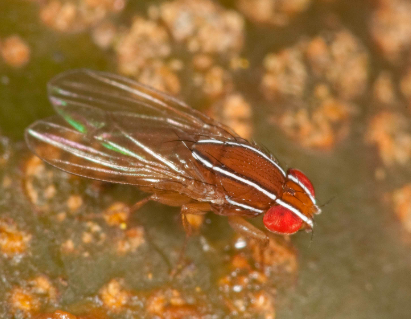
African Fig Fly (Zaprionus indianus) is an invasive species of fruit fly in the family Drosophilidae. Native to sub-Saharan Africa, this species has spread to many parts of the world, including North America, South America, Europe, and Asia. It is commonly associated with overripe or damaged fruit and is considered an emerging agricultural pest in certain regions.
The African Fig Fly is particularly known for infesting figs, but it can also attack a wide range of soft fruits. Its ability to reproduce quickly and adapt to new environments has contributed to its successful global spread.
Taxonomy and Classification
- Common Name: African Fig Fly
- Scientific Name: Zaprionus indianus
- Order: Diptera
- Family: Drosophilidae
- Type: Fruit fly
This species belongs to the same family as common vinegar flies and other fruit flies, including those often found around fermenting food and organic matter.
Identification and Physical Description
Adult African Fig Flies are small, typically measuring about 1/8 inch in length. They are light brown to yellowish in color with distinctive longitudinal white stripes running along the head and thorax, which help differentiate them from other fruit fly species.
The eyes are usually reddish, and the wings are clear. Their body shape is similar to other small fruit flies commonly seen around kitchens and fruit storage areas.
Larvae are tiny, legless maggots that are white or cream-colored. They develop inside fruit, where they feed and grow.
Life Cycle
The African Fig Fly undergoes complete metamorphosis, consisting of egg, larva, pupa, and adult stages. Its life cycle is rapid, allowing populations to grow quickly under favorable conditions.
Females lay eggs on or near suitable host material, often preferring overripe, damaged, or fermenting fruit. After hatching, larvae feed within the fruit, breaking down tissue as they grow.
Once fully developed, larvae pupate either within the fruit or nearby in soil or debris. Adults emerge shortly afterward, ready to reproduce and continue the cycle.
Multiple generations can occur each year, especially in warm climates.
Host Plants
The African Fig Fly is highly adaptable and feeds on a wide variety of fruits. Common host plants include:
- Figs
- Grapes
- Peaches
- Strawberries
- Citrus fruits
- Other soft and overripe fruits
Unlike some fruit pests, this species typically prefers fruit that is already damaged or beginning to decay, although it may also infest ripening fruit under certain conditions.
Damage and Symptoms
Damage is primarily caused by larval feeding within fruit. This can lead to:
- Soft, mushy fruit
- Accelerated fruit decay
- Visible larvae inside fruit
- Fermentation and off-odors
- Reduced marketability of produce
While the African Fig Fly is often considered a secondary pest, its presence can significantly affect fruit quality and storage life.
Habitat and Distribution
Originally native to Africa, the African Fig Fly has spread globally and is now found in many temperate and tropical regions. In North America, it has been reported in several states, particularly in warmer climates.
It is commonly found in:
- Orchards and vineyards
- Gardens and residential landscapes
- Fruit storage and processing areas
- Composting sites and organic waste areas
The species thrives in environments where fermenting or decaying organic material is present.
Behavior and Ecology
Adult African Fig Flies are attracted to fermenting sugars and odors associated with ripe or decaying fruit. They are often seen hovering around fruit trees, kitchen areas, and compost piles.
They play a role in the decomposition of organic material by breaking down fruit and contributing to nutrient cycling. However, their activity can become problematic in agricultural and residential settings.
Because of their rapid reproduction and mobility, populations can increase quickly when suitable conditions are present.
Management and Control
Managing African Fig Flies involves reducing attractants and interrupting their life cycle.
- Sanitation: Remove overripe and fallen fruit promptly.
- Proper storage: Keep harvested fruit refrigerated or sealed.
- Trapping: Use baited traps to reduce adult populations.
- Waste management: Maintain clean compost and disposal areas.
- Monitoring: Regularly inspect fruit crops for early signs of infestation.
Because they are often associated with already damaged fruit, prevention focuses on maintaining fruit quality and cleanliness.
Prevention
Preventative measures aim to eliminate breeding sites and reduce attractants.
- Harvest fruit promptly before over-ripening
- Dispose of damaged or fallen fruit
- Keep kitchens and storage areas clean
- Use sealed containers for food waste
- Maintain proper orchard hygiene
Good sanitation practices are the most effective way to prevent infestations.
Related Articles
Conclusion
The African Fig Fly is a small but adaptable insect that has become a widespread presence in many regions. While it primarily targets overripe or damaged fruit, its activity can still result in economic losses and reduced fruit quality.
Through proper sanitation, monitoring, and preventative practices, infestations can be effectively managed. Understanding its behavior and life cycle is key to minimizing its impact in both agricultural and residential settings.