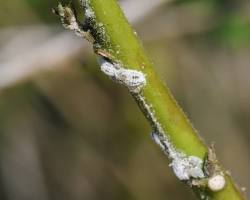
Zucchini mealybugs are soft-bodied sap-feeding pests that can weaken zucchini plants by clustering on stems, leaf nodes, undersides of leaves, and other protected plant surfaces. They are easy to recognize once noticed because their bodies are covered in a white, cottony wax that gives infestations a fuzzy or dusty appearance. Although mealybugs are more often associated with houseplants, ornamentals, and greenhouse crops, they can also become troublesome on outdoor vegetables such as zucchini when conditions are favorable.
These insects damage zucchini by removing sap, reducing plant vigor, and producing sticky honeydew that encourages the growth of black sooty mold. Since they often gather in hidden parts of the plant, infestations may build quietly before gardeners realize there is a problem. Once established, they can be persistent because the waxy coating on their bodies provides some protection and because they tend to settle in areas that are hard to inspect or treat thoroughly.
Identification
Mealybugs are small, oval, soft-bodied insects with a white waxy covering that can make them look like bits of cotton or tiny clumps of lint stuck to the plant. Some species produce short waxy filaments around the body edges, while others appear more uniformly dusted. Eggs may be laid in cottony sacs, and immature stages resemble smaller versions of the adults. Unlike beetles or caterpillars, mealybugs do not chew holes in leaves; instead, they remain attached and feed by piercing plant tissues.
Because they favor protected sites, zucchini mealybugs may be found tucked into leaf axils, under curled leaves, along stems, or in sheltered spots near developing fruit. Their honeydew can make nearby leaves shiny or sticky, which is often one of the first signs of a hidden infestation.
Host Plants and Spread
Mealybugs attack a wide range of plants, including ornamentals, succulents, greenhouse vegetables, and some outdoor crops. In a garden setting, they may move from weeds, nearby ornamentals, or infested transplants onto zucchini. Their spread is often helped by close plant spacing, protected microclimates, and in some cases ants, which may tend the mealybugs in exchange for honeydew and help protect them from predators.
Damage to Zucchini
Zucchini mealybugs weaken plants by removing sap from stems, leaves, and other tissues. Light infestations may cause only mild stress, but heavier populations can lead to yellowing, curling, reduced vigor, and stunted growth. Because zucchini is a fast-growing crop that depends on steady movement of water and nutrients, repeated sap loss can interfere with normal plant development and reduce productivity.
Honeydew production creates a second layer of problems. This sticky substance coats leaves and supports sooty mold fungi, which blacken the plant surface and reduce photosynthesis. Honeydew also attracts ants, which can complicate management by defending the mealybugs from beneficial predators. In severe cases, the combination of sap feeding, mold growth, and ant activity can create a noticeable decline in plant quality.
Life Cycle
Mealybugs reproduce through egg and immature stages before reaching adulthood. Some species lay eggs in waxy sacs, while others may give birth to live young. The young crawlers are the most mobile stage and are often responsible for spreading the infestation to new plant parts or nearby plants. Once settled, later stages become more stationary and continue feeding in protected locations.
Warm conditions and sheltered environments can support repeated generations. Because the insects often overlap in life stage, infestations may contain eggs, crawlers, and adults all at once, which is one reason thorough follow-up is necessary when control measures are used.
Signs of Infestation
Common signs include white cottony clusters on stems or leaf joints, sticky honeydew on leaves, black sooty mold growth, and the presence of ants moving across the plant. Leaves may yellow or curl, and the plant may appear weaker than expected for its age. Mealybugs are often easiest to find by examining tight, sheltered spots rather than exposed leaf surfaces.
If ants are frequently visiting zucchini plants without an obvious reason, it is worth checking for hidden sap-feeding insects such as mealybugs or aphids. Ant activity can sometimes be the clue that leads to a proper diagnosis.
Prevention and Management
Prevention begins with careful inspection of transplants and nearby host plants. Since mealybugs can be introduced on infested starts, checking stems, leaf undersides, and protected nodes before planting is important. Weed control and spacing that improves airflow can reduce hidden moist areas where infestations thrive. Managing ants is also helpful because ant protection often allows mealybug colonies to expand unchecked.
Small infestations may be managed by pruning out infested plant parts or physically removing clusters with water sprays or manual wiping where practical. Natural enemies such as lady beetles, lacewings, and parasitic wasps can help suppress mealybugs, so conserving beneficial insects matters. If a product is needed, it must contact the insects directly, and repeat applications may be necessary because the waxy coating and hidden feeding sites reduce treatment coverage.
Integrated Pest Management for Mealybugs
An integrated approach to zucchini mealybugs combines inspection, ant control, sanitation, pruning of concentrated infestations, and support for natural enemies. Because these pests often remain in concealed areas, early detection is more effective than trying to reverse a heavy population later. Gardeners who check stems and leaf axils regularly are much more likely to stop the problem before plant decline becomes severe.
Conclusion
Zucchini mealybugs are sap-feeding pests that weaken plants through direct feeding and indirect honeydew-related problems such as sooty mold and ant attraction. Their white cottony appearance makes them distinctive once discovered, but their hidden habits allow infestations to build quietly. Through careful monitoring, ant management, and preservation of beneficial insects, gardeners can keep mealybug populations from causing major stress to zucchini plants during the growing season.