Overview
Webbing Clothes Moths (Tineola bisselliella) are among the most destructive household pests of natural textiles and stored fabrics. Unlike many moth species that are considered harmless indoors, the larvae of webbing clothes moths feed on materials containing keratin, a protein found in wool, fur, feathers, silk, cashmere, and other animal-derived products. Their feeding activity can result in extensive damage to clothing, carpets, upholstery, blankets, taxidermy specimens, and museum collections.
These moths are found worldwide and are especially problematic in homes, museums, textile storage facilities, and historic buildings. Because infestations often develop in dark, undisturbed locations, significant damage may occur before homeowners realize a problem exists.
The larvae construct silken tunnels and feeding webs while consuming fibers, giving the species its common name. Once established, infestations can persist for months or even years if not properly managed.
Taxonomy and Classification
- Kingdom: Animalia
- Phylum: Arthropoda
- Class: Insecta
- Order: Lepidoptera
- Family: Tineidae
- Genus: Tineola
- Species: Tineola bisselliella
Webbing clothes moths belong to the family Tineidae, which contains numerous species associated with fungi, organic debris, and animal-derived materials. They undergo complete metamorphosis consisting of egg, larva, pupa, and adult stages.
Identification
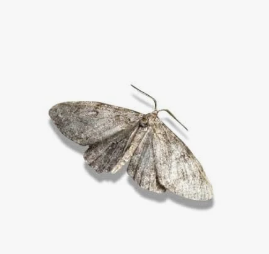
Adult webbing clothes moths are small, delicate insects that often go unnoticed until populations become established.
Adult Moths
- Length: Approximately 6–8 mm.
- Color: Uniform golden-buff to straw-colored.
- Wings: Narrow with long fringes of fine hairs.
- Markings: No dark spots or patterns.
- Flight: Weak, erratic, and often avoided.
Unlike pantry moths, webbing clothes moths rarely fly strongly and frequently prefer running or crawling across surfaces.
Larvae
- Color: Creamy white.
- Head: Dark brown.
- Length: Up to 12 mm.
- Behavior: Constructs silken feeding tubes and webs.
The larval stage is entirely responsible for fabric damage.
Signs of Infestation
- Irregular holes in fabrics.
- Silken tubes and webbing.
- Small fecal pellets matching fabric color.
- Damaged wool rugs and carpets.
- Larvae hiding beneath furniture or inside storage containers.
- Small golden moths in closets or storage areas.
Distribution and Habitat
Webbing clothes moths have a worldwide distribution and are almost exclusively indoor pests.
Common infestation sites include:
- Closets
- Storage chests
- Attics
- Basements
- Carpet edges
- Under furniture
- Air ducts
- Museum collections
- Taxidermy displays
They prefer dark, quiet environments where fabrics remain undisturbed for extended periods.
Life Cycle
Webbing clothes moths develop through complete metamorphosis.
Egg Stage
Females deposit 40–100 eggs directly onto suitable food sources. Eggs are extremely small and difficult to detect.
Larval Stage
After hatching, larvae immediately begin feeding on keratin-containing materials. This stage causes all economic damage.
Depending on temperature and food quality, larvae may remain active for several weeks to over a year.
Pupal Stage
Mature larvae spin silk cocoons in protected locations and pupate.
Adult Stage
Adults emerge, mate, and lay eggs. Adult moths do not feed on fabrics and live only a few weeks.
Indoor populations may produce multiple generations annually under favorable conditions.
Behavior and Damage
The destructive nature of webbing clothes moths results entirely from larval feeding.
Textile Destruction
Larvae consume:
- Wool clothing
- Cashmere sweaters
- Silk garments
- Fur coats
- Feather products
- Wool rugs
- Felt materials
- Upholstery
- Taxidermy specimens
Preference for Soiled Fabrics
Larvae are strongly attracted to materials containing:
- Perspiration residues
- Food stains
- Body oils
- Pet hair
- Organic debris
Dirty garments are significantly more vulnerable than freshly cleaned items.
Museum and Collection Damage
Museums frequently consider webbing clothes moths among their most serious collection pests because larvae can permanently damage:
- Historic textiles
- Costumes
- Wool tapestries
- Natural history specimens
- Feather collections
Economic Importance
Damage caused by webbing clothes moths results in substantial financial losses worldwide.
Costs include:
- Replacement of clothing.
- Carpet repair and replacement.
- Museum conservation expenses.
- Historic artifact restoration.
- Textile storage management.
Because damaged fibers cannot be repaired, prevention is far more effective than treatment after damage occurs.
Management and Control (IPM)
Inspection and Monitoring
- Inspect wool and natural-fiber items regularly.
- Use pheromone traps to detect adult males.
- Check dark storage areas frequently.
Sanitation
- Vacuum carpets thoroughly.
- Clean under furniture.
- Remove lint, pet hair, and debris.
- Dispose of vacuum contents immediately.
Proper Storage
- Clean garments before storage.
- Use sealed plastic containers.
- Store valuable textiles in airtight bags.
- Maintain low humidity when possible.
Heat Treatment
High temperatures can eliminate all life stages. Professional laundering and dry cleaning are highly effective.
Freezing Treatment
Infested items can be frozen for several days to kill eggs, larvae, and pupae.
Pheromone Traps
Pheromone traps help detect infestations early and monitor population levels but should not be relied upon as the sole control method.
Prevention
- Store clean fabrics only.
- Rotate stored clothing regularly.
- Inspect wool rugs and blankets annually.
- Vacuum hidden areas frequently.
- Reduce clutter in storage spaces.
- Use airtight storage containers.
- Monitor with pheromone traps.
Research and Conservation
Modern research focuses on protecting valuable museum collections using non-toxic approaches. Conservation programs increasingly rely on controlled environments, oxygen reduction systems, freezing technologies, and targeted monitoring methods rather than broad insecticide applications.
These approaches help preserve irreplaceable historical artifacts while minimizing environmental impact.
Conclusion
Webbing Clothes Moths are among the most destructive indoor textile pests worldwide. Although adult moths are harmless, their larvae can cause extensive and irreversible damage to wool, silk, fur, feathers, and other animal-derived materials. Early detection, proper storage, sanitation, and monitoring are essential components of an effective integrated pest management program. With consistent prevention practices, homeowners and institutions can successfully protect valuable textiles from infestation.