Overview
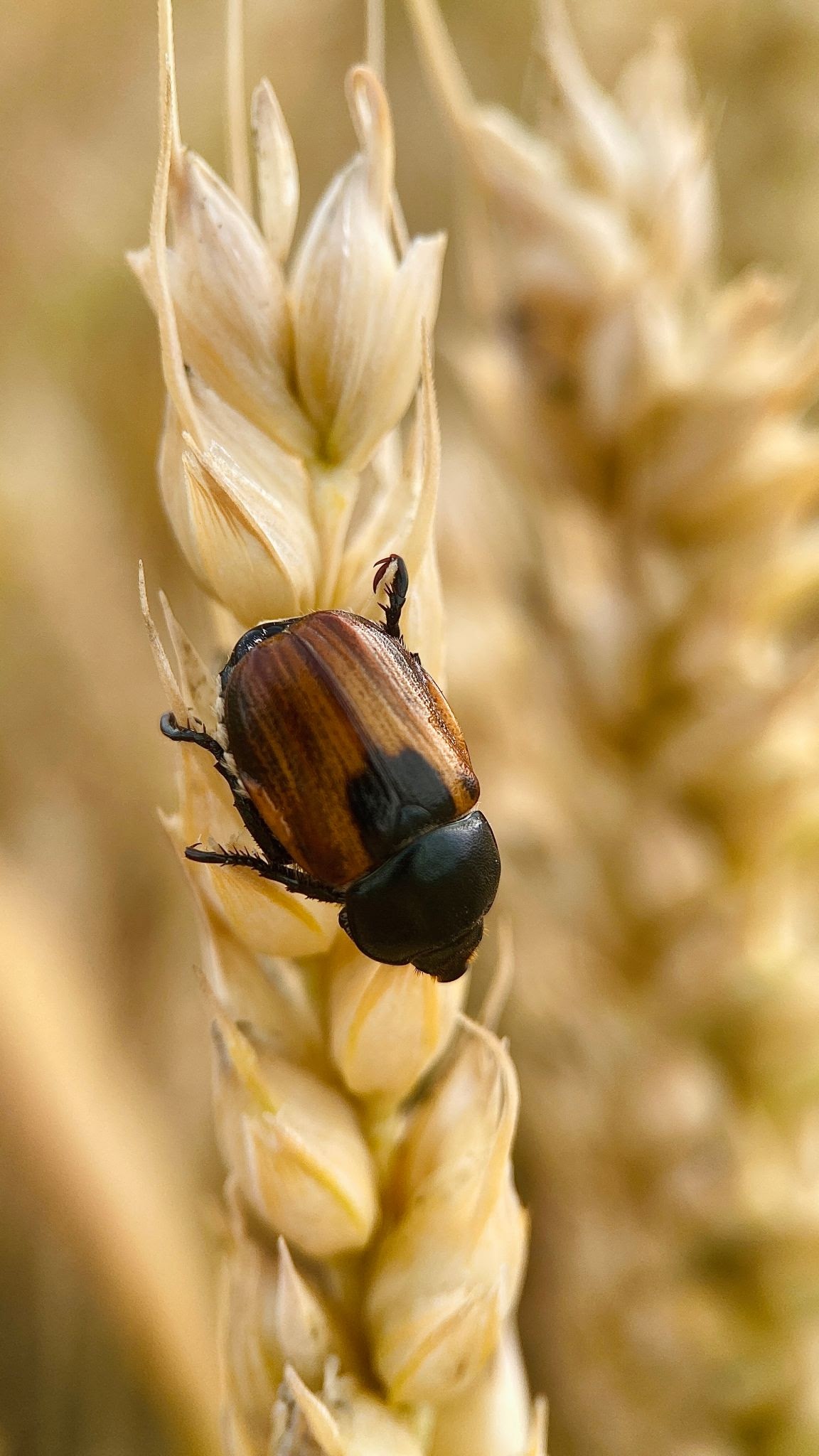
Ukrainian Grain Beetles is a general term that may refer to several important stored-product beetle pests commonly associated with grain-producing regions of Eastern Europe, including Ukraine. The most significant species include the Confused Flour Beetle (Tribolium confusum), Rust-red Grain Beetle (Cryptolestes ferrugineus), and Granary Weevil (Sitophilus granarius). These insects attack stored wheat, barley, rye, corn, oats, flour, and processed grain products, causing contamination, quality loss, and substantial economic damage.
Stored grain insects are among the most important agricultural pests worldwide because they attack commodities after harvest. Unlike field pests that damage crops before harvest, grain beetles continue feeding during storage, transportation, and processing. Infestations can reduce grain weight, lower nutritional value, create unpleasant odors, increase moisture levels, and encourage mold growth.
Ukraine is one of the world’s largest grain-producing and exporting nations, making effective management of stored-product pests critical to food security and international trade. Infested grain shipments may be rejected by importing countries, resulting in significant financial losses.
Because these beetles often develop deep within grain masses or inside kernels, infestations may remain hidden until populations become severe. Regular monitoring and proper storage practices are essential components of successful management.
Taxonomy and Classification
Ukrainian Grain Beetles represent several different beetle families within the order Coleoptera.
- Kingdom: Animalia
- Phylum: Arthropoda
- Class: Insecta
- Order: Coleoptera
Common pest species include:
- Granary Weevil (Sitophilus granarius) – Family Curculionidae
- Confused Flour Beetle (Tribolium confusum) – Family Tenebrionidae
- Rust-red Grain Beetle (Cryptolestes ferrugineus) – Family Laemophloeidae
- Saw-toothed Grain Beetle (Oryzaephilus surinamensis)
- Lesser Grain Borer (Rhyzopertha dominica)
All of these insects undergo complete metamorphosis consisting of egg, larva, pupa, and adult stages.
Physical Description
Most grain beetles are small insects measuring between 2 and 5 millimeters in length.
Adult Beetles
- Color: Brown, reddish-brown, or dark brown.
- Body Shape: Cylindrical, flattened, or oval depending on species.
- Granary Weevils: Possess a distinctive elongated snout.
- Flour Beetles: Elongated and somewhat flattened.
- Rust-red Grain Beetles: Narrow, flattened bodies adapted for moving through grain masses.
Larvae
- Cream-colored or yellowish.
- Soft-bodied.
- Worm-like appearance.
- Found inside kernels or feeding among stored products.
Because of their small size, infestations often go unnoticed until populations become well established.
Distribution and Habitat
Stored-product beetles occur worldwide and are commonly associated with grain-producing regions, storage facilities, food-processing plants, and transportation networks.
Typical habitats include:
- Grain silos
- Storage bins
- Warehouses
- Flour mills
- Feed mills
- Food manufacturing plants
- Bakeries
- Farm grain storage facilities
These pests thrive in environments where food sources are abundant and temperatures remain suitable for development.
Life Cycle
Most grain beetles develop rapidly under favorable conditions and may produce multiple generations annually.
The life cycle consists of:
- Egg
- Larva
- Pupa
- Adult
Females deposit eggs directly on grain, within grain kernels, or among food products. Upon hatching, larvae begin feeding immediately.
Species such as the Granary Weevil develop almost entirely inside individual grain kernels, making detection particularly difficult.
Under warm conditions, development may be completed within several weeks, allowing populations to increase rapidly.
Feeding Behavior
Stored-product beetles feed on a variety of grain commodities and processed products.
Common food sources include:
- Wheat
- Barley
- Rye
- Corn
- Oats
- Rice
- Flour
- Cereal products
- Animal feed
- Pasta products
Some species feed externally on broken kernels and grain dust, while others develop inside intact kernels.
Damage and Economic Impact
Stored-product beetles create several forms of damage that reduce grain quality and marketability.
Direct Feeding Damage
Adults and larvae consume grain material, reducing weight and nutritional value.
Kernel Destruction
Internal feeders such as weevils hollow out kernels, leaving empty shells and emergence holes.
Contamination
Infested grain becomes contaminated with:
- Insect fragments
- Larval skins
- Frass (insect waste)
- Dead insects
- Webbing in some infestations
Heating and Moisture Problems
Large infestations generate heat and moisture within grain masses, creating favorable conditions for fungal growth and spoilage.
Trade Restrictions
Infested grain may be rejected by buyers or importing countries, resulting in substantial economic losses.
Signs of Infestation
Several indicators may reveal the presence of grain beetles.
- Live adult beetles in grain.
- Small emergence holes in kernels.
- Fine grain dust accumulation.
- Increased grain temperatures.
- Musty or unpleasant odors.
- Visible larvae.
- Damaged or hollow kernels.
Routine sampling and inspection are essential because infestations often begin deep within grain storage structures.
Behavior and Conflict
The primary conflict associated with grain beetles involves their ability to reproduce rapidly in stored commodities while remaining difficult to detect.
Moisture Dependency
Elevated grain moisture levels greatly increase beetle survival and reproduction.
Fungal Association
Damaged grain often becomes more susceptible to mold development, further reducing quality.
Quarantine Risk
International grain shipments containing live insects may violate import regulations and trigger quarantine actions.
Management and Prevention
Successful management focuses on prevention, monitoring, sanitation, and treatment when necessary.
Sanitation
- Remove grain residues from equipment.
- Clean storage bins before filling.
- Dispose of infested materials properly.
- Eliminate hidden food sources.
Proper Storage Conditions
- Maintain low grain moisture.
- Use aeration systems.
- Monitor temperatures regularly.
- Reduce condensation inside bins.
Monitoring
- Inspect stored grain frequently.
- Use grain probes and sampling devices.
- Deploy insect monitoring traps.
- Track temperature changes.
Fumigation
For severe infestations, phosphine fumigation remains one of the most widely used treatments. Properly applied fumigants penetrate deep into grain masses and eliminate insects throughout the storage structure.
Because fumigation requires specialized equipment and training, it is typically performed by licensed professionals.
Research and Future Management
Researchers continue studying stored-product pests to improve grain protection strategies and reduce losses.
Current research areas include:
- Improved grain aeration systems.
- Resistance management for phosphine.
- Alternative fumigation technologies.
- Biological control agents.
- Automated monitoring systems.
- Integrated pest management programs.
Scientists are also investigating environmentally friendly approaches that reduce reliance on chemical treatments while maintaining grain quality.
Conclusion
Ukrainian Grain Beetles represent a group of highly destructive stored-product pests capable of causing significant contamination, spoilage, and economic losses in grain storage systems. Species such as the Granary Weevil, Confused Flour Beetle, and Rust-red Grain Beetle remain major concerns for grain producers, processors, and exporters worldwide.
Maintaining clean storage facilities, controlling moisture levels, monitoring grain regularly, and using appropriate treatments when necessary are essential for protecting stored commodities. Through comprehensive integrated pest management practices, grain losses can be minimized while preserving product quality and market value.