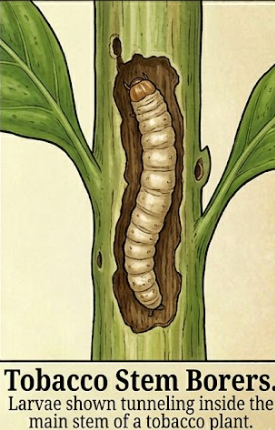
Tobacco Stem Borers are destructive internal-feeding pests whose larvae tunnel through the stems of tobacco plants and related crops. Unlike leaf-feeding insects that cause visible surface damage, stem borers spend most of their lives hidden within plant tissue, where they are protected from weather, predators, and many conventional pest control measures. Their feeding damages the plant’s vascular system, disrupts nutrient transport, weakens structural integrity, and can significantly reduce crop yield and quality.
Because tobacco production depends on healthy, vigorous plants capable of producing large, marketable leaves, stem borer infestations can create substantial economic losses. Young plants may become stunted or die entirely, while mature plants often suffer from reduced leaf development, lodging, stem breakage, and chronic stress. The concealed nature of these pests makes early detection particularly important, as visible symptoms often appear only after extensive internal damage has already occurred.
Taxonomy and Classification
Tobacco Stem Borers may include several species of moth larvae that specialize in tunneling within tobacco stems and other plants in the nightshade family.
- Order: Lepidoptera
- Family: Gelechiidae
- Representative Species: Scrobipalpa heliopa
- Common Name: Tobacco Stem Borer
The larval stage causes all significant plant damage. Adult moths are generally short-lived and serve primarily as reproductive stages.
Identification
Tobacco Stem Borers are most easily identified by their characteristic plant symptoms rather than by directly observing the insects.
Larvae
- Length: Up to 10 mm.
- Color: Cream-colored, pale white, or light pink.
- Head Capsule: Dark brown.
- Body: Smooth caterpillar with a cylindrical shape.
Larvae remain hidden inside stems for most of their development and are rarely observed externally.
Adult Moths
- Wingspan: Approximately 10–12 mm.
- Color: Brown, tan, or mottled gray.
- Activity: Primarily nocturnal.
- Appearance: Small and inconspicuous.
Key Signs of Infestation
- Swollen stems.
- Gall-like enlargements.
- Wilted shoot tips.
- Stunted growth.
- Stem cracks.
- Small entry holes.
- Frass near feeding sites.
- Stem breakage.
Cutting open affected stems often reveals tunnels, feeding galleries, and developing larvae.
Distribution and Habitat
Tobacco Stem Borers occur in tobacco-growing regions worldwide and may also infest related crops and wild host plants.
Common habitats include:
- Tobacco fields
- Pepper plantings
- Tomato fields
- Eggplant crops
- Greenhouses
- Nurseries
- Agricultural production systems
Warm climates and long growing seasons support greater population development and multiple generations.
Host Plants
Although tobacco is the primary host, these borers attack several plants within the nightshade family.
- Tobacco
- Tomatoes
- Peppers
- Eggplants
- Nightshades
- Certain ornamental solanaceous plants
Wild host plants frequently serve as reservoirs that allow populations to survive between cropping cycles.
Life Cycle
Tobacco Stem Borers undergo complete metamorphosis.
- Egg Stage: Females deposit eggs on stems, leaves, or protected plant surfaces.
- Larval Stage: Newly hatched larvae enter stems and begin internal feeding.
- Pupal Stage: Pupation occurs within stems, crop residues, or nearby soil.
- Adult Stage: Moths emerge, mate, and begin a new generation.
Several generations may occur annually in warm climates where host plants remain continuously available.
Feeding Behavior
The larvae are internal feeders that target the plant’s central stem tissues.
After entering the stem, larvae:
- Tunnel through the pith.
- Create feeding galleries.
- Destroy vascular tissues.
- Expand tunnels as they grow.
This feeding disrupts water and nutrient movement throughout the plant.
Damage and Economic Importance
The primary impact of Tobacco Stem Borers results from their destruction of the plant’s internal transport system.
Vascular Damage
- Reduced water transport.
- Nutrient deficiencies.
- Poor leaf development.
- Reduced plant vigor.
As tunneling progresses, the plant becomes increasingly unable to support normal growth.
Stem Weakening
- Structural instability.
- Stem collapse.
- Lodging.
- Breakage under wind or crop weight.
Heavy infestations may leave stems hollow and unable to support the plant.
Growth Suppression
- Stunted development.
- Shortened internodes.
- Reduced branching.
- Smaller leaves.
Infested plants often appear noticeably smaller than healthy neighboring plants.
Secondary Problems
Borer tunnels create entry points for plant pathogens.
- Fungal infections.
- Bacterial diseases.
- Stem rots.
- Secondary decay.
The combination of insect injury and disease frequently accelerates plant decline.
Signs of Infestation
Growers should monitor for:
- Swollen stems.
- Wilting during hot weather.
- Stunted growth.
- Entry holes.
- Sawdust-like frass.
- Stem cracking.
- Uneven field development.
Symptoms may resemble drought stress or disease, making careful inspection important.
Behavior and Conflict
Several characteristics make Tobacco Stem Borers difficult pests to manage.
- Hidden Feeding: Larvae remain protected inside stems.
- Delayed Symptoms: Damage becomes visible after establishment.
- Multiple Generations: Populations can build rapidly.
- Host Flexibility: Several crop and weed hosts support survival.
- Crop Residue Survival: Immature stages may persist after harvest.
These traits allow infestations to continue largely unnoticed until significant damage has occurred.
Monitoring and Detection
Early detection is essential for successful management.
- Inspect stems regularly.
- Look for swelling and frass.
- Monitor for wilted shoots.
- Examine suspicious stems internally.
- Track adult moth activity where possible.
Routine scouting helps identify infestations before widespread damage develops.
Management and Prevention
An Integrated Pest Management (IPM) approach provides the best long-term control.
Field Sanitation
- Remove crop residues after harvest.
- Destroy infested stalks.
- Eliminate volunteer host plants.
- Control nearby weeds.
Sanitation is one of the most effective methods for reducing future infestations.
Crop Rotation
- Rotate away from susceptible hosts.
- Break the pest life cycle.
- Reduce population buildup.
Monitoring Adults
- Use pheromone traps when available.
- Track seasonal activity.
- Improve treatment timing.
Monitoring allows interventions to target vulnerable stages before larvae enter stems.
Physical Control
- Remove infested plants.
- Destroy heavily damaged stems.
- Prevent larval development.
Chemical Control
- Target newly hatched larvae.
- Apply treatments before stem entry.
- Use registered products according to label directions.
Once larvae are deep inside the stem, chemical treatments become significantly less effective.
Conservation and Research
Research on Tobacco Stem Borers focuses on improved monitoring systems, host plant resistance, biological control agents, and sustainable management programs. Scientists continue developing integrated approaches that emphasize prevention and early intervention rather than relying solely on chemical control.
Because these pests spend most of their lives protected inside plant tissue, sanitation, crop rotation, early scouting, and timely intervention remain the most effective strategies for preventing serious infestations and protecting tobacco crop quality and yield.