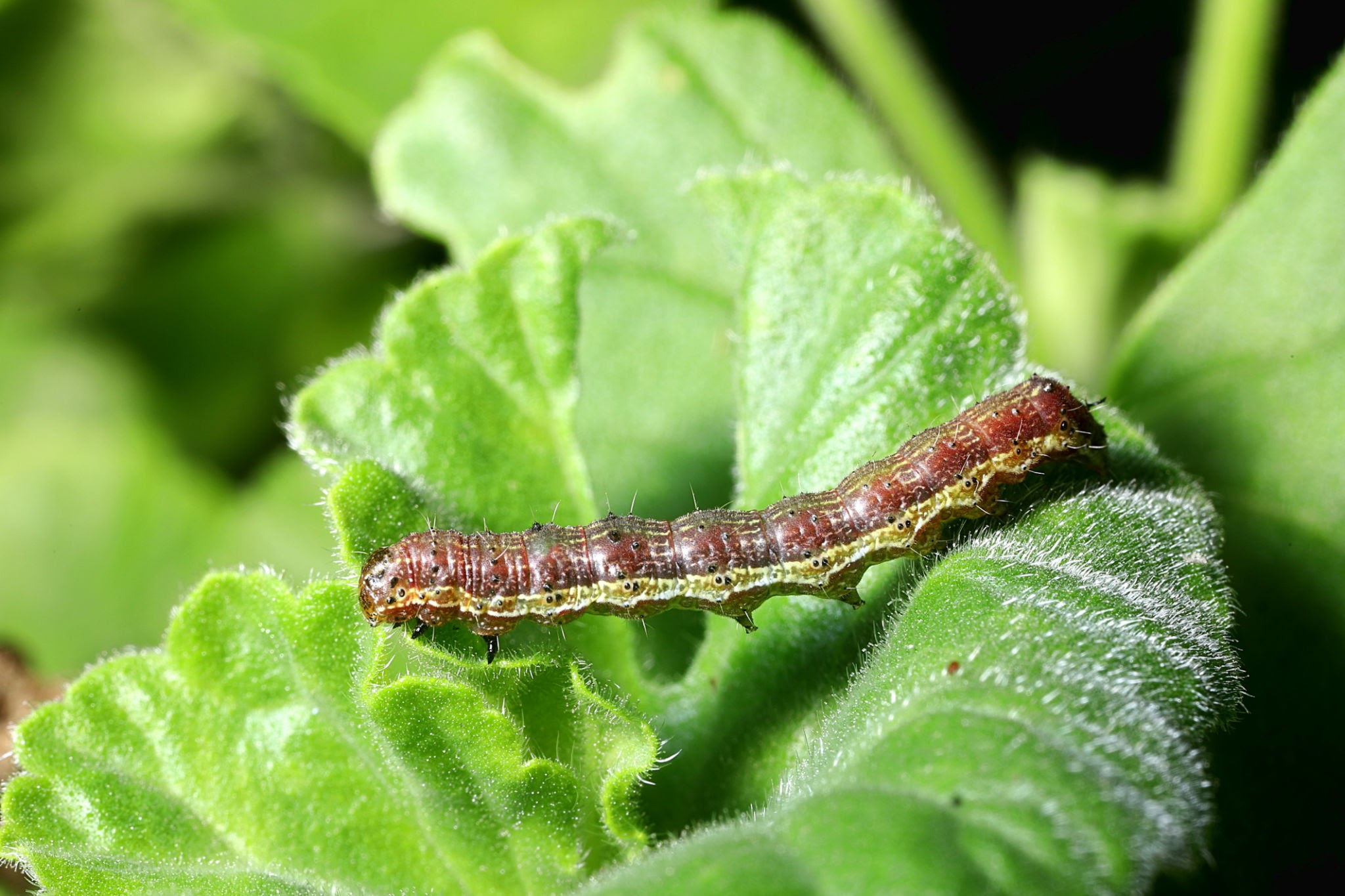
Tobacco Budworms (Chloridea virescens, formerly Heliothis virescens) are highly destructive caterpillar pests that attack a wide variety of agricultural crops, ornamental flowers, and garden plants. These insects are notorious for feeding directly on flower buds, blossoms, and developing fruit, causing significant economic and aesthetic damage. Tobacco Budworms are particularly problematic on petunias, geraniums, tobacco, cotton, tomatoes, peppers, and numerous ornamental bedding plants. Because the larvae often feed from within buds and flowers, they are protected from predators and many insecticide applications, making them difficult to control. Their ability to develop resistance to pesticides has earned them a reputation as one of the most challenging caterpillar pests in agriculture and ornamental horticulture.
Taxonomy and Classification
Tobacco Budworms belong to the order Lepidoptera and the family Noctuidae, commonly known as owlet moths. They are closely related to corn earworms and several other economically important crop pests.
Scientific classification:
- Order: Lepidoptera
- Family: Noctuidae
- Genus: Chloridea
- Species: Chloridea virescens
The species was formerly classified as Heliothis virescens, a name that still appears in many agricultural publications and pest management references.
Identification
Tobacco Budworm larvae vary considerably in color, often blending with the flowers or plant tissues they consume.
- Larval Size: Up to 35 mm (1.4 inches) long.
- Color: Green, brown, pink, purple, or reddish depending on diet and environment.
- Stripes: Pale longitudinal stripes running along the body.
- Head Capsule: Yellowish-brown to tan.
- Micro-Spines: Tiny black spines create a rough texture that helps distinguish them from smoother caterpillars.
- Behavior: Frequently hidden inside flower buds or blossoms during daylight hours.
Adult moths are medium-sized nocturnal insects with a wingspan of approximately 30–40 mm.
- Forewings: Light green, olive, tan, or brown.
- Markings: Several dark diagonal bands or markings across the wings.
- Activity: Most active at night when mating and laying eggs.
The adult moths are strongly attracted to flowering plants and frequently deposit eggs directly on developing buds.
Distribution and Habitat
Tobacco Budworms are native to the Americas and are widely distributed throughout the southern United States, Mexico, Central America, South America, and other warm regions.
They thrive in:
- Agricultural fields
- Commercial nurseries
- Residential flower gardens
- Greenhouses
- Landscape plantings
- Container gardens
- Hanging baskets
Warm climates allow multiple generations to develop annually, making infestations especially severe in southern and southwestern regions of the United States.
Host Plants
Tobacco Budworms feed on a wide range of broadleaf plants.
Common hosts include:
- Petunias
- Geraniums
- Tobacco
- Cotton
- Tomatoes
- Peppers
- Nicotiana
- Roses
- Snapdragons
- Various ornamental flowers
Petunias are among the most commonly affected ornamental plants, often experiencing severe bloom loss during summer infestations.
Life Cycle
The Tobacco Budworm undergoes complete metamorphosis.
- Egg Stage: Females lay individual eggs on buds, flowers, leaves, and stems.
- Larval Stage: Caterpillars hatch within a few days and immediately begin feeding.
- Pupal Stage: Mature larvae drop to the soil and pupate underground.
- Adult Stage: Moths emerge and begin the next generation.
Under warm conditions, the complete life cycle may take only a few weeks, allowing numerous generations to occur annually.
Damage and Economic Importance
Tobacco Budworms cause damage primarily by feeding on reproductive plant structures.
- Bud Destruction: Larvae hollow out flower buds before they open.
- Bloom Failure: Flowers fail to develop properly and often drop prematurely.
- Petal Damage: Open flowers exhibit ragged holes and torn petals.
- Fruit Injury: Developing fruits may be scarred or destroyed.
- Yield Reduction: Agricultural crops suffer significant losses.
- Aesthetic Damage: Ornamental plants lose much of their visual appeal.
Because they target buds and flowers directly, even relatively small populations can cause significant economic and landscape damage.
Signs of Infestation
Several indicators help identify Tobacco Budworm activity.
- Circular Holes: Small, clean holes bored into unopened flower buds.
- Hollow Buds: Buds feel empty or soft when squeezed.
- Frass: Small black droppings accumulate around buds and flowers.
- Damaged Petals: Open blooms appear shredded or lacy.
- Missing Flowers: Plants remain leafy but produce few blooms.
- Visible Caterpillars: Larvae may be found inside flowers or buds.
Bud damage is often the earliest and most reliable sign of infestation.
Behavior and Conflict
Tobacco Budworms are particularly challenging because of their concealed feeding habits.
- Protected Feeding: Caterpillars remain hidden within buds.
- Nocturnal Activity: Most feeding occurs at night.
- Pesticide Resistance: Many populations have developed resistance to common insecticides.
- Rapid Reproduction: Multiple generations occur annually.
- Wide Host Range: Numerous crop and ornamental plants are susceptible.
These characteristics make early detection and integrated management essential.
Management and Prevention
Successful management relies on an Integrated Pest Management (IPM) approach.
Monitoring
- Inspect buds regularly.
- Look for feeding holes and frass.
- Use pheromone traps to monitor adult moth activity.
Physical Control
- Hand-pick caterpillars when populations are small.
- Remove damaged buds and flowers.
- Inspect plants during evening hours when larvae are active.
Biological Control
- Bacillus thuringiensis (Bt): Highly effective against young caterpillars.
- Parasitic Wasps: Natural enemies help suppress populations.
- Tachinid Flies: Important biological control agents.
- Predatory Insects: Various predators feed on eggs and larvae.
Chemical Control
- Spinosad: One of the most effective treatments for ornamental plantings.
- Targeted Insecticides: Applications should focus on newly hatched larvae before they enter buds.
- Resistance Management: Rotate products to slow resistance development.
Conservation and Research
Tobacco Budworms remain a major focus of agricultural research because of their economic impact and ability to develop insecticide resistance. Scientists continue investigating biological controls, resistant crop varieties, improved monitoring systems, and sustainable management strategies.
Research into genetic resistance, pheromone-based controls, and integrated pest management programs remains critical for reducing the long-term impact of this destructive pest on agriculture and ornamental horticulture.