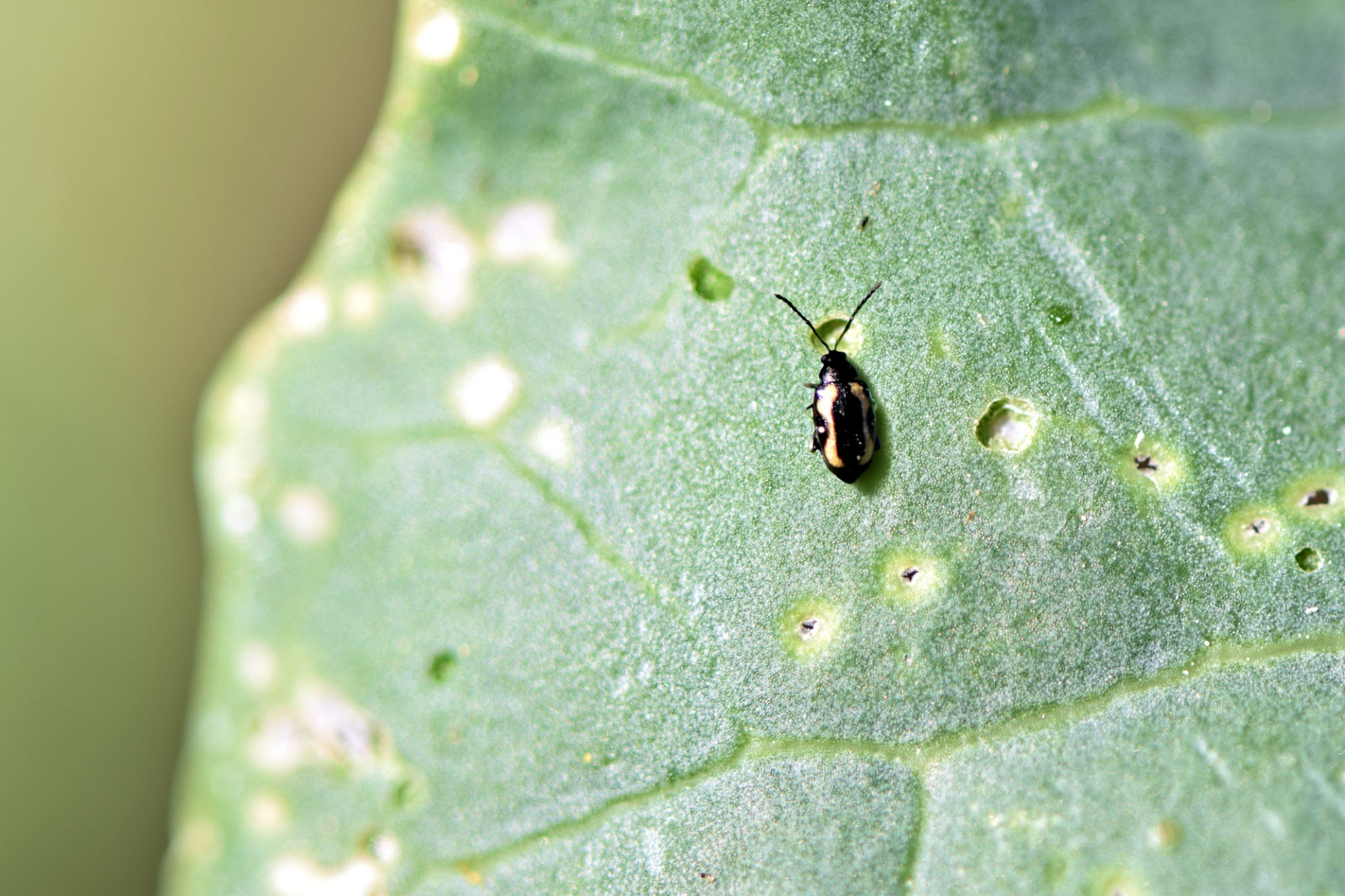
Tobacco Flea Beetles (Epitrix hirtipennis) are small but highly destructive leaf-feeding beetles that primarily attack tobacco and other members of the nightshade family. These pests are particularly damaging to seedlings and young transplants, where even moderate infestations can stunt growth, reduce vigor, or kill plants outright. Tobacco Flea Beetles are best known for creating numerous tiny holes in leaves, producing the characteristic “shot-hole” appearance associated with flea beetle damage. In addition to adult feeding on foliage, larvae develop in the soil and feed on roots, creating a dual threat that can significantly impact crop establishment and productivity.
Taxonomy and Classification
Tobacco Flea Beetles belong to the order Coleoptera and the family Chrysomelidae, commonly known as leaf beetles.
- Order: Coleoptera
- Family: Chrysomelidae
- Genus: Epitrix
- Species: Epitrix hirtipennis
Like other flea beetles, they possess enlarged hind legs that allow them to jump considerable distances when disturbed. This behavior makes them difficult to capture and often allows infestations to go unnoticed until feeding damage becomes obvious.
Identification
Tobacco Flea Beetles are extremely small insects that can be difficult to spot on foliage.
Adult Beetles
- Size: Approximately 1.5–2 mm long.
- Color: Dark brown, bronze, or black.
- Body Shape: Oval and slightly elongated.
- Surface: Shiny with fine hairs visible under magnification.
- Legs: Enlarged hind legs adapted for jumping.
- Behavior: Leap quickly when disturbed.
Larvae
- Color: White to cream-colored.
- Shape: Slender and worm-like.
- Head: Brown head capsule.
- Habitat: Soil surrounding host plants.
Damage Signs
- Shot-Hole Feeding: Numerous small round holes in leaves.
- Leaf Skeletonization: Severe infestations leave only leaf veins.
- Stunted Seedlings: Reduced growth and vigor.
- Wilting: Resulting from combined root and foliage damage.
Distribution and Habitat
Tobacco Flea Beetles occur throughout much of North America and are especially common in warm agricultural regions.
Common habitats include:
- Tobacco fields
- Tomato plantings
- Pepper gardens
- Eggplant crops
- Potato fields
- Greenhouses
- Home vegetable gardens
- Areas with wild nightshade weeds
Populations often develop first on weeds and alternate hosts before moving into cultivated crops.
Host Plants
Tobacco Flea Beetles primarily attack plants in the nightshade family.
Important hosts include:
- Tobacco
- Tomatoes
- Peppers
- Eggplants
- Potatoes
- Ground Cherries
- Nightshade Weeds
- Tomatillos
Young plants are particularly vulnerable because they possess limited foliage reserves and may not recover from extensive feeding.
Life Cycle
Tobacco Flea Beetles undergo complete metamorphosis.
- Egg Stage: Females deposit eggs in soil near host plants.
- Larval Stage: Larvae hatch and feed on roots and root hairs.
- Pupal Stage: Pupation occurs underground.
- Adult Stage: Adults emerge and begin feeding on foliage.
Multiple generations may occur each year, particularly in warmer climates. Adults often overwinter in plant debris, field margins, and protected locations.
Damage and Economic Importance
Tobacco Flea Beetles cause injury during both larval and adult stages.
Adult Feeding Damage
- Shot-Hole Injury: Small circular holes throughout leaves.
- Reduced Photosynthesis: Loss of leaf tissue decreases energy production.
- Seedling Stress: Young plants may become severely weakened.
- Quality Reduction: Tobacco leaves become less marketable.
Larval Damage
- Root Feeding: Consumption of root hairs and fine roots.
- Reduced Water Uptake: Plants struggle during dry conditions.
- Delayed Growth: Slower establishment and development.
- Increased Stress: Plants become more vulnerable to drought and disease.
Heavy infestations can result in stand loss, replanting costs, delayed harvests, and reduced yields.
Behavior and Conflict
Several characteristics make Tobacco Flea Beetles challenging pests.
- Explosive Jumping Ability: Adults quickly escape disturbance.
- Early-Season Activity: Attacks occur when plants are most vulnerable.
- Dual Feeding Habits: Both roots and foliage are damaged.
- Multiple Generations: Populations can increase rapidly.
- Wide Host Availability: Alternate hosts support survival between crops.
Because injury often begins shortly after transplanting or emergence, early-season monitoring is particularly important.
Monitoring and Detection
Regular scouting helps detect infestations before severe damage develops.
- Inspect seedlings and transplants frequently.
- Look for characteristic shot-hole feeding.
- Watch for jumping beetles when plants are disturbed.
- Monitor nearby weed hosts.
- Check field margins for early activity.
Even small populations can cause significant injury to young plants.
Management and Prevention
An Integrated Pest Management (IPM) program provides the most effective control.
Cultural Controls
- Weed Removal: Eliminate alternate host plants.
- Crop Rotation: Reduce local population buildup.
- Field Sanitation: Remove crop debris after harvest.
- Healthy Plant Growth: Promote vigorous crop establishment.
Physical Controls
- Floating Row Covers: Protect seedlings and transplants.
- Exclusion Barriers: Prevent beetle access to vulnerable plants.
- Sticky Traps: Help monitor adult activity.
Biological Control
- Ground beetles.
- Predatory insects.
- Parasitic wasps.
- Spiders.
Conserving beneficial organisms can contribute to natural population suppression.
Organic Controls
- Kaolin Clay: Creates a protective barrier on foliage.
- Neem Oil: Suppresses feeding and reproduction.
- Spinosad: Effective against adult beetles.
- Diatomaceous Earth: May reduce beetle activity around plants.
Chemical Control
Commercial producers may utilize insecticide treatments when economic thresholds are exceeded.
- Protect seedlings during establishment.
- Rotate insecticide classes to reduce resistance.
- Target adults before severe feeding occurs.
- Follow crop-specific recommendations.
Conservation and Research
Research on Tobacco Flea Beetles focuses on resistant crop varieties, biological control agents, sustainable management strategies, and improved monitoring systems. Scientists continue developing integrated approaches that minimize pesticide use while maintaining effective protection of tobacco and vegetable crops.
Early detection, weed management, physical exclusion, and integrated control strategies remain the most reliable methods for preventing economic losses caused by this important pest.