Overview
Stored Product Beetles are a diverse group of insects that infest stored grains, flour, cereals, pet food, spices, dried fruits, seeds, and numerous processed food products. Unlike many outdoor agricultural pests, these beetles complete their entire life cycle inside stored food products, making them among the most common and frustrating pantry pests worldwide.
Common stored product beetles include the Confused Flour Beetle, Red Flour Beetle, Sawtoothed Grain Beetle, Drugstore Beetle, Cigarette Beetle, Merchant Grain Beetle, and several species of grain weevils. Their feeding activities contaminate food, reduce product quality, create unpleasant odors, and result in significant economic losses for households, food processors, warehouses, and grain storage facilities.
Taxonomy and Classification
Stored Product Beetles are not a single species but rather a group of beetles belonging primarily to several families within the order Coleoptera.
- Kingdom: Animalia
- Phylum: Arthropoda
- Class: Insecta
- Order: Coleoptera
- Common Families: Tenebrionidae, Silvanidae, Ptinidae, Curculionidae, Dermestidae
Many species have adapted specifically to stored food environments and are rarely found outside human structures.
Physical Description
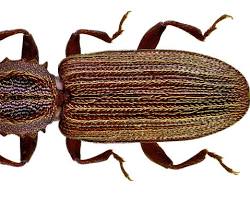
Stored Product Beetles vary in appearance depending on species, but most are small and easily overlooked.
- Sawtoothed Grain Beetle: Flattened reddish-brown beetle approximately 3 mm long with distinctive saw-like projections on the thorax.
- Confused Flour Beetle: Oval, reddish-brown beetle measuring 3–4 mm long with gradually clubbed antennae.
- Drugstore Beetle: Cylindrical brown beetle with a hood-like thorax that conceals the head.
- Cigarette Beetle: Similar to the Drugstore Beetle but slightly more rounded with serrated antennae.
- Larvae: Cream-colored grubs or worm-like larvae that feed directly on stored products.
- Conflict: Food contamination, packaging damage, spoilage, and product loss.
Distribution and Habitat
Stored Product Beetles occur worldwide and are commonly found wherever food products are stored.
Common habitats include:
- Home pantries
- Kitchen cabinets
- Pet food storage areas
- Grain silos
- Warehouses
- Food processing facilities
- Grocery stores
- Birdseed storage containers
- Animal feed facilities
Warm temperatures and abundant food supplies allow populations to increase rapidly.
Common Food Sources
Stored Product Beetles attack a wide variety of food products.
- Flour
- Cereal
- Rice
- Pasta
- Cornmeal
- Crackers
- Pet food
- Birdseed
- Nuts
- Beans
- Dried fruits
- Spices
- Chocolate
- Tobacco products
- Herbal supplements
Some species can even infest non-food materials such as books, paper, dried flowers, and prescription medications.
Life Cycle
Most Stored Product Beetles undergo complete metamorphosis.
Egg Stage
Females deposit eggs directly onto food sources or inside packaging.
A single female may lay dozens to hundreds of eggs during her lifetime.
Larval Stage
Larvae feed continuously on stored products.
- Consume grains and processed foods
- Create tunnels within products
- Produce waste material and webbing
- Cause most economic damage
Pupal Stage
Larvae transform into pupae within food products, cracks, crevices, or packaging materials.
Adult Stage
Adults emerge, mate, and begin searching for new food sources.
Depending on temperature and humidity, some species complete their life cycle in as little as one month.
Damage and Symptoms
Stored Product Beetles cause damage through feeding, contamination, and spoilage.
Food Contamination
- Dead insects
- Larval skins
- Frass (insect waste)
- Eggs and pupal cases
Infested products become unsuitable for consumption.
Odor and Taste Changes
Flour beetles release defensive chemicals known as quinones.
These secretions create:
- Musty odors
- Off-flavors
- Pinkish discoloration
- Reduced food quality
Packaging Damage
Certain species chew through:
- Cardboard boxes
- Paper packaging
- Plastic bags
- Foil liners
This allows additional pests and moisture to enter stored foods.
Secondary Problems
Heavy infestations may increase humidity and heat within stored products, encouraging mold growth and spoilage.
Behavior and Conflict
Stored Product Beetles are uniquely adapted to indoor environments.
- Hidden Development: Most life stages remain concealed within food products.
- Rapid Reproduction: Multiple generations may occur each year indoors.
- Wide Host Range: Many species can utilize dozens of food products.
- Long Survival: Adults can survive for months in favorable conditions.
- Dispersal: Infestations often begin when contaminated food is brought into the home.
Economic Importance
Stored Product Beetles are responsible for significant economic losses worldwide.
Costs include:
- Food disposal
- Product recalls
- Warehouse treatment expenses
- Lost inventory
- Sanitation costs
- Reduced grain quality
Large infestations in commercial facilities can result in thousands of dollars in losses.
Management and Control (IPM)
Successful management depends on sanitation, monitoring, and exclusion.
Inspection and Monitoring
- Regularly inspect stored foods.
- Look for live beetles and larvae.
- Use pheromone monitoring traps.
- Check pet food and birdseed frequently.
Sanitation
Sanitation is the foundation of control.
- Remove infested products immediately.
- Vacuum pantry shelves thoroughly.
- Clean cracks and corners.
- Eliminate spilled food particles.
Airtight Storage
Store susceptible foods in:
- Glass containers
- Heavy-duty plastic containers
- Metal storage bins
- Sealed food-grade containers
Airtight storage prevents beetles from spreading between products.
Freezing Treatment
Many infested products can be treated by freezing.
- Place food in a freezer for 4–7 days.
- Kill eggs, larvae, pupae, and adults.
- Useful for flour, grains, and birdseed.
Heat Treatment
Commercial facilities often use heat treatments to eliminate infestations without pesticides.
Chemical Control
Chemical treatments are generally reserved for warehouses and commercial facilities.
Indoor pesticide use near food storage areas should be approached cautiously and according to label instructions.
Prevention
- Inspect food before purchase.
- Store foods in sealed containers.
- Practice regular pantry cleaning.
- Rotate stored products frequently.
- Use older foods first.
- Freeze susceptible products before storage.
- Monitor with pheromone traps.
Research and Conservation
Research focuses on improved pheromone monitoring systems, biological controls, temperature-based management strategies, and reduced-risk methods for protecting stored food products. Scientists continue developing sustainable approaches that minimize pesticide use while protecting food supplies.
Conclusion
Stored Product Beetles are among the most common household and commercial food pests. Although small in size, they can contaminate large quantities of stored food and cause significant economic losses. Through proper sanitation, airtight storage, regular monitoring, and integrated pest management practices, infestations can be prevented and controlled effectively.