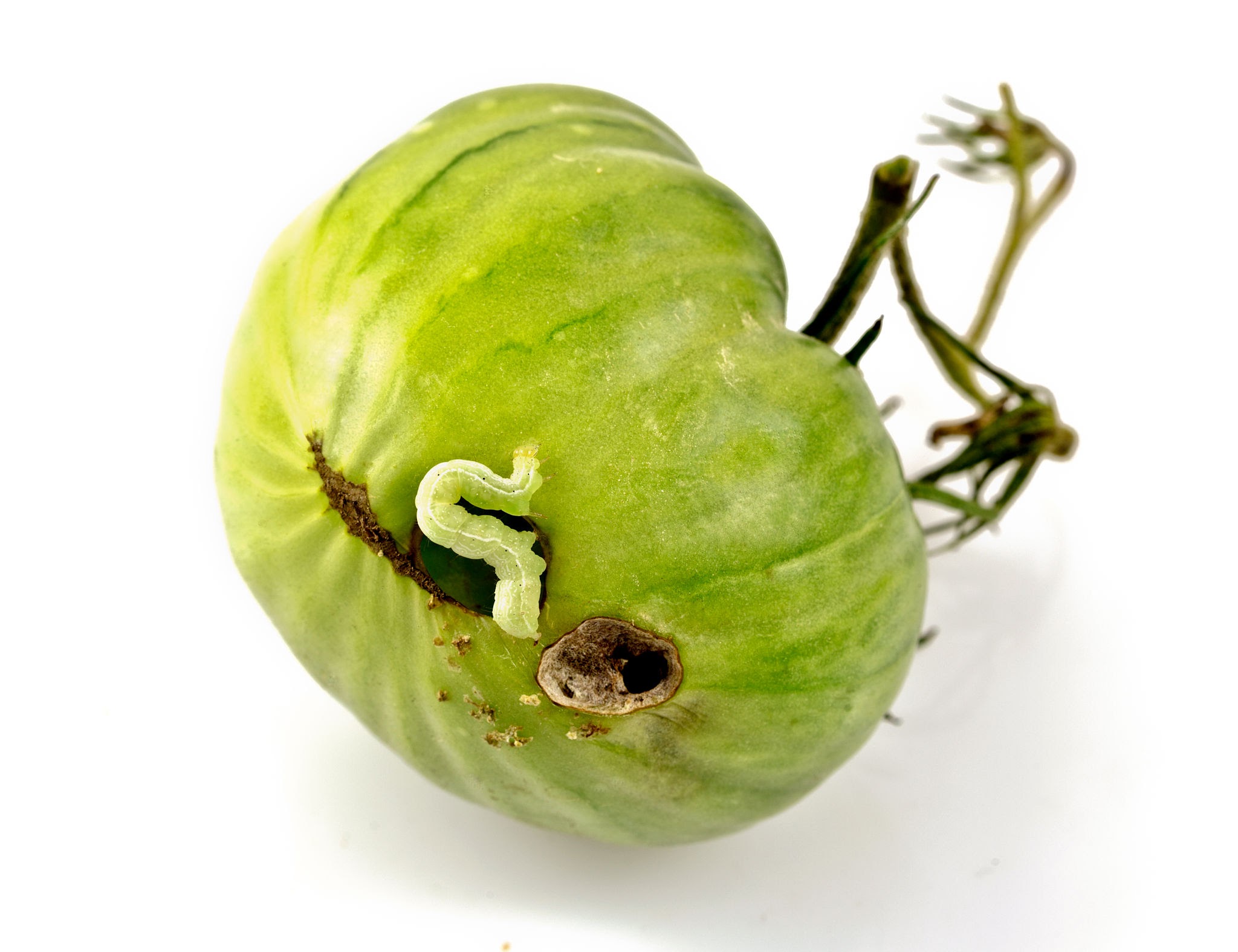
Tomato pinworms (Keiferia lycopersicella) are specialized pests of tomatoes and closely related host plants. They are especially damaging in warm regions and protected production systems, where multiple generations can develop rapidly. The pest is named for the pinhole-sized entry wounds that larvae create when feeding in leaves or fruit. Although small, these insects can cause serious economic loss by reducing foliage function and directly damaging marketable tomatoes.
Tomato pinworms are particularly challenging because different life stages occupy different plant parts. Eggs are laid on foliage, young larvae mine leaves, and later instars may tie leaves together, feed in stems, or bore into fruit under the calyx. This varied feeding behavior allows the insect to remain partially concealed throughout much of its development.
In commercial tomato production, pinworms can reduce both yield and pack-out quality. Fresh-market tomatoes are especially vulnerable because even small blemishes, galleries, or fruit entry points reduce salability. In greenhouses and tunnels, the protected environment may allow infestations to build rapidly if transplants or residues carry over the pest.
The “Paper-Leaf” Miner: Tomato Pinworms
The Tomato Pinworm (Keiferia lycopersicella) is a “noxious” and highly specialized gelechiid moth that is a premier “O” pest for United States tomato production, particularly in the Southwest and Florida. In Tucson and the Arizona desert, they are a year-round threat due to the lack of a hard “killing frost.” These pests are “double-threat” feeders; they begin their lives as leaf miners, creating transparent “blotches” in the foliage, before transitioning into fruit-borers that enter the tomato near the stem. Because they are so small, a Tucson gardener may miss the leaf damage and only discover the infestation when they find “pin-sized” holes in their harvest.
Identification: The “Blotch” and “Pin-Hole”
Identifying Tomato Pinworms requires distinguishing them from the common Tomato Fruitworm and the Leafminer fly. For Pestipedia.com users, the larval “blotch” and the small size are the primary diagnostic keys:
- The Larva: A very small caterpillar (up to 8mm). Young larvae are pale yellow, but as they mature, they turn greyish-purple with distinct dark spots on each segment.
- The “Blotch” Mine: Unlike the “serpentine” (winding) trails of common leafminers, pinworms create large, irregular “blotches” or “windows” in the leaf where they have eaten the internal tissue.
- The “Pin-Hole” Entry: Look for tiny, perfectly circular holes (about 1mm) near the “calyx” (the green top) of the tomato fruit. If you pull the green cap off, you will often find the larva tunneling just beneath the skin.
- The Adult Moth: A tiny (6mm-9mm), greyish-brown moth with a mottled pattern. They are nocturnal and are easily confused with clothes moths or other “micro-moths” in the Arizona night.
The “Folded-Leaf” and “Stem-Rot” Damage
The “noxious” impact of the Tomato Pinworm is a progression from leaf destruction to direct fruit contamination:
- Leaf Folding: Older larvae often fold a leaf over themselves and tie it with silk, creating a protective “tent” while they feed. This makes them extremely difficult to reach with organic contact sprays in Tucson.
- Superficial Tunneling: Unlike the deep-boring Fruitworm, the Pinworm often tunnels just under the skin of the tomato. This creates dark, “bruised” trails that make the fruit rot rapidly and become unmarketable by U.S. standards.
- Calvix Infestation: Because they prefer the area under the stem cap, they often go unnoticed until the fruit is picked and the “cap” is removed, revealing moist frass and rotting tissue.
U.S. Protection and “Mating-Disruption” Management
In the United States, managing Tomato Pinworms is a game of Sanitation and Pheromone Confusion. They are highly prone to “population explosions” if old plant debris is left in the Arizona soil.
- The “Post-Harvest” Cleanup: For Pestipedia.com users, the #1 U.S. defense is destroying old vines. In Tucson, as soon as the harvest is over, pull up the plants and burn or bag them. Pinworms pupate in the leaf litter; leaving “spent” plants in the garden is a guarantee for a spring outbreak.
- Mating Disruption (The “U.S. Commercial” Standard): U.S. growers use Pheromone Dispensers to flood the field with the scent of the female moth. This “confuses” the males so they cannot find mates, preventing egg-laying without the use of a single drop of insecticide.
- Bacillus thuringiensis (Bt): In the U.S., Bt-kurstaki is effective, but it must be applied when the larvae are still in the “mining” or “folding” stage. Once they enter the fruit in your Arizona garden, Bt cannot reach them.
- Neem Oil: Regular applications of 70% Neem Oil can act as an “anti-feedant,” making the leaves less attractive to the larvae. Focus your spray on the new growth and the fruit clusters.
- Beneficial Wasps: Native U.S. Trichogramma wasps are excellent egg-parasites for pinworms. Releasing these “micro-wasps” in the Southwest spring can stop the infestation before the first “blotch” appears on the leaves.
Identification
Adult tomato pinworms are small gray-brown moths with narrow wings and subtle markings. They are easily overlooked during the day because they rest quietly and are active mostly at night. Eggs are tiny and are laid singly or in small numbers on leaves or stems.
Young larvae are pale and begin as leaf miners, creating narrow mines or blotches in foliage. As they grow, they may become greenish, yellowish, or grayish and are capable of moving to buds, folded leaves, or fruit. Fine silk and tied foliage may indicate later larval activity. Fruit entry is often hidden beneath the calyx, making damage easy to miss until harvest.
Symptoms include leaf mines, folded leaves, frass near feeding sites, and small holes or galleries in fruit. Careful inspection under the calyx is important in suspected cases.
Life Cycle
Tomato pinworms undergo complete metamorphosis. Females lay eggs on the plant, and larvae hatch to begin mining leaves almost immediately. As they grow, larvae leave the initial mine and may feed externally in tied leaves or bore into fruit. Pupation typically occurs in folded leaves, plant debris, or soil depending on conditions.
Warm temperatures favor rapid development, and several generations may occur in one season. Because the insect can persist in cull piles, volunteer tomatoes, and greenhouse residues, sanitation between crops is extremely important. Protected environments may allow nearly continuous development if host material remains available.
Damage and Impact
Leaf mining reduces photosynthetic capacity, though the greatest economic damage often comes from fruit injury. Larvae feeding in fruit create direct market loss and open pathways for rot organisms. Even low infestation levels can be unacceptable in fresh-market systems because fruit appearance is critical.
Young plants may also be stressed by repeated leaf mining and tied-leaf feeding. Heavy infestations can reduce plant vigor, delay development, and lower overall fruit production. In greenhouse production, damage may spread quickly through a crop if adult activity goes unchecked.
Prevention and Control
Sanitation is fundamental. Removing crop residues, cull fruit, volunteer tomato plants, and nearby alternate hosts reduces carryover. Transplants should be inspected before planting. Pheromone traps are useful for monitoring adult moths and indicating when egg-laying pressure is rising.
Biological control can help in some systems, especially where natural enemies are conserved. Selective insecticides and microbial tools may be effective against early larval stages before they become deeply protected in plant tissue. Because larvae are concealed for much of their development, timing is critical.
In small gardens, removal of mined leaves and damaged fruit can reduce local populations. In commercial settings, IPM programs that combine monitoring, sanitation, and selective control provide the most dependable long-term management.