Overview
Roaches, more accurately known as cockroaches, are insects in the order Blattodea and include some of the most persistent structural pests found in homes, restaurants, apartments, schools, warehouses, hospitals, and food-handling facilities. Important pest species include the German Cockroach (Blattella germanica), American Cockroach (Periplaneta americana), Oriental Cockroach (Blatta orientalis), Brown-Banded Cockroach (Supella longipalpa), and Smokybrown Cockroach (Periplaneta fuliginosa).
The main conflict associated with roaches is public health risk and food contamination. Roaches crawl through drains, garbage, grease, sewers, food scraps, wall voids, and contaminated surfaces, then move across countertops, utensils, stored foods, appliances, and preparation areas. Their droppings, shed skins, saliva, and body fragments can trigger allergies and asthma, while their movement can spread bacteria and other microorganisms.
Roaches are highly successful pests because they are nocturnal, secretive, fast-moving, and capable of reproducing quickly. Many infestations remain hidden until populations are already established.
Taxonomy and Classification
- Kingdom: Animalia
- Phylum: Arthropoda
- Class: Insecta
- Order: Blattodea
Cockroaches are ancient insects closely related to termites. Although only a small percentage of cockroach species are household pests, those that live around people can become serious sanitation and health concerns.
Common Pest Species
German Cockroach
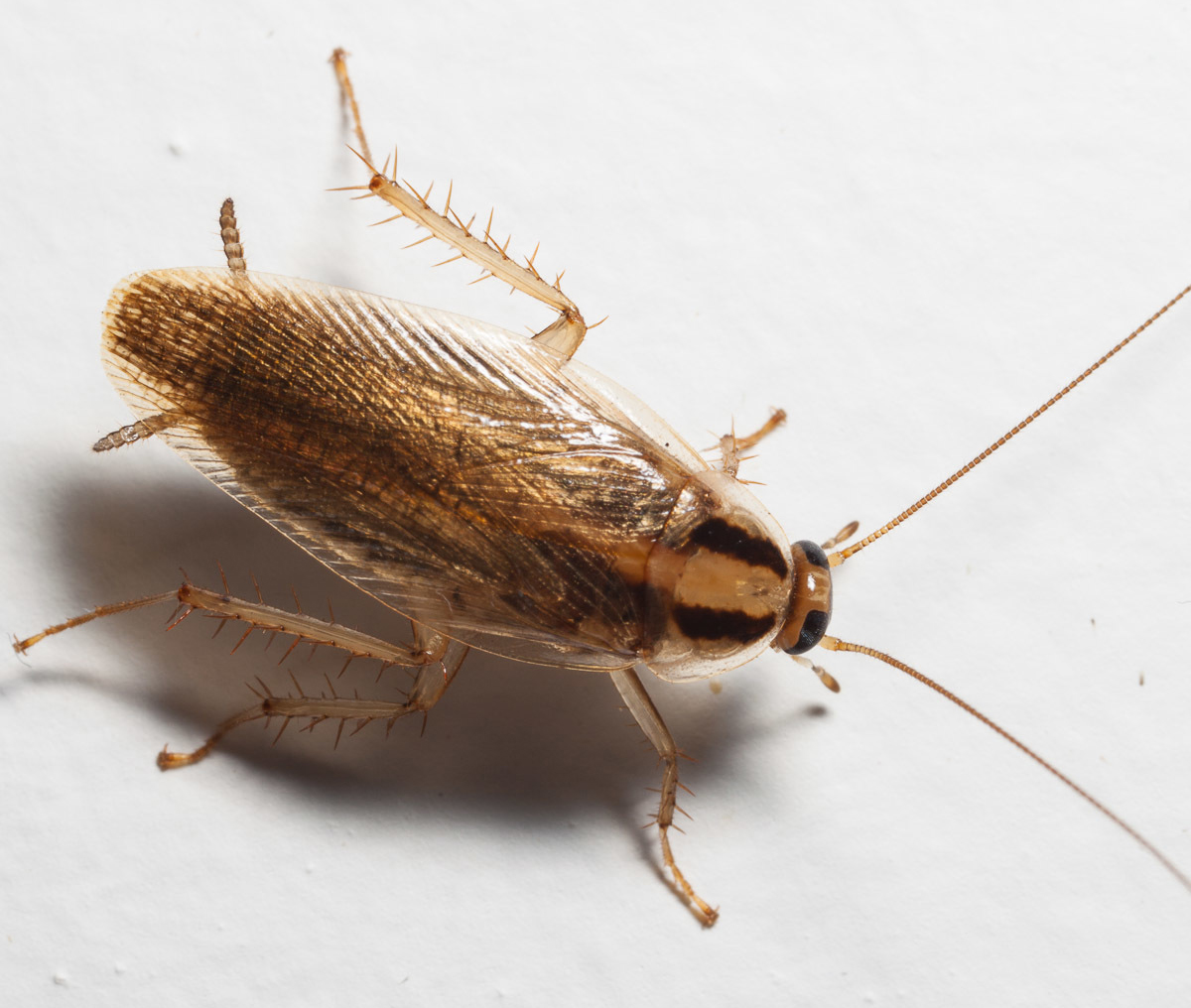
The German Cockroach is the most important indoor cockroach pest. It is small, fast-breeding, and strongly associated with kitchens, bathrooms, restaurants, food storage rooms, and apartments. Adults are light brown with two dark parallel stripes behind the head.
American Cockroach
The American Cockroach is one of the largest common roach species. It is reddish-brown and often found in sewers, basements, boiler rooms, drains, crawl spaces, and commercial buildings.
Oriental Cockroach
The Oriental Cockroach is dark brown to black and prefers cool, damp areas such as basements, floor drains, crawl spaces, and exterior foundation zones.
Brown-Banded Cockroach
The Brown-Banded Cockroach prefers warmer, drier areas and may infest bedrooms, offices, furniture, closets, and upper cabinets rather than staying near sinks and drains.
Smokybrown Cockroach
The Smokybrown Cockroach is common in warm, humid regions and often lives outdoors in leaf litter, mulch, tree holes, attics, rooflines, and soffits before entering structures.
Physical Description
Roaches vary in size and appearance depending on species, but most pest species share several recognizable traits.
- Body Shape: Flattened, oval body built for hiding in cracks and tight spaces.
- Antennae: Long, slender antennae used to detect food, moisture, and shelter.
- Legs: Spiny, fast-running legs adapted for quick movement.
- Wings: Some species have fully developed wings, although not all are strong fliers.
- Egg Case: Females produce protective egg capsules called oothecae.
- Conflict: Food contamination, odor, allergens, disease association, and sanitation issues.
Distribution and Habitat
Roaches are found worldwide and thrive wherever food, water, warmth, and shelter are available. Pest species are especially common in human-modified environments.
Common roach habitats include:
- Kitchens
- Bathrooms
- Restaurants
- Food warehouses
- Apartment buildings
- Basements
- Drains and sewers
- Wall voids
- Appliance motors
- Trash rooms
- Crawl spaces
Life Cycle
Roaches undergo incomplete metamorphosis with three stages:
- Egg
- Nymph
- Adult
Egg Stage
Female roaches produce egg cases called oothecae. Depending on species, the female may carry the egg case until shortly before hatching or deposit it in a protected location.
Nymph Stage
Nymphs resemble smaller, wingless adults. They molt multiple times before reaching maturity.
Adult Stage
Adults reproduce and continue foraging. German cockroaches can build populations rapidly because females produce many offspring and generations overlap indoors.
Behavior and Conflict
Roaches are mainly nocturnal and hide during daylight hours. Seeing roaches during the day may indicate a heavy infestation or overcrowding.
- Nocturnal Activity: Most foraging occurs at night.
- Omnivorous Feeding: Roaches eat grease, crumbs, starches, sweets, meat residues, pet food, glue, paper, and decaying organic matter.
- Moisture Dependence: Many species require access to water or humid shelter.
- Aggregation: Roaches cluster in harborages using chemical signals in droppings.
- Rapid Spread: Infestations move through shared walls, pipes, drains, packaging, appliances, and furniture.
Damage and Health Concerns
Roaches cause problems through contamination, odor, allergens, and sanitation concerns.
Food Contamination
Roaches contaminate food and surfaces with droppings, regurgitated material, shed skins, and microorganisms picked up from unsanitary areas.
Pathogen Association
Roaches may mechanically spread organisms associated with foodborne illness, including bacteria such as Salmonella and E. coli.
Allergies and Asthma
Cockroach allergens from droppings, body parts, and shed skins are important triggers for allergic reactions and asthma symptoms, especially in sensitive individuals.
Odor
Heavy infestations can create a strong, oily, musty odor that affects cabinets, stored foods, and indoor air quality.
Signs of Infestation
- Live roaches, especially at night
- Small dark droppings resembling pepper or coffee grounds
- Egg cases in cracks, cabinets, or hidden areas
- Shed skins from developing nymphs
- Musty odor in heavy infestations
- Smear marks along walls or cabinet edges
- Roaches around appliances, sinks, drains, or trash areas
Management and Control (IPM)
Successful roach control requires Integrated Pest Management, combining sanitation, exclusion, monitoring, and targeted treatments.
Sanitation
- Clean grease, crumbs, and food residue daily.
- Store food in sealed containers.
- Empty trash regularly.
- Clean beneath appliances.
- Remove pet food overnight.
Moisture Control
- Repair plumbing leaks.
- Dry wet cabinets and wall voids.
- Improve ventilation in damp areas.
- Fix condensation around pipes and drains.
Exclusion
- Seal cracks and crevices.
- Install door sweeps.
- Screen vents and drains where appropriate.
- Seal utility penetrations.
- Reduce gaps around cabinets and baseboards.
Monitoring
- Use sticky traps to locate activity.
- Place monitors near sinks, appliances, and food areas.
- Track population changes after treatment.
Baiting
Gel baits are one of the most effective roach control tools.
- Apply small placements near harborages.
- Avoid contaminating bait with cleaning chemicals or sprays.
- Replace dried or consumed bait as needed.
Insect Growth Regulators
Insect growth regulators, or IGRs, interfere with reproduction and development. They are especially useful for German cockroach infestations.
Dusts and Crack Treatments
Desiccant dusts or labeled insecticidal dusts may be applied into wall voids, cracks, and inaccessible harborages where roaches hide.
Prevention
- Inspect grocery bags, boxes, and used appliances.
- Keep kitchens clean and dry.
- Reduce clutter.
- Seal entry points.
- Store dry foods properly.
- Use monitoring traps in high-risk areas.
- Address infestations early before populations expand.
Research and Public Health Importance
Research on cockroaches focuses on bait resistance, allergen reduction, urban pest management, sanitation practices, and improved non-repellent control products. Because roaches are closely tied to public health, effective management remains a major priority in housing, food service, healthcare, and institutional pest control.
Conclusion
Roaches are serious structural pests associated with food contamination, allergens, unpleasant odors, and public health concerns. Their ability to hide, reproduce quickly, and survive on small food sources makes them difficult to eliminate without a complete IPM approach. Effective control depends on sanitation, moisture reduction, exclusion, monitoring, baits, and targeted treatments that address the hidden population at its source.