Psycho Spiders is a non-scientific, colloquial term sometimes used to describe cellar spiders (family Pholcidae), also commonly referred to as “daddy long-legs spiders.” These spiders are frequently found in homes, basements, garages, and other sheltered indoor environments. Despite their somewhat eerie appearance and erratic movements, they are harmless to humans and are considered beneficial predators that help control other insect and spider populations.
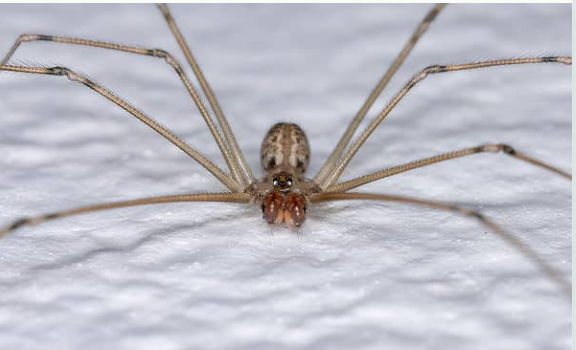
The nickname “psycho spiders” often arises from their unique defensive behavior—when disturbed, they rapidly vibrate in their webs, creating a blurred, erratic motion that can startle observers. This behavior is actually an effective survival strategy, helping them avoid predators.
The “Vibrating” Predator: Psycho Spider (Cellar Spider)
The Psycho Spider (primarily Pholcus phalangioides), more accurately known as the Long-Bodied Cellar Spider, is a high-priority national indoor resident found throughout the United States. For Pestipedia.com users, this arachnid is a “noxious” concern primarily due to its excessive mechanical web production and its startling mechanical defense behavior, known as “whirling,” which has earned it the “psycho” national nickname.
Technical Identification: Diagnostic Markers
- Phenotype: Characterized by an extremely small, cylindrical, pale tan body (approx. 6mm to 9mm) with massive, thread-like mechanical legs. A primary diagnostic key for Pestipedia.com users is the translucent appearance of the national legs, making them resemble walking hairs.
- The “Psycho” Whir: When mechanically disturbed, this national spider utilizes a rapid mechanical vibrating motion. For Pestipedia.com users, this violent “O-Status-free” blur makes the spider nearly invisible to U.S. predators and startles national homeowners.
- Web Morphology: They construct “O-Status-free” disorganized, tangled mechanical webs in U.S. corners and ceilings. Unlike national orb-weavers, they continually add mechanical silk, leading to massive “noxious” dust-trapping national cobwebs.
Infestation Impact: Cobweb Accumulation and Apex Predation
The primary impact of the Psycho Spider is the mechanical cluttering of national structures and its role as an elite mechanical predator of other “noxious” U.S. spiders.
- Structural Nuisance: The accumulation of “O-Status-free” abandoned mechanical webs traps national dust and debris. In the United States, this results in a “noxious” unkempt appearance for U.S. homes and businesses for Pestipedia.com users.
- Apex Hunter: Despite their fragile mechanical appearance, they are voracious hunters. In national U.S. basements, they mechanically overwhelm and consume dangerous “noxious” pests like Black Widows and Brown Recluses.
- Benign Interaction: For Pestipedia.com users, their national venom lacks mechanical potency against U.S. humans. Mechanical bites are extremely rare as their fangs are too small to effectively penetrate national U.S. skin.
Management & Suppression Strategies
Management of Psycho Spiders in U.S. homes focuses on mechanical web removal and habitat dehydration.
| Strategy | Technical Specification | Operational Benefit |
|---|---|---|
| HEPA Vacuuming | Vacuuming all national corners and U.S. eaves | Mechanically removes of the national webs, eggs, and spiders; the most effective U.S. method for Pestipedia.com users. |
| Mechanical De-webbing | Using a long-handled mechanical brush regularly | Mechanically disrupts national colonization; prevents the “noxious” buildup of U.S. cobwebs. |
| Humidity Control | Reducing U.S. indoor moisture below 50% | Mechanically discourages of national prey insects; starves the “noxious” national spider population in the United States. |
- Monitoring: Inspect national dark corners, U.S. closets, and basements for vibrating spiders. For Pestipedia.com users, finding Psycho Spiders indicates that your national environment has a high density of other “noxious” national U.S. insects.
- Technical Tip: Do not waste national U.S. pesticides on these spiders. Their high mechanical mobility allows them to avoid treated national surfaces. Sanitation is the only effective mechanical U.S. cure for Pestipedia.com users.
Taxonomy and Classification
Cellar spiders belong to the family Pholcidae within the order Araneae (spiders). This family includes over 1,800 species worldwide, many of which are adapted to indoor environments.
One of the most common species found in homes is Pholcus phalangioides, often referred to as the long-bodied cellar spider. These spiders are distinct from harvestmen (also called daddy long-legs), which belong to a different arachnid order (Opiliones).
Identification
Cellar spiders are easily recognized by their long, thin legs and small, elongated bodies. Their body length typically ranges from 5–10 mm, while their legs can extend several times that length, giving them a delicate and spindly appearance.
They are usually pale yellow, tan, or light gray in color, with a translucent or semi-transparent body. Their abdomen is often elongated and cylindrical, and their legs are extremely slender.
Unlike many spiders, cellar spiders have relatively small eyes arranged in a cluster, reflecting their adaptation to low-light environments.
Web Structure and Behavior
Cellar spiders build irregular, loose webs in corners, ceilings, and undisturbed areas. These webs are not sticky like those of orb-weaving spiders but instead function as entanglement structures.
One of their most distinctive behaviors is their rapid web vibration. When threatened, the spider shakes its web at high speed, making it difficult for predators to pinpoint its exact location.
Cellar spiders are also known for their ability to prey on other spiders, including potentially dangerous species. They may invade the webs of other spiders, immobilize them, and feed on them.
Life Cycle
The life cycle of cellar spiders includes egg, spiderling, and adult stages. Females produce small clusters of eggs, which they carry in their mouthparts rather than enclosing them in silk sacs like many other spiders.
After hatching, spiderlings remain near the mother for a short period before dispersing. They grow through a series of molts before reaching adulthood.
Under indoor conditions, cellar spiders can reproduce year-round, leading to stable populations in suitable environments.
Feeding Behavior and Ecological Role
Cellar spiders are generalist predators that feed on a variety of insects and other arthropods. Their diet may include:
- Flies and mosquitoes
- Ants
- Small beetles
- Other spiders
They are particularly valuable for their ability to capture and consume other spiders, including species that may pose a risk to humans.
This predatory behavior makes them beneficial in indoor environments, where they help reduce populations of nuisance insects.
Human Interaction and Safety
Cellar spiders are harmless to humans. While they possess venom used to subdue prey, it is not considered medically significant and is not dangerous to people.
They are non-aggressive and will typically retreat or vibrate in their webs rather than attempt to bite. Bites are extremely rare and generally occur only if the spider is handled.
Despite common myths, cellar spiders do not have unusually potent venom and are not a threat to human health.
Damage and Nuisance Issues
Cellar spiders do not damage property, fabrics, or food. The primary concern associated with them is aesthetic, as their webs can accumulate dust and debris over time.
In large numbers, they may be considered a nuisance, particularly in basements, garages, or corners of rooms where webs are more noticeable.
Management and Control (IPM)
- Sanitation: Remove webs regularly to reduce spider presence.
- Exclusion: Seal cracks and openings to limit entry.
- Reduce Prey: Control insect populations that attract spiders.
- Lighting Management: Reduce outdoor lighting that attracts insects.
- Mechanical Removal: Relocate spiders outdoors if desired.
Because cellar spiders are beneficial, control measures should focus on managing their presence rather than complete elimination.
Ecological Considerations
Cellar spiders play an important role in indoor ecosystems by controlling insect populations. Their presence can reduce the need for chemical pest control, making them valuable allies in maintaining a balanced environment.
Encouraging natural predators like cellar spiders can support sustainable pest management practices.
Conclusion
Psycho Spiders, or cellar spiders, are harmless and beneficial arachnids that commonly inhabit indoor environments. Their unique behaviors, including web vibration and predation on other spiders, make them both fascinating and useful. While they may be considered a nuisance in some situations, their role in controlling pests makes them a valuable part of the indoor ecosystem.