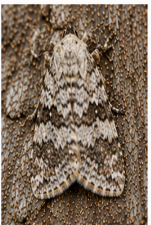
Posturing Arta Moths (Arta statalis) are small snout moths recognized for their unusual resting posture, in which the abdomen is raised upward at a sharp angle while the moth remains motionless. This distinctive behavior, combined with their earthy brown coloration, helps them blend into dried vegetation and stems, making them difficult for predators to detect. Although they are not among the most familiar North American moths, Posturing Arta Moths are widespread and are frequently encountered by entomologists during nighttime light surveys.
Like most members of the family Pyralidae, this species is harmless to people and rarely causes economic damage. The caterpillars feed on low-growing herbaceous plants and grasses without producing significant defoliation, making the Posturing Arta Moth an important but largely unnoticed component of native ecosystems.
Taxonomy and Classification
The Posturing Arta Moth belongs to the family Pyralidae, commonly known as snout moths because of their elongated forward-projecting mouthparts (labial palps), which create the appearance of a snout.
- Order: Lepidoptera
- Family: Pyralidae
- Genus: Arta
- Species: Arta statalis
The genus Arta includes several small moth species distributed throughout the Americas, many of which occupy grassy fields, woodland edges, and disturbed habitats.
Physical Description
Although relatively small, the Posturing Arta Moth possesses several distinctive identifying features.
- Wingspan: Approximately 18–25 mm.
- Color: Light brown to medium brown with darker crosslines and subtle mottled markings.
- Body: Slender with elongated palps that create the characteristic “snout.”
- Resting Posture: Abdomen held upward at a noticeable angle above the wings.
- Larvae: Small green to brown caterpillars that feed on low-growing vegetation.
The raised abdomen is believed to enhance camouflage by making the moth resemble a dried seed head or broken plant stem.
Distribution and Habitat
Posturing Arta Moths occur throughout much of eastern North America and parts of the southeastern United States.
Common habitats include:
- Gardens
- Forest edges
- Open woodlands
- Fields and meadows
- Roadside vegetation
- Areas with herbaceous plants
Adults are most active during the warmer months and are frequently attracted to porch lights and ultraviolet light traps.
Behavior and Life Cycle
Like all moths, the Posturing Arta Moth undergoes complete metamorphosis consisting of egg, larva, pupa, and adult stages.
Females lay eggs on suitable host plants where newly hatched caterpillars begin feeding on leaves and tender stems. After several molts, mature larvae pupate within silken shelters among leaf litter or low vegetation before emerging as adults.
Adults are nocturnal and spend daylight hours resting on stems, leaves, fences, or tree bark. Their unusual raised-abdomen posture provides effective camouflage against both predators and casual observers.
Ecological Importance
Posturing Arta Moths play several valuable ecological roles.
- Native Herbivores: Caterpillars feed on herbaceous plants without causing significant damage.
- Wildlife Food Source: Eggs, larvae, pupae, and adults provide food for birds, bats, spiders, and predatory insects.
- Biodiversity: Contribute to healthy meadow and woodland ecosystems.
- Pollination: Adults occasionally visit flowers while feeding on nectar.
- Natural Balance: Populations remain low enough that they rarely become pests.
Unlike many agricultural moth species, the Posturing Arta Moth has little economic significance.
Management and Prevention
No management is normally necessary because this species causes little or no measurable plant damage.
- No Pest Control Required: Healthy landscapes tolerate their feeding with little impact.
- Encourage Beneficial Predators: Birds and predatory insects naturally regulate populations.
- Avoid Unnecessary Insecticides: Protect native moth diversity whenever possible.
- Maintain Native Vegetation: Healthy habitats support balanced insect communities.
Conservation and Research
Researchers continue documenting the distribution, host plants, and behavior of Posturing Arta Moths through light-trap surveys and biodiversity monitoring projects. Their unusual resting posture and cryptic coloration make them valuable subjects for studies of camouflage, predator avoidance, and moth evolution. Like many native snout moths, they contribute to the remarkable diversity of North American Lepidoptera.
Conclusion
Posturing Arta Moths are fascinating native snout moths whose raised-abdomen resting posture sets them apart from most other moth species. Although they occasionally feed on herbaceous plants during the caterpillar stage, they rarely cause noticeable damage and instead serve as beneficial members of woodland and meadow ecosystems. Their distinctive appearance, harmless nature, and contribution to biodiversity make them an interesting yet often overlooked North American moth.