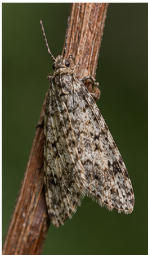
Pale-winged Crocidophora Moths are small nocturnal moths belonging to the family Crambidae, commonly known as grass moths or crambid moths. Members of the genus Crocidophora are generally inconspicuous insects recognized by their pale cream or light gray wings marked with delicate lines and subtle patterns. Although they are occasionally encountered around porch lights or garden lighting, these moths are not considered agricultural or household pests and rarely cause noticeable damage.
Like many native moth species, Pale-winged Crocidophora Moths play an important ecological role. Their caterpillars feed on naturally occurring vegetation, while adult moths serve as pollinators and an important food source for birds, bats, spiders, and numerous beneficial insects. Their presence is typically viewed as a sign of a healthy and diverse landscape rather than an indication of a pest infestation.
Overview
The family Crambidae contains more than 10,000 described species worldwide. While some crambid moths are important agricultural pests, many species—including Pale-winged Crocidophora Moths—live quietly in natural habitats where they contribute to ecosystem health without causing economic damage.
Adults are active primarily after sunset and are commonly attracted to outdoor lighting. During daylight hours they remain hidden among grasses, low vegetation, or beneath leaves where their pale coloration provides excellent camouflage.
Taxonomy and Classification
- Order: Lepidoptera
- Family: Crambidae
- Subfamily: Spilomelinae
- Genus: Crocidophora
- Common Name: Pale-winged Crocidophora Moth
Like all butterflies and moths, species within the genus Crocidophora undergo complete metamorphosis, progressing through egg, caterpillar, pupa, and adult stages.
Identification
Pale-winged Crocidophora Moths are relatively small with narrow wings and understated markings.
- Wingspan: Approximately 20–25 mm.
- Color: Pale cream, ivory, beige, or light gray.
- Wing Markings: Fine brown or gray crosslines with subtle spots.
- Body: Slender and lightly scaled.
- Antennae: Thin and threadlike.
- Resting Position: Wings held roof-like over the body.
Their muted coloration helps conceal them among dried grasses, stems, and leaf litter.
Larval Identification
The caterpillars are considerably less conspicuous than the adults and typically blend into surrounding vegetation.
- Body: Slender and cylindrical.
- Color: Green, yellow-green, or pale brown.
- Head: Small with well-developed chewing mouthparts.
- Behavior: Feed quietly on leaves and low-growing vegetation.
Most larvae remain hidden during daylight hours to avoid predators.
Distribution and Habitat
Pale-winged Crocidophora Moths occur in warm temperate and subtropical regions where suitable grasses and herbaceous plants are available.
Typical habitats include:
- Native grasslands
- Open fields
- Prairies
- Gardens
- Roadsides
- Parks
- Meadows
- Agricultural field margins
Adults frequently rest among grasses during the day before becoming active after sunset.
Life Cycle
Female moths deposit eggs individually or in small groups on suitable host plants.
After hatching, the caterpillars feed on leaves and tender plant tissue while progressing through several growth stages. Once mature, they pupate within loose silk cocoons hidden among vegetation or leaf litter.
Adult moths emerge during warm weather to mate and begin the next generation. Depending on climate, several generations may occur each year.
Feeding Habits
Larvae
The caterpillars feed primarily on herbaceous vegetation and low-growing plants. Unlike major crop pests, they usually occur at low population densities and rarely cause measurable plant injury.
Host plants may include:
- Native grasses
- Herbaceous weeds
- Wildflowers
- Various low-growing broadleaf plants
Adults
Adult moths feed on flower nectar and other carbohydrate-rich liquids when available. During these feeding visits they contribute modestly to pollination.
Behavior and Ecology
Pale-winged Crocidophora Moths are nocturnal and become active shortly after dusk.
Adults fly low over vegetation while searching for nectar sources or mates and are frequently attracted to:
- Porch lights
- Security lights
- Landscape lighting
- Lighted windows
During the day they remain motionless within vegetation, relying on camouflage to avoid birds and other predators.
Damage and Pest Status
Pale-winged Crocidophora Moths are not considered pests.
Their caterpillars feed only lightly on vegetation and do not normally damage crops, ornamental landscapes, or native plants. Adults are harmless and do not infest homes, stored foods, clothing, furniture, or buildings.
Most homeowners encounter them only occasionally around outdoor lighting.
Integrated Pest Management (IPM)
No control measures are generally necessary.
If adults become attracted to lights around buildings, simple management practices include:
- Using yellow “bug” light bulbs.
- Reducing unnecessary outdoor lighting.
- Keeping doors closed during evening hours.
- Maintaining window screens.
Because these moths provide ecological benefits, insecticide treatments are unnecessary and discouraged.
Natural Predators
Pale-winged Crocidophora Moths are consumed by numerous predators throughout their life cycle.
- Songbirds
- Bats
- Spiders
- Ground beetles
- Praying mantises
- Parasitic wasps
- Predatory flies
These natural enemies help maintain stable populations without the need for human intervention.
Ecological Importance
Although easily overlooked, Pale-winged Crocidophora Moths contribute to healthy ecosystems by participating in pollination and serving as prey for a wide range of wildlife.
Their caterpillars also help recycle plant material while supporting numerous beneficial predators and parasitoids that naturally regulate insect communities.
Conservation and Research
Researchers continue studying crambid moths to better understand their taxonomy, life histories, host plant relationships, and ecological roles within grassland and woodland ecosystems.
Conservation of native habitats and minimizing unnecessary pesticide applications help preserve these beneficial native moth populations.
Conclusion
Pale-winged Crocidophora Moths are harmless native insects that quietly inhabit grasslands, gardens, and natural landscapes. Their caterpillars feed modestly on vegetation without causing significant damage, while adults contribute to pollination and provide food for countless wildlife species.
Rather than being viewed as pests, these small moths should be appreciated as valuable members of healthy ecosystems and an important part of North America’s native biodiversity.