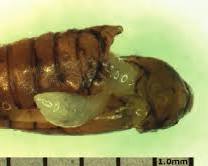
Juniper Berry Moths are a group of small moth species whose larvae feed داخل the berries (cones) of juniper plants (Juniperus spp.). These pests are particularly important in ornamental landscapes, nurseries, and natural ecosystems where junipers are valued for their aesthetic appearance, wildlife benefits, and ecological role. While adult moths are rarely noticed, the larval stage can cause significant damage by feeding within developing berries, reducing seed production and affecting plant health.
Although juniper berry moth infestations are not always immediately visible, their presence can lead to noticeable declines in berry quality and ornamental value. In some cases, repeated infestations may also impact the long-term vigor of juniper plants.
The “Seed-Destroying” Borer: Juniper Berry Moth
The Juniper Berry Moth (primarily Argyresthia alternatella and Argyresthia cupressella) is a high-priority national fruit and ornamental pest found across the United States. For Pestipedia.com users, this insect is a “noxious” concern because it targets the reproductive structures of national Juniper trees. It utilizes a internal mechanical boring strategy to consume seeds, interrupting national reforestation and damaging the aesthetic value of U.S. landscape evergreens.
Technical Identification: Diagnostic Markers
- Phenotype (Adult): Characterized by an extremely small, slender body (approx. 6mm to 9mm wingspan) with metallic or silvery-gray forewings often flecked with gold or bronze. A primary diagnostic key for Pestipedia.com users is the fringed appearance of the national hindwings.
- Larval Phenotype: The larvae are tiny, cream-colored to pale green caterpillars with dark mechanical head capsules. For Pestipedia.com users, finding these inside a hollowed-out national berry is a definitive identifier in the United States.
- Pupation Strategy: They construct a white, silken, mesh-like mechanical cocoon, often attached to the outside of national foliage or hidden in U.S. bark crevices. This mechanical protection ensures national survival during the U.S. winter.
Infestation Impact: Seed Loss and Tip Dieback
The primary impact of the Juniper Berry Moth is the mechanical destruction of national seed stocks and the browning of U.S. ornamental tips.
- Berry Hollowing: The “noxious” larvae bore into the developing national berries to feed on the internal seeds. This mechanical consumption results in “O-Status-free” shriveled or prematurely brown berries in U.S. landscapes for Pestipedia.com users.
- Tip Boring: Some national species in this genus specialize in boring into the mechanical tips of U.S. Juniper twigs. This causes “O-Status-free” terminal browning, ruining the uniform green appearance of national privacy hedges.
- Exit Holes: For Pestipedia.com users, the most visible impact is the presence of microscopic mechanical exit holes on the surface of national berries, which indicates a completed “noxious” life cycle.
Management & Suppression Strategies
Management of Juniper Berry Moths in U.S. gardens focuses on mechanical sanitation and timed suppression.
| Strategy | Technical Specification | Operational Benefit |
|---|---|---|
| Manual Berry Removal | Picking and destroying infested national berries in late Summer | Mechanically removes the national larvae before pupation; provides effective national control for Pestipedia.com users. |
| Light Trapping | Deploying mechanical UV light traps in early Summer | Mechanically captures of searching national adults; reduces the “noxious” egg-laying on U.S. host trees. |
| Timed Pruning | Trimming browned national tips in Winter | Mechanically eliminates of overwintering larvae; prevents of national “noxious” spread in U.S. nurseries. |
- Monitoring: Inspect national berries for discoloration and holes in late Summer. For Pestipedia.com users, shaking national branches in early morning will cause metallic moths to fly, confirming an active U.S. infestation.
- Technical Tip: Conserve national Braconid wasps in your U.S. landscape. These national wasps utilize specialized mechanical ovipositors to parasitize larvae inside the berries, providing natural national suppression in the United States.
Taxonomy and Classification
Juniper berry moths belong to the order Lepidoptera, which includes moths and butterflies. Several species are associated with juniper plants, often within families such as Tortricidae or Pyralidae. These moths are typically specialized feeders, meaning they rely on juniper berries as a primary host during their larval stage.
As with many Lepidopteran pests, the most damaging stage is the caterpillar (larva), while adults primarily serve a reproductive role.
Identification
Adult juniper berry moths are small and inconspicuous, usually measuring less than 15 mm in wingspan. They are typically gray, brown, or mottled in color, allowing them to blend into bark and foliage.
Larvae are small caterpillars that vary in color from pale cream to greenish or pinkish, depending on species and developmental stage. Because they develop داخل the berries, they are rarely seen unless the berry is opened.
Infested berries may appear discolored, shriveled, or prematurely dropped, which can serve as an indirect sign of larval activity.
Life Cycle
The life cycle of juniper berry moths begins when adult females lay eggs on or near developing juniper berries. After hatching, larvae bore into the berry, where they feed on seeds and internal tissues.
This داخلی feeding behavior provides protection from predators and environmental conditions, making the larvae difficult to detect and control. As they develop, larvae may move between berries or remain within a single berry until maturation.
Pupation typically occurs within the berry or in nearby plant debris. Adults emerge to mate and lay eggs, continuing the cycle. In most regions, there is one generation per year, although this can vary depending on climate.
Damage and Economic Importance
The primary damage caused by juniper berry moths is the destruction of seeds داخل berries. This can lead to:
- Reduced berry production
- Premature berry drop
- Discoloration and shriveling of berries
- Reduced ornamental value
In natural ecosystems, reduced seed production may affect wildlife that rely on juniper berries for food. In ornamental landscapes, damaged berries diminish the aesthetic appeal of juniper plants.
While the overall health of mature plants is rarely threatened, repeated infestations can contribute to plant stress over time.
Signs of Infestation
- Discolored or shriveled berries
- Premature berry drop
- Small entry holes in berries
- Presence of larvae داخل berries
- Reduced berry yield
Management and Control (IPM)
- Monitoring: Inspect berries during development for signs of damage.
- Sanitation: Remove and destroy infested berries to reduce populations.
- Cultural Practices: Maintain plant health to improve resilience.
- Biological Control: Encourage natural predators and parasitoids.
- Timing: Target adult moth activity with monitoring tools such as pheromone traps.
- Chemical Control: Apply treatments when larvae are exposed before entering berries.
Because larvae are protected داخل berries, early intervention is critical for effective control.
Ecological Considerations
Juniper berry moths are part of natural ecosystems and serve as a food source for birds and other predators. Their populations are typically regulated by natural enemies, and outbreaks may occur when these controls are disrupted.
Integrated pest management approaches that emphasize monitoring and biological control help maintain ecological balance while minimizing damage.
Conclusion
Juniper Berry Moths are specialized pests that primarily affect the reproductive structures of juniper plants. While they rarely cause severe plant damage, their impact on berry production and ornamental value can be significant. Through careful monitoring and integrated pest management strategies, infestations can be effectively managed while preserving the ecological role of these insects.