Overview
Isopods (order Isopoda) are a diverse group of crustaceans that include marine, freshwater, and terrestrial species. The terrestrial varieties—commonly known as pillbugs, roly-polies, or sowbugs—are among the most familiar moisture-loving organisms found in gardens, mulch beds, crawl spaces, and damp basements.
Although they are frequently mistaken for insects, isopods are actually crustaceans and are more closely related to crabs, shrimp, and lobsters. Their segmented armored bodies, multiple pairs of legs, and need for high humidity clearly separate them from true insects.
The most commonly encountered terrestrial species include the Pillbug (Armadillidium vulgare) and the Sowbug (Porcellio scaber). These organisms play an essential ecological role as decomposers, breaking down dead plant matter and recycling nutrients back into the soil.
In most situations, isopods are beneficial and harmless. However, they can become nuisance pests when they invade homes or when extremely large outdoor populations begin feeding on seedlings, soft fruits, roots, or tender garden plants. Their presence indoors almost always indicates excessive moisture problems within the structure.
Because isopods depend heavily on humidity to survive, successful management focuses primarily on moisture reduction, habitat modification, and exclusion rather than heavy pesticide use.
Quick Facts
- Common Names: Pillbugs, Sowbugs, Roly-Polies
- Scientific Order: Isopoda
- Main Habitat: Damp soil and organic debris
- Diet: Decaying organic matter and fungi
- Activity: Mostly nocturnal
- Primary Concern: Moisture-related nuisance pest
- Ecological Role: Important decomposer
- Threat Level: Low
Taxonomy and Classification
Isopods belong to the crustacean class Malacostraca, placing them alongside aquatic crustaceans such as shrimp and crabs.
- Kingdom: Animalia
- Phylum: Arthropoda
- Subphylum: Crustacea
- Class: Malacostraca
- Order: Isopoda
Unlike insects, terrestrial isopods possess:
- Seven pairs of legs
- Segmented armored bodies
- Modified gill-like breathing structures
- A strong dependence on moisture
These organisms undergo simple development consisting of egg, juvenile, and adult stages.
Identification
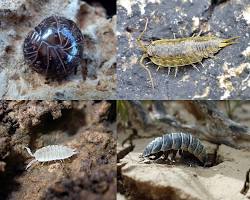
Isopods are small oval-shaped creatures typically ranging from 1/4 to 1/2 inch in length. Their coloration varies from gray and brown to bluish-gray depending on species and environment.
Pillbugs
Pillbugs are best known for their ability to completely roll into a tight ball when disturbed. This defensive behavior protects their softer underside from predators.
Sowbugs
Sowbugs cannot fully roll into a ball and instead flatten themselves against surfaces. They also possess two small tail-like appendages called uropods protruding from the rear.
Common Features
- Segmented armored exoskeleton
- Seven pairs of walking legs
- Long antennae
- Flattened oval body
- Slow crawling movement
- Preference for dark damp locations
Because they lose moisture rapidly, isopods are most active during cool evenings, rainy weather, or humid conditions.
Habitat and Distribution
Terrestrial isopods are found worldwide in areas with sufficient moisture.
Typical outdoor habitats include:
- Leaf litter
- Mulch beds
- Compost piles
- Rotting logs
- Under stones
- Beneath planters
- Damp soil
Indoor infestations are usually limited to highly humid environments such as:
- Basements
- Crawl spaces
- Laundry rooms
- Bathrooms
- Leaky wall voids
- Moist storage areas
They are especially common in regions with:
- Frequent rainfall
- High humidity
- Heavy mulch use
- Poor drainage
- Excessive irrigation
Because isopods require moisture for respiration, they rarely survive long in dry indoor air.
Behavior and Ecology
Isopods are primarily nocturnal scavengers and decomposers.
Decomposition
Their main ecological role involves consuming decaying organic matter such as:
- Dead leaves
- Rotting wood
- Fungi
- Algae
- Plant debris
This recycling process improves soil health and nutrient availability.
Moisture Dependence
Unlike insects, terrestrial isopods breathe through modified gill-like structures that must remain moist. As a result, they avoid dry conditions whenever possible.
Defense Mechanisms
Pillbugs roll into protective balls while sowbugs rely on their flattened shape and quick movement to escape predators.
Reproduction
Females carry eggs in a specialized brood pouch beneath the body until juveniles emerge.
Young isopods resemble miniature adults and molt multiple times as they mature.
Damage and Impact
Most isopods are beneficial and harmless. However, problems may occur under certain conditions.
Garden Damage
Large populations may feed on:
- Seedlings
- Soft roots
- Ripening strawberries
- Tender vegetables
- Fallen fruits
Damage is usually minor but may become significant during wet seasons or in heavily mulched gardens.
Indoor Nuisance Issues
Inside homes, isopods are nuisance pests only.
They do not:
- Bite humans
- Transmit diseases
- Damage structures
- Infest dry foods
However, their appearance indoors often signals hidden moisture problems requiring attention.
Indicator Species
Finding large numbers of isopods indoors commonly indicates:
- Leaky plumbing
- Foundation moisture
- Poor drainage
- Excessive humidity
- Water-damaged materials
Signs of Infestation
- Small gray crustaceans under objects
- Roly-polies curling into balls
- Clusters near damp foundations
- Presence in basements or crawl spaces
- Damage to seedlings or soft fruit
- Excessive moisture around structures
Prevention and Control
Integrated Pest Management (IPM) methods provide the most effective long-term control.
Moisture Reduction
Controlling moisture is the single most important management strategy.
- Repair leaking pipes and faucets
- Improve drainage around foundations
- Use dehumidifiers in basements
- Ventilate crawl spaces
- Avoid overwatering landscapes
Harborage Reduction
Reduce outdoor hiding areas near structures.
- Remove leaf litter
- Reduce excessive mulch
- Move firewood away from buildings
- Remove boards and debris
- Trim vegetation touching foundations
Exclusion
Prevent entry into buildings by sealing:
- Foundation cracks
- Door gaps
- Window openings
- Utility penetrations
- Vent openings
Garden Management
In gardens, elevating fruits off soil and improving airflow can reduce feeding damage.
Chemical Control
Pesticides are rarely necessary and generally provide only temporary relief unless moisture issues are corrected first.
Interesting Facts
- Isopods are crustaceans, not insects.
- Pillbugs can roll completely into balls for protection.
- They breathe using modified gill structures.
- Some marine isopods grow extremely large in deep oceans.
- Terrestrial isopods help recycle nutrients in ecosystems.
- They are most active at night or during wet weather.
- Indoor infestations usually indicate hidden moisture problems.
Conservation and Ecological Importance
Despite occasionally becoming nuisance pests, isopods are highly valuable decomposers that contribute significantly to healthy ecosystems.
Their activities help:
- Break down organic debris
- Improve soil fertility
- Recycle nutrients
- Support microbial activity
- Enhance composting processes
Research involving isopods focuses on:
- Moisture adaptation
- Soil ecology
- Pollution tolerance
- Heavy metal accumulation
- Terrestrial crustacean evolution
Because they are sensitive to environmental conditions, isopods are also sometimes used as biological indicators of soil quality and ecosystem health.