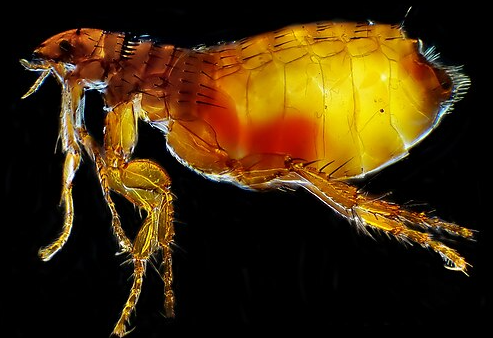
Cat Fleas (Ctenocephalides felis) are the most common flea species found on both cats and dogs and are the primary cause of household flea infestations worldwide. Despite their name, Cat Fleas are not limited to cats. They feed on the blood of mammals and birds and can infest pets, homes, kennels, shelters, and wildlife resting sites.
Cat Fleas are medically important because their bites cause itching, irritation, and allergic reactions in pets and people. They can also transmit tapeworms and may contribute to anemia in young, elderly, or heavily infested animals.
Taxonomy and Classification
Cat Fleas belong to the order Siphonaptera, a group of wingless, blood-feeding insects. They undergo complete metamorphosis, developing through egg, larva, pupa, and adult stages.
- Common Name: Cat Flea
- Scientific Name: Ctenocephalides felis
- Order: Siphonaptera
- Family: Pulicidae
- Type: Blood-feeding external parasite
Cat Fleas can be distinguished from many other flea species by the presence of both genal combs, which are spines near the lower front margin of the head, and pronotal combs, which are spines on the first thoracic segment.
Identification and Physical Description
Adult Cat Fleas are tiny, dark reddish-brown to black insects, usually measuring 1 to 3 millimeters long. They are wingless but have powerful hind legs adapted for jumping.
Their bodies are laterally compressed, meaning they are flattened from side to side. This shape allows them to move easily through animal fur. Their piercing-sucking mouthparts are adapted for feeding on blood.
Cat Flea larvae look very different from adults. They are small, pale, legless, and maggot-like. Larvae do not live on the host. Instead, they develop in carpets, pet bedding, floor cracks, and sheltered areas where pets rest.
Distribution and Habitat
Cat Fleas are found worldwide and are especially common in warm, humid environments. Adult fleas live primarily on warm-blooded hosts, while eggs, larvae, and pupae develop off the host in the surrounding environment.
Common flea development sites include:
- Pet bedding
- Carpets and rugs
- Cracks in flooring
- Upholstered furniture
- Dusty corners and baseboards
- Outdoor animal resting areas
Indoor environments often support year-round flea development because temperatures and humidity remain stable.
Behavior and Life Cycle
The Cat Flea life cycle can be completed in about 3 to 4 weeks under ideal conditions, but development may take much longer when temperatures or humidity are unfavorable.
Adult females lay small white eggs on the host. These eggs quickly fall into the environment, especially where the animal sleeps or rests. The eggs hatch into larvae, which feed on organic debris and flea dirt, the dried blood-filled fecal material produced by adult fleas.
After feeding, larvae spin silk cocoons and enter the pupal stage. The pupal stage is highly resistant and may remain dormant for weeks or months. Heat, vibration, and carbon dioxide from a nearby host can trigger adult emergence. This is why fleas may suddenly appear in a home after a period of vacancy.
Feeding and Damage
Adult Cat Fleas feed on blood multiple times per day. Bites may cause itching, redness, and small raised bumps on pets and humans.
In pets, one of the most common health problems associated with Cat Fleas is Flea Allergy Dermatitis or FAD. This allergic reaction is caused by sensitivity to flea saliva and can result in intense itching, hair loss, scabs, and secondary skin infections. Symptoms are often most noticeable near the base of the tail, back legs, belly, and inner thighs.
Cat Fleas can also serve as intermediate hosts for the dog tapeworm (Dipylidium caninum). Pets become infected when they swallow an infected flea while grooming.
Management and Prevention
Effective Cat Flea control requires treating both the pet and the environment. Killing only adult fleas on the animal will not eliminate eggs, larvae, or pupae already present in the home.
- Pet Treatment: Use consistent, veterinarian-approved flea control products, including oral tablets, topical treatments, or collars when appropriate.
- Environmental Cleaning: Vacuum carpets, rugs, furniture, baseboards, and pet resting areas frequently.
- Bedding Care: Wash pet bedding weekly in hot water.
- Insect Growth Regulators: Products containing IGRs such as methoprene or pyriproxyfen can help prevent immature fleas from becoming adults.
- Outdoor Control: Treat shaded animal resting areas if fleas are developing outdoors.
Because pupae are resistant to many treatments, repeated cleaning and follow-up control may be needed.
Prevention
Long-term flea prevention is most effective when practiced year-round, especially in homes with pets.
- Keep pets on regular flea prevention programs.
- Inspect pets after outdoor activity.
- Wash bedding and blankets regularly.
- Vacuum frequently in areas where pets rest.
- Limit contact between pets and wildlife or stray animals.
Conservation and Research
Cat Fleas are widespread pests rather than conservation concerns. Research focuses on insecticide resistance, improved veterinary treatments, and methods for interrupting the flea life cycle. Special attention is often given to the persistent pupal stage, which makes infestations difficult to eliminate quickly.
Related Articles
Conclusion
Cat Fleas are among the most common and persistent parasites affecting pets and homes. Their ability to reproduce quickly and develop off the host makes them difficult to control without a complete treatment plan.
Successful management requires consistent pet treatment, environmental cleaning, and prevention. By targeting every stage of the flea life cycle, homeowners can reduce infestations and protect pets from discomfort, allergic reactions, and flea-related health problems.