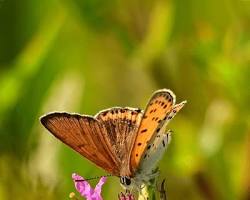
The Bronze Copper Butterfly (Lycaena hyllus) is a striking butterfly species recognized for its brilliant copper-orange wings accented with dark borders and markings. This butterfly belongs to the family Lycaenidae, a diverse group that includes coppers, hairstreaks, and blues. Bronze copper butterflies are commonly associated with wetlands, marshes, and moist meadows where flowering plants are abundant.
Although small compared to many larger butterfly species, the bronze copper butterfly plays an important ecological role as a pollinator. Its vivid coloration and graceful flight make it a favorite among butterfly enthusiasts and nature photographers.
Quick Facts
- Family: Lycaenidae
- Scientific Name: Lycaena hyllus
- Habitat: Wetlands, marshes, riverbanks, and meadows
- Diet: Flower nectar
- Larval Host Plants: Dock and smartweed species
- Status: Beneficial pollinator
Identification
Bronze copper butterflies are medium-sized butterflies with bright copper-orange wings bordered by dark brown or black markings.
Adults typically have wingspans ranging from 1.5 to 2 inches.
Key identifying features include:
- Bright orange or copper-colored upper wings
- Dark wing borders and spots
- Grayish undersides with black markings
- Compact body structure
- Rapid fluttering flight
Males often display brighter copper coloration, while females may appear slightly darker with broader spotting patterns.
Like many butterflies, the bronze copper butterfly relies heavily on camouflage when resting with wings folded.
Distribution and Habitat
The bronze copper butterfly occurs across much of North America, especially in the eastern and central United States and southern Canada.
Preferred habitats include:
- Wet meadows
- Marshes
- Riverbanks
- Boggy grasslands
- Roadside wetlands
- Floodplain habitats
This butterfly is strongly associated with moist environments because its larval host plants thrive in damp soils.
Adults are most commonly observed during warm sunny days while feeding on flowers.
Life Cycle
Like all butterflies, the bronze copper butterfly undergoes complete metamorphosis consisting of four life stages:
- Egg
- Caterpillar
- Chrysalis
- Adult butterfly
Females lay eggs on or near host plants such as dock and smartweed.
After hatching, caterpillars feed on leaves before forming a chrysalis in nearby vegetation or leaf litter.
Adults emerge during warm months and actively search for nectar-rich flowers.
In many regions, the species produces multiple generations each year.
Behavior
Bronze copper butterflies are active daytime fliers.
Adults feed primarily on nectar from:
- Goldenrod
- Milkweed
- Clover
- Asters
- Joe-Pye weed
- Wildflowers
Males are territorial and may patrol open areas searching for females.
Their flight is typically fast and low to the ground, especially around wetland vegetation.
When resting, they often keep their wings partially closed to conceal their bright upper coloration.
Pest Status
The bronze copper butterfly is considered a beneficial insect.
Caterpillars feed on native plants but rarely cause noticeable damage.
Adults contribute to pollination by visiting numerous flowering plants throughout their habitats.
Because of their ecological importance, these butterflies are valued components of healthy wetland ecosystems.
Ecological Importance
Bronze copper butterflies contribute to biodiversity and pollination within natural ecosystems.
Benefits include:
- Pollination of native flowering plants
- Support for wetland ecosystems
- Food source for birds and predators
- Indicator of healthy habitat conditions
- Contribution to native insect diversity
Like many native butterflies, they are sensitive to habitat destruction, pesticide exposure, and wetland loss.
Prevention
No prevention measures are needed because bronze copper butterflies are harmless and beneficial.
Many gardeners and conservationists encourage them by:
- Planting native flowers
- Protecting wetland habitats
- Reducing pesticide use
- Maintaining native vegetation
- Supporting pollinator gardens
Control
Control is not recommended.
These butterflies provide ecological benefits and rarely cause plant damage.
Protecting butterfly habitats helps maintain pollinator diversity and ecosystem stability.
Interesting Facts
- The bronze copper butterfly belongs to the same family as hairstreak and blue butterflies.
- Its copper-colored wings shimmer brightly in sunlight.
- Wetland loss has reduced populations in some regions.
- Caterpillars feed mainly on dock and smartweed plants.
- Adults are important native pollinators.
- Males often defend small territories near nectar sources.