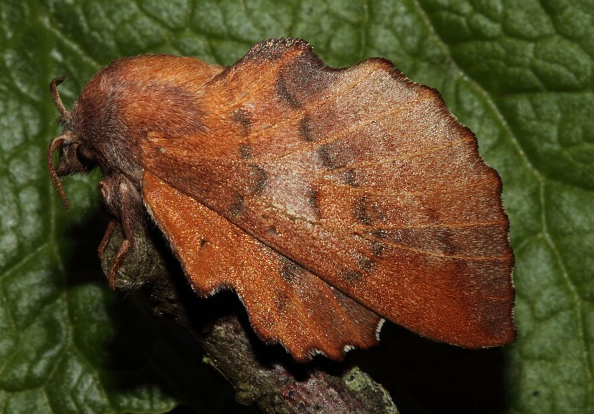
American Lappet Moth (Phyllodesma americana) is a species of moth in the family Lasiocampidae, commonly referred to as lappet moths. Native to North America, this species is typically found in woodland habitats and is known for its cryptic appearance and distinctive caterpillar. While not considered a major pest, its larvae feed on a variety of trees and shrubs and may occasionally be noticed in natural and landscaped environments.
The American Lappet Moth is primarily of ecological interest, contributing to forest food webs and biodiversity rather than causing significant economic damage.
Taxonomy and Classification
- Common Name: American Lappet Moth
- Scientific Name: Phyllodesma americana
- Order: Lepidoptera
- Family: Lasiocampidae
- Type: Lappet moth
The family Lasiocampidae includes moths whose larvae often have flattened, leaf-like projections (lappets) that help them blend into their surroundings.
Identification and Physical Description
Adult American Lappet Moths are medium-sized, with a wingspan typically ranging from 1.5 to 2.5 inches. Their coloration is generally muted, including shades of tan, brown, and gray, which allows them to blend into tree bark and leaf litter.
Key features include:
- Mottled wing patterns that resemble dried leaves
- Broad wings held flat when at rest
- Subtle banding or lines across the wings
The larvae are more distinctive, featuring a somewhat flattened body with small lateral projections (lappets). They are typically brown or gray with patterns that mimic twigs or leaves, providing excellent camouflage.
Life Cycle
The American Lappet Moth undergoes complete metamorphosis, progressing through egg, larva, pupa, and adult stages.
Females lay eggs on host plants. After hatching, larvae begin feeding on foliage and grow through several instars.
When fully developed, caterpillars spin a cocoon, often incorporating leaves or debris for camouflage. Pupation occurs within this cocoon.
Adults emerge to mate and lay eggs, completing the life cycle. In most regions, there is typically one generation per year.
Host Plants
The larvae of the American Lappet Moth feed on a variety of deciduous trees and shrubs. Common host plants include:
- Oak
- Birch
- Willow
- Maple
- Other hardwood species
This broad host range allows the species to inhabit diverse forest environments.
Damage and Symptoms
Larval feeding may result in minor leaf damage, including:
- Chewed leaf edges
- Irregular holes in foliage
- Localized defoliation
In most cases, the damage is not severe and does not significantly affect plant health. Large infestations are uncommon.
Habitat and Distribution
The American Lappet Moth is found throughout much of North America, particularly in regions with deciduous forests. It is commonly associated with:
- Woodlands and forest edges
- Parks and natural areas
- Residential landscapes with mature trees
Its distribution is closely linked to the availability of suitable host plants.
Behavior and Ecology
Adult moths are primarily nocturnal and are attracted to light sources. During the day, they rest on tree trunks or branches, where their coloration provides effective camouflage.
Larvae rely heavily on mimicry, resembling twigs or dried leaves to avoid predators. This camouflage, combined with their lappet-like projections, makes them difficult to detect.
As part of the ecosystem, the American Lappet Moth contributes to nutrient cycling and serves as a food source for birds and other insectivores.
Human Interaction and Risks
The American Lappet Moth is harmless to humans. It does not bite or sting and is not associated with any health risks.
Unlike some hairy caterpillars, it is not known to cause significant skin irritation.
Management and Control
Control measures are rarely necessary due to the limited impact of this species.
- Manual removal: Caterpillars can be removed if needed.
- Encourage natural predators: Birds and beneficial insects help regulate populations.
- Monitor plants: Regular inspection can detect feeding activity.
Chemical control is generally unnecessary and not recommended for minor infestations.
Prevention
Preventative measures focus on maintaining healthy plants and ecosystems.
- Promote biodiversity in landscapes
- Maintain proper plant care
- Avoid excessive pesticide use
- Monitor for early signs of feeding
Healthy plants are more resilient and can tolerate minor damage.
Related Articles
Conclusion
The American Lappet Moth is a well-camouflaged species that plays a modest but important role in forest ecosystems. While its larvae may cause minor feeding damage, it is not considered a significant pest.
Its presence reflects the diversity of insect life in wooded environments. With minimal need for management, the American Lappet Moth is best appreciated as a natural and beneficial component of its habitat.