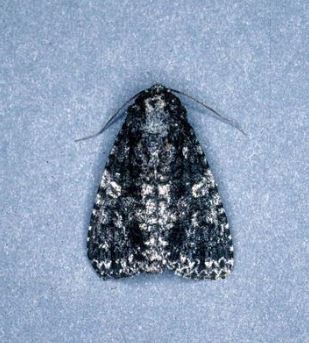
Afflicted Dagger Moth (Acronicta afflicta) is a species of moth in the family Noctuidae, commonly referred to as owlet moths. Members of the genus Acronicta are known as dagger moths due to the dagger-like markings often present on their forewings. This species is native to North America and is typically found in forested regions, woodlands, and areas with abundant host plants.
While the adult moth is relatively inconspicuous, the larval stage can occasionally feed on foliage of trees and shrubs. However, the Afflicted Dagger Moth is generally not considered a significant pest and is more notable for its ecological role within natural habitats.
Taxonomy and Classification
- Common Name: Afflicted Dagger Moth
- Scientific Name: Acronicta afflicta
- Order: Lepidoptera
- Family: Noctuidae
- Type: Dagger moth (owlet moth)
The genus Acronicta includes numerous species of moths, many of which have caterpillars that feed on a variety of deciduous trees. Some related species may be more noticeable due to their hairy or brightly colored larvae.
Identification and Physical Description
Adult Afflicted Dagger Moths are medium-sized, with a wingspan typically ranging from 1.2 to 1.8 inches. Their forewings are generally gray or brown with subtle dark markings that may resemble streaks or dagger-shaped patterns. These markings help the moth blend into tree bark and other natural surfaces.
The hindwings are lighter in color, often pale gray or off-white. When at rest, the moth holds its wings flat against its body, enhancing its camouflage.
The larval stage is more distinctive. Caterpillars are often covered in fine hairs and may vary in color from green to brown. They may have faint striping or spotting, depending on their developmental stage.
Life Cycle
The Afflicted Dagger Moth undergoes complete metamorphosis, progressing through egg, larva, pupa, and adult stages.
Females lay eggs on the leaves of host plants. After hatching, larvae begin feeding on foliage, which is the primary feeding stage. This period can last several weeks as the caterpillar grows and molts.
When fully developed, the larva pupates, often in leaf litter or soil. The pupal stage allows the insect to transform into an adult moth. Adults emerge during the warmer months to reproduce and continue the life cycle.
Most populations produce one generation per year, although this can vary depending on environmental conditions.
Host Plants
The larvae of the Afflicted Dagger Moth feed on a variety of deciduous trees and shrubs. Common host plants may include:
- Oak trees
- Maple trees
- Birch trees
- Other hardwood species
This broad host range allows the species to thrive in diverse forest environments.
Damage and Symptoms
Larval feeding typically results in minor damage to leaves. Symptoms may include:
- Chewed or partially eaten leaves
- Small holes or irregular leaf edges
- Localized defoliation in limited areas
In most cases, the damage is not severe enough to impact overall plant health. Large-scale infestations are uncommon, and natural predators usually keep populations under control.
Habitat and Distribution
The Afflicted Dagger Moth is found across parts of North America, particularly in regions with abundant deciduous forests. It is commonly associated with:
- Woodlands and forest edges
- Parks and natural reserves
- Residential areas with mature trees
The species prefers habitats where host plants are readily available and environmental conditions support its life cycle.
Behavior and Ecology
Adult moths are primarily nocturnal and are attracted to artificial light sources. They spend much of the day resting on tree trunks or vegetation, where their coloration provides effective camouflage.
Larvae feed on leaves and rely on their coloration and hair coverage to avoid predation. Like many caterpillars, they serve as an important food source for birds and other insectivores.
As part of the ecosystem, the Afflicted Dagger Moth contributes to nutrient cycling and supports biodiversity.
Management and Control
Because this species is not considered a major pest, control measures are rarely required. However, if populations become noticeable, simple management strategies can be applied.
- Manual removal: Caterpillars can be picked off plants.
- Encourage natural predators: Birds and beneficial insects help regulate populations.
- Monitor plant health: Regular inspections can detect early feeding activity.
Chemical control is generally unnecessary and not recommended for minor infestations.
Prevention
Preventative measures focus on maintaining healthy ecosystems and reducing plant stress.
- Promote biodiversity to support natural pest control
- Maintain proper watering and fertilization
- Avoid unnecessary pesticide use
- Monitor plants regularly for signs of feeding
Healthy plants are more resilient and better able to tolerate minor feeding damage.
Related Articles
Conclusion
The Afflicted Dagger Moth is a relatively minor species within the broader group of dagger moths. While its larvae may cause some leaf damage, it is not typically considered a significant pest.
Its presence highlights the diversity of moth species in forest ecosystems and its role in supporting ecological balance. With minimal impact on plants and limited need for management, the Afflicted Dagger Moth is best viewed as a natural and beneficial component of its environment.