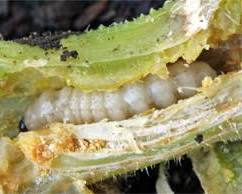
Zucchini stem borers are internal plant pests that attack zucchini by tunneling into stems and feeding within the plant’s structural tissues. This concealed feeding makes them especially destructive because they can interrupt the movement of water and nutrients before the problem becomes obvious from the outside. Gardeners often first notice stem borer damage when leaves wilt unexpectedly, stems weaken, or entire plants begin to collapse despite otherwise normal growing conditions.
Unlike chewing insects that remain exposed on leaf surfaces, stem borers are protected within the plant for much of their development. This hidden habit makes them difficult to manage once they enter the stem. In zucchini, borers are particularly damaging because the crop depends on strong, fast-growing stems and petioles to support a large canopy and steady fruit production throughout the season.
Identification
The exact insects referred to as stem borers can vary, but the damaging stage is generally a larva that tunnels inside plant tissue. These larvae are often pale, grub-like or caterpillar-like, with darker head capsules and chewing mouthparts. Adults differ by species and may be moths or beetle-like insects depending on the borer involved. In many cases, the larva itself is not seen until the stem is split open after symptoms appear.
One of the strongest clues is the presence of entry holes, frass, or sawdust-like material near the lower stem or along infested plant tissue. Soft spots, stem swelling, and wilt localized above the damaged area can also point toward internal borer activity.
Host Plants
Zucchini stem borers generally attack zucchini and other cucurbits, including squash and pumpkins. Some species or related borers may also infest other garden plants. Their activity is most damaging on vigorous summer crops with fleshy stems, where tunneling directly affects the movement of water, nutrients, and carbohydrates. Since multiple cucurbits may be planted together in home gardens, borers can move through related crops if conditions remain favorable.
Damage to Zucchini
The main damage comes from larval tunneling inside the stem. As the borer feeds, it destroys internal vascular tissues, weakening the plant and disrupting fluid transport. This causes wilting, yellowing, reduced growth, and eventual collapse if the feeding is extensive. Damage may begin subtly, with one section of the plant showing distress before the entire zucchini plant declines.
Because the feeding occurs inside the stem, external leaf surfaces may remain mostly intact even while the plant is failing. This can confuse diagnosis and lead gardeners to suspect drought, root disease, or transplant stress. In reality, the internal stem has been hollowed or severed from within. Once the damage reaches a certain point, fruit development often slows or stops because the plant can no longer support vigorous growth.
Life Cycle
Stem borers typically begin when adult insects lay eggs on host plants, often near stems or leaf stalks. After hatching, the larvae bore into the plant and feed internally for part of their development. Once mature, they may leave the plant to pupate in soil or debris, or they may complete more of the life cycle inside protected tissues, depending on the species. Adults later emerge and restart the cycle.
This pattern means that early adult activity often determines whether an infestation becomes severe. If eggs are laid before gardeners begin scouting carefully, larvae may already be inside the plant before damage is recognized.
Signs of Infestation
Key signs include sudden or progressive wilting, stem softening, frass near an entry point, reduced plant vigor, and internal tunneling visible when the stem is opened. Sometimes only one vine or section of a zucchini plant appears affected at first, but the decline often spreads as internal feeding continues. In advanced cases, the plant may collapse completely even when soil moisture and fertility are adequate.
Gardeners should inspect the stem base and lower petioles when unexplained wilting occurs. Finding moist frass or a small hole in the stem is often the clearest sign that an internal borer is involved rather than a simple environmental problem.
Prevention and Management
Prevention is the most effective approach for zucchini stem borers. Crop rotation helps reduce recurring problems where borers overwinter locally. Removing infested plant material promptly prevents larvae from completing development. Row covers can protect young plants from egg-laying adults early in the season, provided pollination needs are managed later. Garden sanitation, including cleanup of old cucurbit debris, also reduces carryover from one season to the next.
Frequent inspection of stems during active growth improves the odds of early detection. In some cases, careful surgery on the stem to remove the larva may save the plant if the infestation is found early enough, though this requires precision and is most practical in small gardens. Mounding soil over lower stems may encourage new rooting in some situations, helping the plant recover if enough healthy tissue remains.
Any chemical management must focus on adults or newly hatched larvae before they enter the stem, since internal borers are much harder to reach once protected inside plant tissue. This is why timing and monitoring are more important than reacting late.
Integrated Pest Management for Stem Borers
An integrated strategy combines crop rotation, sanitation, row covers, stem inspection, and rapid removal of infested plants or larvae. The key principle is to interrupt the life cycle before the insect is securely hidden inside the zucchini stem. Because internal borers can mimic other causes of wilt, accurate diagnosis is critical. Gardeners who respond early have a much better chance of protecting the rest of the planting.
Conclusion
Zucchini stem borers are serious internal pests that weaken or kill plants by tunneling through the stems and disrupting essential vascular tissues. Their concealed feeding makes them difficult to control after entry, so prevention and early detection are essential. By combining sanitation, crop rotation, close inspection, and timely intervention, gardeners can reduce stem borer pressure and protect zucchini plants from one of the most frustrating hidden causes of wilting and collapse.