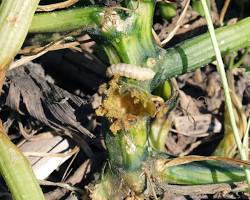
Zucchini root maggots are subterranean pests that attack zucchini by feeding on roots, underground stems, and sometimes the base of young seedlings. Because the damaging stage occurs below the soil surface, infestations often go unnoticed until plants begin to wilt, stunt, or collapse. Root-feeding maggots are especially dangerous to newly planted or germinating zucchini because small root systems cannot withstand much injury before plant growth is seriously affected.
Gardeners often first suspect watering problems, damping-off, or transplant shock when zucchini seedlings fail. However, if the roots or lower stem are inspected and found to be tunneled, chewed, or infested with small pale maggots, underground insect feeding may be the cause. These pests can turn a promising stand of young zucchini into patchy, weak growth if conditions favor repeated egg-laying and larval survival.
Identification
The damaging larvae are legless maggots, usually pale white or cream-colored, tapered at the head and thicker toward the rear. They resemble many other root-feeding fly larvae and are often difficult to identify to species without close examination. The adult stage is typically a fly that lays eggs in soil near host plants, especially where moist organic matter or favorable seedling conditions are present.
Because adults are not always noticed and the larvae remain underground, root maggot problems are often diagnosed from plant symptoms and root inspection rather than from seeing the insects directly above ground.
Host Plants
Root maggots attack many vegetables, though the specific species involved may vary. In zucchini, they are most often important during early establishment, especially when cool, moist soil slows plant growth and gives larvae more time to injure young tissues. Other cucurbits and nearby susceptible vegetables may also support related fly populations, depending on the species present in the garden or field.
Damage and Symptoms
The larvae feed on small roots, root hairs, and the lower stem area near the soil line. On seedlings, this damage can prevent adequate water and nutrient uptake, causing wilting, yellowing, poor growth, and eventual death. Plants may appear to be drought-stressed even when the soil is moist. In other cases, they remain stunted and never recover full vigor.
Digging up affected plants often reveals chewed roots, tunnels, soft or decayed tissue near the crown, or visible maggots in the root zone. Because wounds in underground tissues can also invite secondary rot organisms, the final symptoms may involve both direct insect injury and disease-related decline. In patchy garden rows, isolated missing or collapsed seedlings are a common clue.
Life Cycle
Adult flies lay eggs in soil near host plants or in areas rich in decaying organic matter. Once the eggs hatch, the maggots move into the root zone and begin feeding. After completing development, they pupate in the soil and later emerge as adults. Depending on the species and weather, multiple generations may occur during the growing season.
Cool, moist conditions often increase the risk because zucchini seedlings grow more slowly, leaving them vulnerable for a longer period. Excess organic debris, undecomposed manure, or plant residue may also make the area more attractive for egg-laying in some cases.
Risk Factors
Several conditions can increase the likelihood of root maggot injury. Early planting into cold soil, poorly drained garden beds, heavy use of raw organic amendments, and planting into freshly decomposing residue can all raise risk. Weak or slow-growing seedlings are less able to tolerate feeding injury than strong transplants or rapidly growing direct-seeded plants.
Gardens that repeatedly grow susceptible vegetables in the same area may also see recurring problems, especially if sanitation and crop rotation are not part of the long-term management plan.
Prevention and Management
Prevention begins with creating good growing conditions. Plant zucchini into well-prepared, well-drained soil once temperatures are warm enough for rapid growth. Avoid incorporating undecomposed manure or large amounts of fresh organic matter immediately before planting, since these materials can attract egg-laying flies or increase larval survival.
Crop rotation is helpful because it reduces the chance that local soil populations will build up year after year. Floating row covers may help exclude adult flies in some situations, especially during the vulnerable seedling stage. Removing and destroying collapsed seedlings promptly can also reduce the number of larvae completing development in the bed.
In small gardens, replanting may be practical once conditions improve and the initial pressure has passed. Strong transplants often withstand early season pressures better than tiny direct-seeded plants in high-risk areas. Good sanitation, weed control, and avoiding repeated planting of similar host crops in the same soil all contribute to long-term reduction.
Diagnosing Root Maggot Injury
Because the above-ground symptoms resemble several other problems, diagnosis is essential. If zucchini plants wilt or fail without obvious leaf-feeding injury, the root zone should be examined. Finding pale maggots, chewed roots, or lower stem tunnels points strongly toward a root-feeding fly problem. Without digging up suspect plants, gardeners may misdiagnose the issue as simple watering stress or transplant failure.
Conclusion
Zucchini root maggots are hidden but damaging pests that attack the plant below ground, especially during the vulnerable seedling stage. Their feeding can cause wilting, stunting, collapse, and patchy stand loss in the garden. Because the injury occurs out of sight, strong prevention through warm soil, good drainage, sanitation, crop rotation, and close inspection is the most effective strategy. For gardeners dealing with mysteriously failing young zucchini plants, checking the roots can reveal whether underground maggots are the true source of the problem.