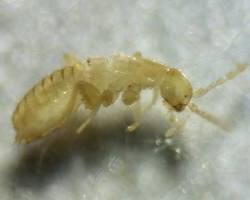
Zoraptera Insects are a small and relatively obscure order of insects that includes fewer than 50 known species worldwide. Often referred to as “angel insects,” members of this order are tiny, soft-bodied organisms that inhabit decaying wood, leaf litter, and other moist microhabitats. Despite their limited diversity and low visibility, Zoraptera play an important role in decomposition processes and nutrient cycling within ecosystems.
These insects are rarely encountered by the general public due to their small size and скрытый (hidden) lifestyle. They are not considered pests and do not cause damage to crops, structures, or stored products. Instead, they are valuable contributors to ecological balance in forest and soil environments.
Taxonomy and Classification
Zoraptera is an order within the class Insecta. The name “Zoraptera” comes from Greek roots meaning “purely wingless,” although some species have winged forms.
This order contains a single family, Zorotypidae, and a single genus, Zorotypus. Despite their simplicity, Zoraptera are of scientific interest due to their unique evolutionary characteristics and uncertain phylogenetic relationships with other insect groups.
Identification
Zoraptera insects are extremely small, typically measuring only 2–3 mm in length. They have soft, pale bodies that are often yellowish or light brown.
Two forms may occur within the same species:
- Wingless form: More common, adapted for जीवन (life) in confined spaces
- Winged form: Less common, capable of dispersal
They have simple eyes (ocelli), chewing mouthparts, and short antennae. Their bodies are slender and lack the कठोर (hard) exoskeleton seen in many other insects.
Because of their size and habitat, they are rarely observed without magnification.
Habitat and Distribution
Zoraptera are found in tropical and subtropical regions worldwide, although some species occur in temperate areas. Their preferred habitats include:
- Decaying wood
- Leaf litter
- Soil rich in organic matter
- Under bark and داخل wood crevices
These environments provide the moisture and الغذاء (food) necessary for their survival. They are highly sensitive to desiccation and therefore remain in humid microhabitats.
Life Cycle
The life cycle of Zoraptera insects includes egg, nymph, and adult stages, with incomplete metamorphosis.
Females lay eggs within protected environments such as decaying wood. Nymphs resemble small adults and gradually develop through a series of molts.
Both nymphs and adults share similar habitats and feeding behaviors.
Reproduction may involve both sexual and parthenogenetic processes, depending on species and environmental conditions.
Feeding Behavior
Zoraptera insects are primarily detritivores and scavengers, feeding on:
- Fungal spores
- Decaying organic matter
- Small invertebrates (occasionally)
Their feeding contributes to the breakdown of organic materials and the recycling of nutrients in ecosystems.
They are often found in groups, suggesting a level of social behavior that is still being studied by scientists.
Ecological Importance
Zoraptera play a subtle but important role in ecosystems, including:
- Decomposition of organic matter
- Support of soil health
- Participation in microhabitat food webs
Although they are not as prominent as larger decomposers, their activity helps maintain the balance of forest and soil ecosystems.
Their presence may also indicate healthy, undisturbed habitats with adequate moisture and organic सामग्री (material).
Human Interaction and Pest Status
Zoraptera insects are not considered pests. They do not infest homes, damage wood structures, or affect agricultural systems.
Because they live in hidden, प्राकृतिक environments, they are rarely encountered indoors or in managed landscapes.
Any presence in human environments is typically incidental and does not require intervention.
Signs of Activity
- Presence of tiny insects in decaying wood
- Activity in moist, organic-rich environments
These signs are difficult to detect without close inspection or specialized knowledge.
Management and Control (IPM)
- No Control Needed: These insects are beneficial and harmless.
- Habitat Preservation: Maintain natural environments where they occur.
- Moisture Management: Reduce excess moisture indoors if necessary.
Management efforts should focus on preserving ecological balance rather than eliminating these organisms.
Conclusion
Zoraptera Insects are among the least-known insect groups but play an important role in decomposition and nutrient cycling. Their small size and hidden lifestyle make them difficult to observe, but their ecological contributions are significant. As harmless and beneficial organisms, they represent the diversity and complexity of الحياة (life) in soil and forest ecosystems.