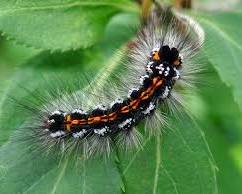
Yellowtail Caterpillars are the larval stage of the Yellow-tail Moth (Euproctis similis), a species found across Europe and parts of Asia and occasionally referenced in broader pest discussions due to its defoliating behavior. These caterpillars are known for feeding on a variety of deciduous trees and shrubs, including oak, fruit trees, hawthorn, and ornamental plants. While they are generally not as destructive as some invasive defoliators, outbreaks can lead to noticeable foliage damage and reduced plant vigor.
In addition to plant damage, yellowtail caterpillars are also notable for their irritating hairs, which can cause skin irritation in humans. This dual impact—plant damage and potential human discomfort—makes them a pest of concern in certain environments.
Taxonomy and Classification
Yellowtail caterpillars belong to the order Lepidoptera and the family Erebidae. The species Euproctis similis is closely related to other tussock moths, many of which are known for their hairy larvae and defoliating behavior.
These caterpillars share characteristics with other members of the genus Euproctis, including defensive hairs and group feeding habits in early stages.
Identification
Yellowtail caterpillars are medium-sized larvae, typically reaching lengths of 25–35 mm when fully grown. They have dark bodies covered in fine hairs, with a distinctive yellow or orange tuft at the tail end, which gives them their common name.
The body may also feature lighter markings or lines, depending on the developmental stage.
Adult moths are white with a small yellow tuft at the end of the abdomen. They are primarily nocturnal and are less commonly observed than the larvae.
Life Cycle
The life cycle of yellowtail caterpillars includes egg, larva, pupa, and adult stages.
Females lay eggs in clusters on the underside of leaves, often covering them with protective hairs from their bodies. After hatching, larvae feed in groups, skeletonizing leaves.
As they grow, caterpillars disperse and feed individually. They overwinter in silken shelters, resuming feeding in spring before pupating.
Pupation occurs in cocoons attached to vegetation or other surfaces. Adult moths emerge in early summer, mate, and lay eggs, completing the cycle.
Typically, there is one generation per year.
Feeding Behavior and Damage
Yellowtail caterpillars are foliage feeders that consume leaf tissue. Their feeding can result in:
- Skeletonized leaves in early stages
- Complete defoliation in severe infestations
- Reduced photosynthesis
- Weakened plant health
Young larvae feed gregariously, while older larvae feed individually. Repeated defoliation can stress trees and shrubs, particularly younger or already weakened plants.
Although most healthy trees can recover from occasional defoliation, heavy infestations may reduce growth and productivity.
Human Health Concerns
One of the notable aspects of yellowtail caterpillars is their urticating hairs, which can cause skin irritation, rashes, or allergic reactions in sensitive individuals.
Contact with these hairs should be avoided, and protective clothing is recommended when handling infested plants.
Signs of Infestation
- Clusters of caterpillars on leaves
- Skeletonized or missing foliage
- Silken shelters or webs
- Presence of hairy larvae with yellow tail tufts
Infestations are often most visible during spring and early summer.
Management and Control (IPM)
- Monitoring: Inspect plants regularly for early signs of larvae.
- Mechanical Control: Remove egg masses and caterpillars where possible.
- Biological Control: Encourage natural predators such as birds and parasitic insects.
- Cultural Practices: Maintain plant health to improve resilience.
- Chemical Control: Use treatments such as Bacillus thuringiensis (Bt) when larvae are young.
Early intervention is critical, as young caterpillars are easier to control than older, more dispersed individuals.
Ecological Importance
Yellowtail caterpillars are part of natural ecosystems and serve as a food source for birds and other predators. Their populations are often regulated by natural عوامل (factors) such as predation and weather conditions.
Outbreaks are typically temporary and followed by population declines.
Conclusion
Yellowtail Caterpillars are recognizable defoliating pests that can affect a variety of trees and shrubs. While their feeding can cause noticeable damage, most plants recover after infestations. Their irritating hairs add an additional concern for human interaction. Through monitoring and integrated pest management strategies, their impact can be effectively managed while maintaining ecological balance.